
Background:
The upholstery fabric covering a cat tree isn’t just cosmetic; it absorbs the initial impact of cat movement and prevents the underlying wood structures from poking through the edges. Tracking Fabric GSM (Grams per Square Meter) is a strictly adhered parameter for Globlazer’s quality baseline.
Challenge:
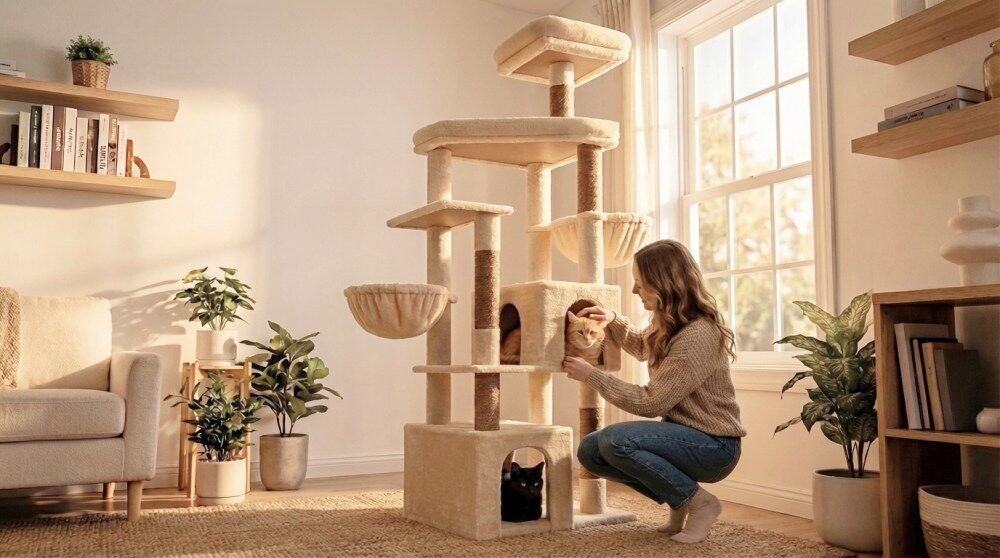
Mass-market pet products largely use thin 280-350 GSM plush to compress material costs per unit. Under the weight of large cat breeds and constant kneading, this thin material quickly flattens, pills, or wears down at the wooden corners, exposing the MDF boards underneath and degrading the furniture look. However, producing exceptionally thick fabric requires robust industrial looms and elevated dye immersion procedures that generic domestic textile mills are often unequipped or unwilling to undertake for a pet furniture client.
Solution:
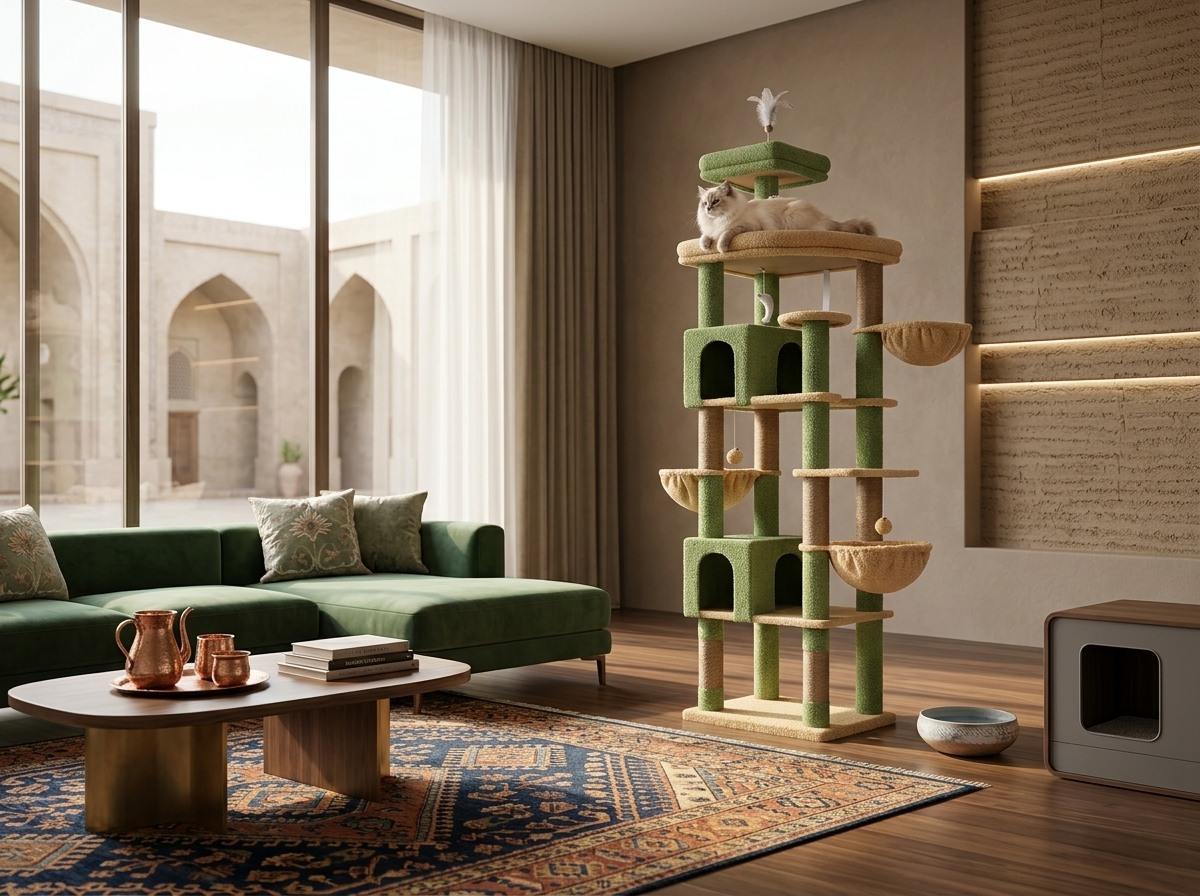
Tapping into China’s world-leading textile manufacturing capabilities, Globlazer strategically allied with a capable dye and weaving mill in Jiangsu. We commissioned a heavy-duty, 400 GSM multi-layer polished flannel designed specifically for wrap-around board durability. To prevent the heavy fabric from turning rough and stiff, the mill implemented a multi-stage mechanical brushing and polishing routine directly into the weaving workflow. The result is an ultra-dense, visually rich fabric covering that completely softens hard wooden edges and aggressively withstands heavy pet resting compression. Supported by the mill’s advanced color-matching labs, we successfully dyed these heavy fabrics into modern, muted tones, ensuring the final exported cat trees consistently meet the nuanced aesthetic styling benchmarks demanded by high-end home interiors globally.