
International Retail Display Trends in 2026
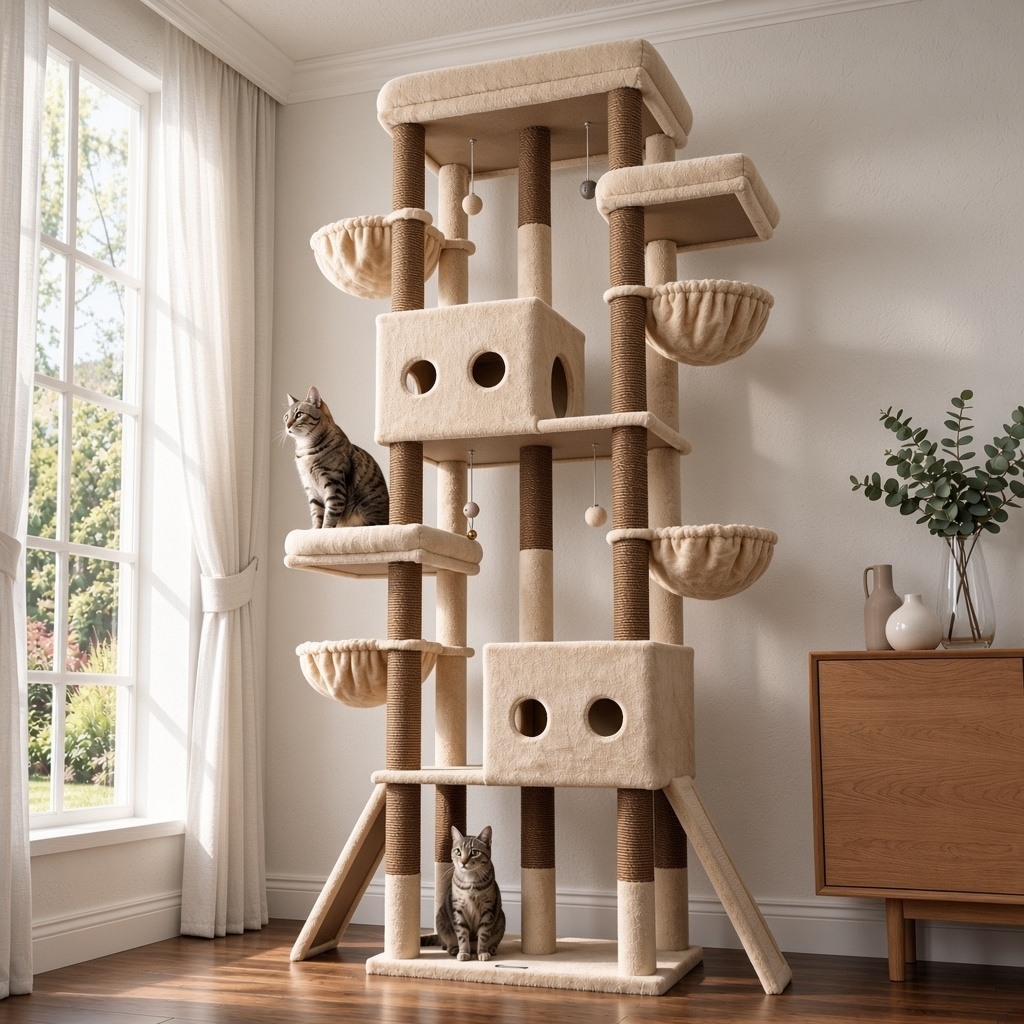
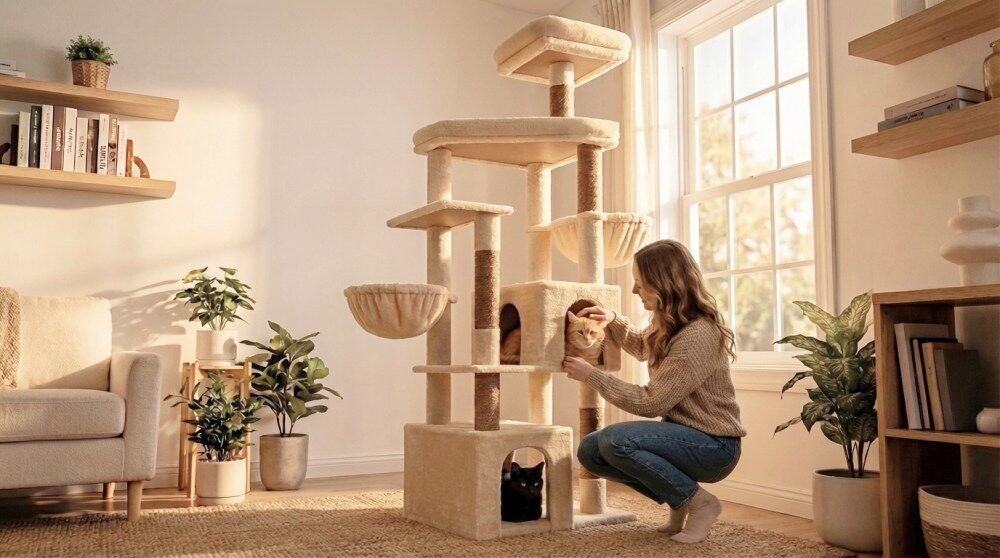
Retail floors are rewriting where a tall cat tree belongs in 2026—and Globlazer teams watching international resets see the same shift: pet verticals staged inside living-room vignettes, not fluorescent pet-corner stacks. Buyers merchandising for Europe and North America increasingly ask whether a tower survives sofa sightlines before they ask whether cats will climb it.
The vignette logic is simple. Sectionals, rugs, and throws set the palette; the tower must share it. Neutral trios—beige, soft grey, disciplined two-tone—merchandise beside accent pillows because shoppers decide with interior literacy now. A bright carnival stack fails the first scroll; a matte neutral tower beside a staged sofa reads like furniture infrastructure.
Cross-aisle placement accelerated the trend. Pet home goods co-locate with décor and soft furnishings, sold with slower furniture logic rather than impulse novelty cycles. Planograms that tuck towers beside rug tables treat climb furniture as room objects—height without shouting, sisal that reads woven, platforms sized for pauses instead of jungle props.
B2B buyers add sharper criteria behind the styling. Lot consistency across seasons matters: the same beige envelope in spring and autumn modules, connector families that still match eighteen months later, engineering documentation that travels with floor sets. Retail display in 2026 is partly theater, partly inventory discipline—beautiful vignettes backed by repeatable neutrals.
Regional accents stay visible. North American sets favor taller neutral silhouettes in open-plan photography; European floors emphasize matte surfaces and low-visual-noise profiles beside oak tones; Japanese presentations reward slim vertical lines that tuck beside cabinetry in compact layouts. The display grammar differs; the outcome converges on edited towers in shared room frames.
Online discovery pushes the same signals offline. Texture close-ups beside upholstery lead listings; retail mirrors that honesty with touchable swatch moments on floor—short-pile faces, sisal weave samples, corners that prove flat-pack corners survived transit. Display is no longer hero product on a pedestal; it is context proof.
Trade teams also report slower handoffs from discovery to floor reset—buyers want towers that photograph once and merchandise for months. That favors repeatable neutral lots and silhouettes calm enough to survive rug refreshes without a full planogram rebuild.
Home expo presentations reinforce the pattern: pet furniture grouped with living-room sets, not isolated under novelty signage. The story is cohabitation—one palette, one sightline, one permanent vertical object households can picture beside seating.
Globlazer programs align with these resets—neutral staging assets, modular Customer Stories that expand without visual chaos, materials specified for living-room photography. We will note specific market kits as lines lock; this update marks direction: international retail display for pet verticals is really living-room display, and the towers that win floor space behave like they already lived there.
New Arrivals
Fresh designs, new colors, and limited releases for modern cat homes.