
What the Future of Large Cat Tree Design Looks Like
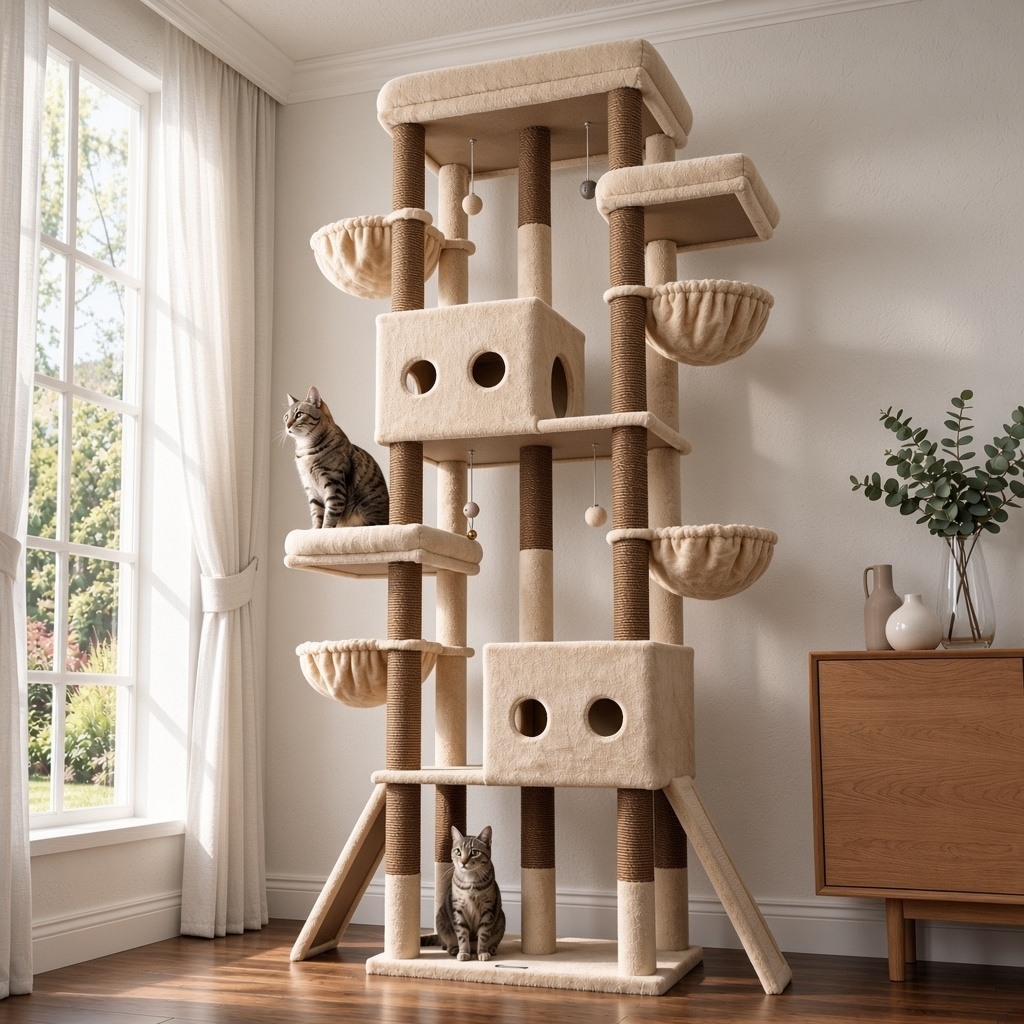
Large cat tree design is entering a quieter chapter. The next three to five years will not reward taller novelty for its own sake. They will reward towers that read like permanent vertical furniture—configured for room height, built from honest materials, and planned the way a bookshelf is planned: footprint first, sightline second, climb confidence underneath all of it.
At Globlazer, we read the shift in the questions arriving ahead of SKUs. Buyers used to open with height and platform count. Now they open with ceiling lines, window walls, and whether a neutral tower can survive the same photograph as a linen sectional six months from now. That is not vanity. It is spatial literacy—cats still need vertical territory, humans still need rooms that feel edited when guests arrive.
Structure moves toward configurable systems
Fixed jungle sculptures had their era. The forward path looks more like modular hardware families: planted bases engineered for open-plan stability, posts sized for ceiling proportion, landings added when a second cat arrives or when a household upgrades from a studio to a one-bedroom without discarding the whole climb line.
Industry Updates observation already treats connector discipline as a retail asset—not a factory footnote. Can a replacement sisal post match eighteen months later? Can mid-tower width expand without visual chaos? Future large towers will answer yes by design, because returns increasingly arrive with living-room photos, not only claw complaints. Configurable vertical systems let families grow routes progressively: same planted base, new pauses, separated up-and-down paths for multi-cat homes that refuse extra floor clutter.
Stability math does not disappear in slimmer envelopes. It relocates. Wide mid-level landings forgive large cats who need honest pauses; weight distributes into the base; stiffness lives in cores rather than shouted bulk. The silhouette can stay slender while a launch to the top still feels planted—not theatrical. Room-scale height will be budgeted like shelving: tall enough for window lookouts, disciplined enough to respect walkway clearance.
Materials will split structure from show surfaces
Material conversations for tall structures are splitting into two layers. Inside, certified wood cores and engineered stiffness carry load paths the way good furniture does—low-VOC adhesives where sleep-adjacent platforms matter, documented sisal lots where weave and wear vary. Outside, show surfaces follow upholstery logic: matte plush that survives vacuum passes, sisal with visible weave rather than costume bark, neutral envelopes in Beige, Dark Grey, and Light Grey that outlive one rug refresh.
Replaceable wear zones will become standard narrative, not aftermarket apology. Entry sisal, top-perch pile, and high-traffic platforms age on predictable schedules. Designing for swap—same post diameter, traceable neutral lots—extends tower life and protects the room investment. Sustainable storytelling will live in those layers: structural honesty inside, claw-facing honesty outside, less disposable novelty in between.
Texture will matter as much as color. Industry Updates research points toward natural weaves and upholstery-grade pile as the bridge between pet behavior and human decor literacy. A large tower photographed beside linen should read woven, not plastic—because online discovery now leads with close-ups, not height callouts alone.
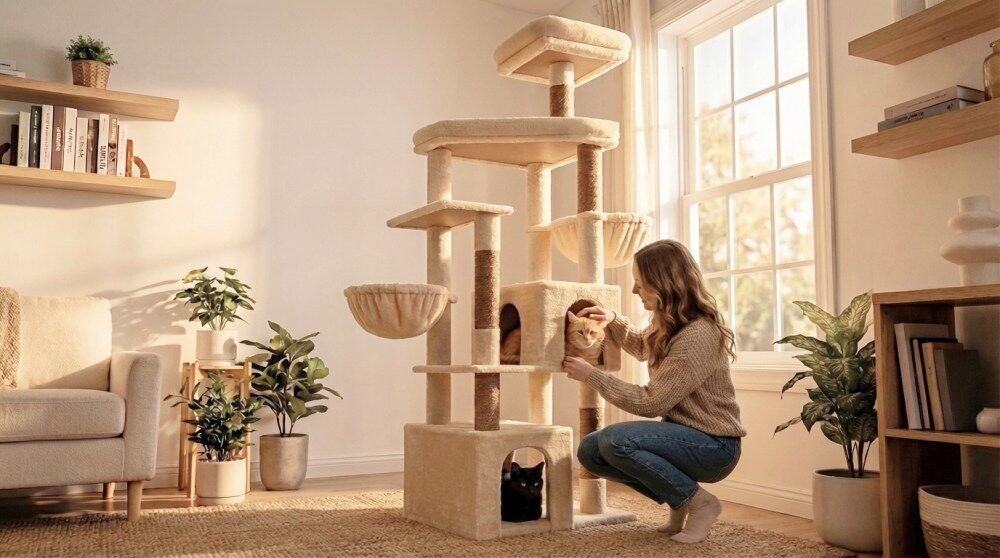
Space integration is the third leg—not an accessory trend. Space cohabitation design places pet routes beside sofas and windows as permanent layout decisions. Towers tuck into the gap between seating and glass; vertical objects align with bookshelves rather than carnival props. Rental households push the same logic: one edited neutral tower they can carry if the silhouette stays calm for the next lease.
Photography and retail will accelerate the translation. Living-room vignettes outperform isolated pet-aisle hero shots because shoppers simulate sightlines before they simulate cats. Listing videos that show a planted base and calm post answer aesthetic anxiety faster than specification bullets. B2B buyers already score modular expandability and neutral lot consistency alongside carton strength—because mismatch reads as decor failure.
Smart features may appear, but the baseline expectation is quieter composition. The future large cat tree is not a gadget tree. It is climb infrastructure specified like furniture: planted base, configured routes, materials that age with dignity, a presence the room planned for.
Over the next three to five years, brands that treat large towers as room-scale vertical systems—not taller versions of yesterday’s novelty—will align with how families actually live. Cats still need height, scratch paths, and separated pauses. Humans still need light, neutral rooms that do not apologize on video calls. The future of large cat tree design is the bargain between those truths, built in modules, honest in materials, quiet in the frame.
Globlazer programs already sketch toward that horizon: connector families across heights, documented neutral lots for long stays, silhouettes slim enough for window walls yet planted enough for daily launches. The next generation will not ask owners to choose between enrichment and interior calm. It will deliver both—one configured tower at a time, specified before the first box arrives.
We expect the tallest programs to keep asking a simple design question last: Would this object still belong if the sofa changed but the room did not? That is the future large cat tree in one sentence—not the highest platform, but the most permanent guest in the photograph.
New Arrivals
Fresh designs, new colors, and limited releases for modern cat homes.