
Why Apartment Cats Need More Vertical Movement
Leo had the zoomies every evening in his Brooklyn walk-up—and nowhere honorable to spend them. The floor plan offered one long living zone, a galley kitchen, and a window that faced a brick wall. Horizontal sprints ended at the same ottoman, the same door, the same frustrated pause.
His owner, Nina, did not need another toy that slid under the couch. She needed routes. Veterinary guidance widely agrees that indoor cats need enriched environments—vertical paths, scratching surfaces, places to watch and retreat. In a compact rental, those routes rarely come from more floor space.
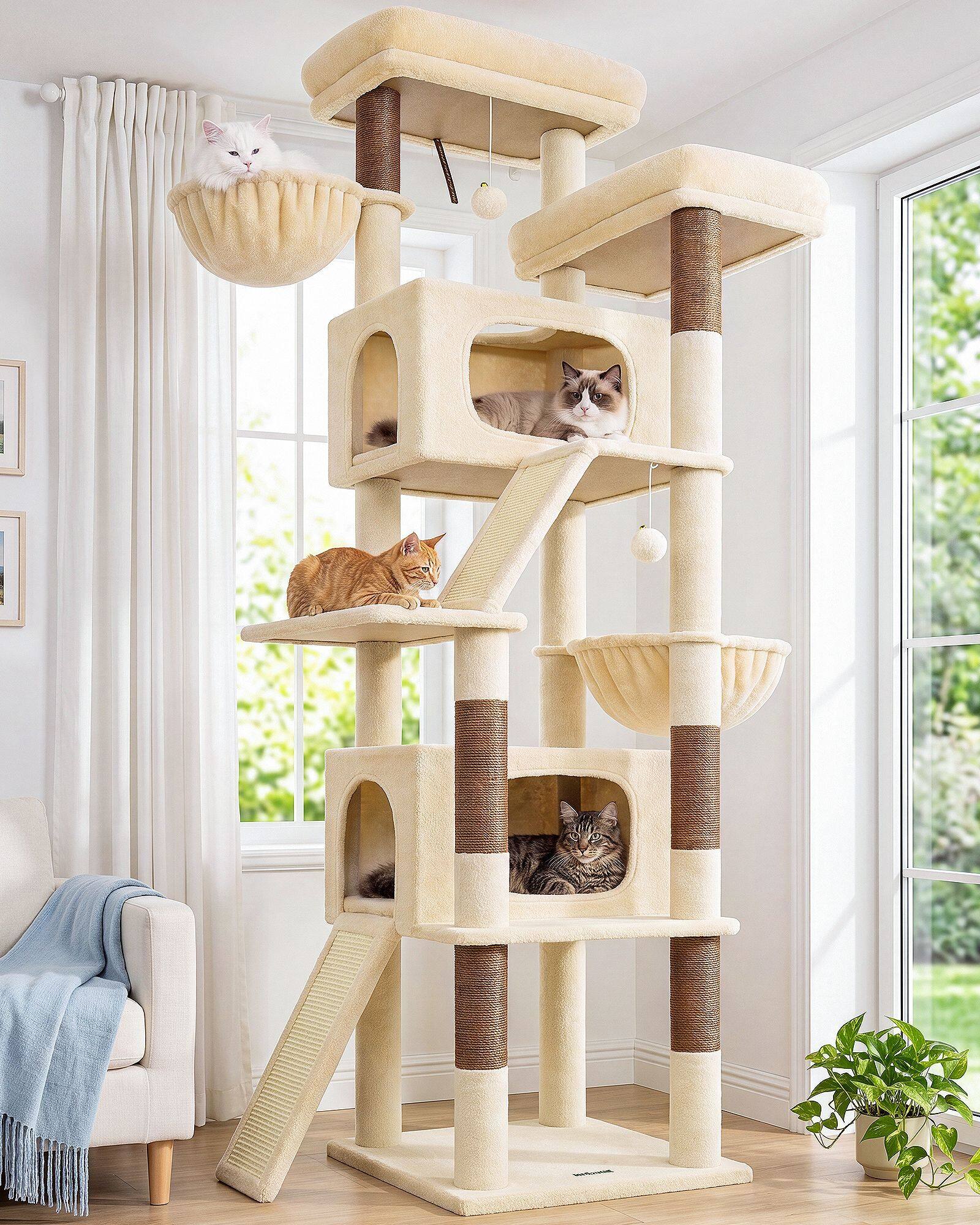
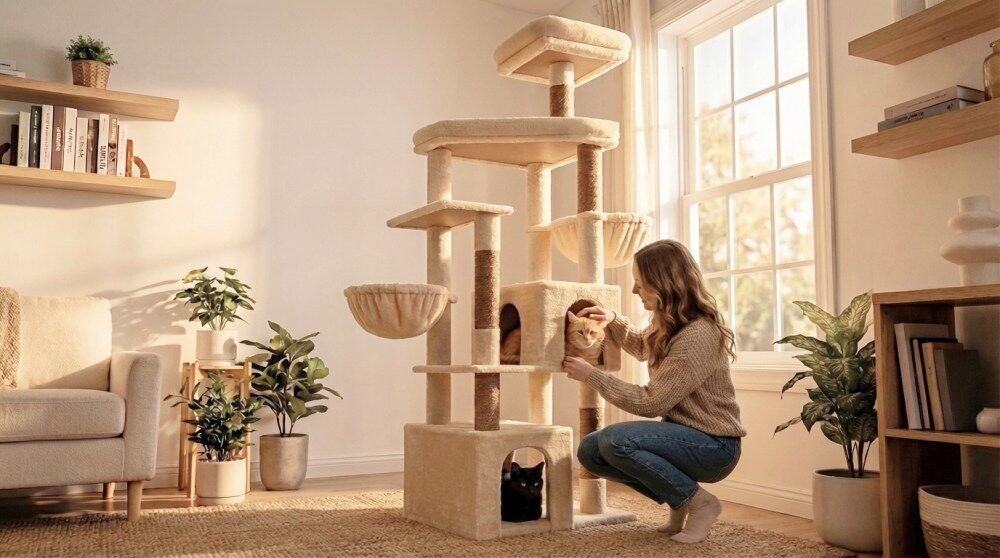
They come from height. A tall cat tree beside the window added three levels of movement without claiming another square foot of walkway. Morning climbs to the mid perch. Afternoon scratches on the sisal by the entry path. Evening leaps that finished on the top rest instead of the curtain rod.
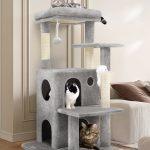
Nina chose Light Grey on purpose. The tower needed to feel like part of the room she had already curated—white trim, a worn oak stool, a single framed print—not like a pet aisle impulse buy parked in the only clear corner.
The first week was negotiation. Leo tested the base with a cautious paw, then a full-body stretch against sisal, then a single dramatic hop to the second level that made Nina hold her breath. By week two the schedule appeared: sun on the mid platform after Nina’s morning coffee, a slow blink from the top before her video calls, a final descent sprint that ended in the tunnel bed instead of across the keyboard.
Vertical movement did not make the apartment larger. It made the same footprint work on a third axis. Nina still stepped around the same ottoman. Leo stopped treating the curtain rod, the fridge top, and the bookshelf lip as unauthorized climbing gyms.
Nina’s building does not allow wall mounts for shelves or cat highways. Renters in walk-ups often face the same rule set: no holes, no adhesive that peels paint, no furniture that blocks the fire path. A freestanding tower solved vertical territory without a lease argument.
Sound mattered too. Leo’s evening sprints had been a drumroll of paws on hollow cores and sliding bowls. The sisal column gave scratch satisfaction with less kitchen percussion. Nina could take a call without muting herself every six minutes.
Neighbors noticed the change before Nina did. The thumps above their ceiling eased. Leo still had energy; he simply spent it on something built for the purpose—a cat tree that expected claws and launches instead of punishing them.
Leo’s energy did not disappear. It gained a schedule. Nina kept her pathways clear. The apartment still felt small for two species—but it stopped feeling like a hallway with furniture.
When Nina’s friends visit, they used to ask why she did not move to a larger place. She points at the tower: same rent, better axis. Vertical movement is the apartment upgrade renters are allowed to keep.
Apartment cats are not lazy. They are under-furnished vertically. Give them honest movement up, and the same square footage starts working harder for everyone who shares the lease.
New Arrivals
Fresh designs, new colors, and limited releases for modern cat homes.