
Behind Our Structural Testing Standards: A Cat Tree Perspective
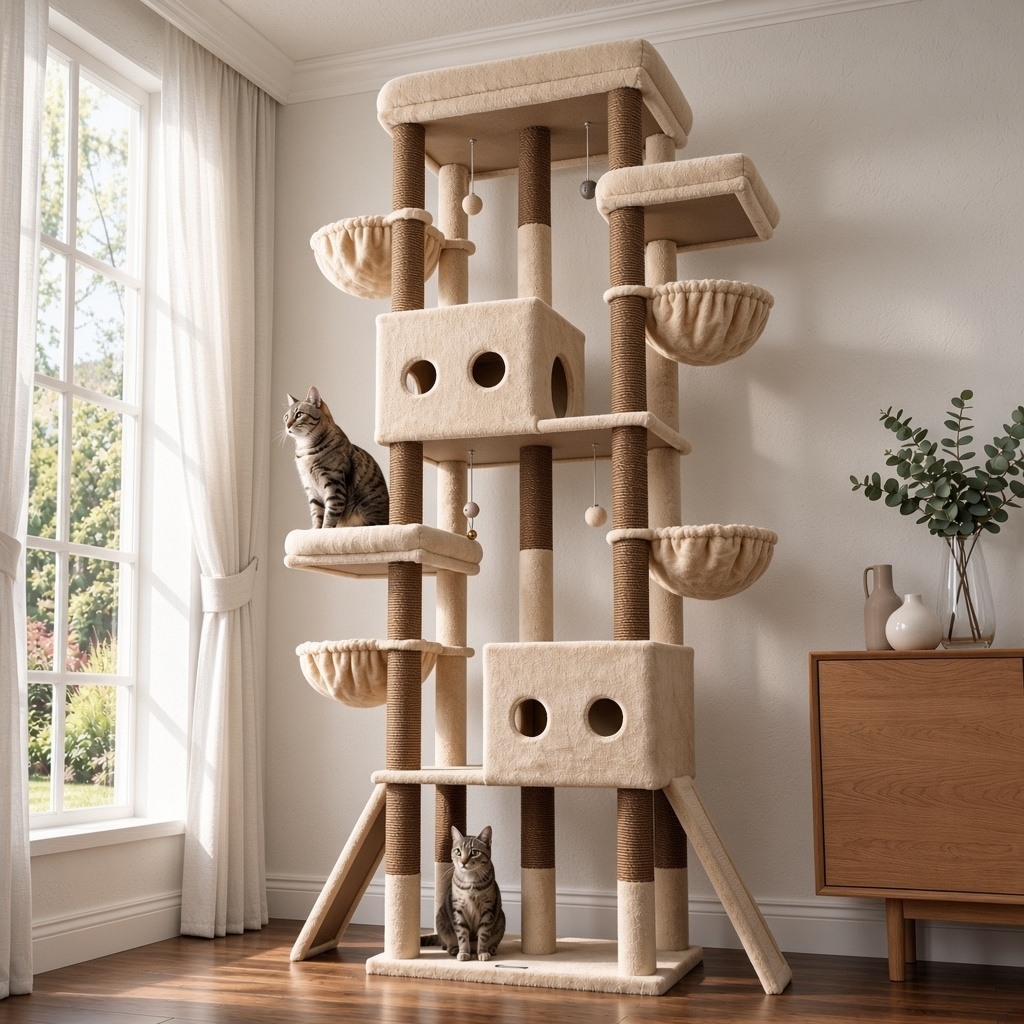
Globlazer towers are judged in living rooms, not in spreadsheets—but we still need shared structural standards so every tall design answers the same questions before it ships. Standards are not a public scorecard. They are the internal language our product team uses when comparing prototypes: widen here, stiffen there, trim visual bulk without removing mass where cats actually land and pause.
Our benchmarks start with perceptual stability. When a large indoor cat launches to a mid platform, does the frame return to stillness quickly enough that a second cat will still use the tower tomorrow? That question sounds simple. It encodes weight, route geometry, joint tolerance, and how owners describe “wobble” in messages long before they measure anything. Because cats vote with their feet, we treat quick recovery as a design requirement—not an afterthought once upholstery looks right.
Footprint versus height is the next guardrail. A slim silhouette can be beautiful and wrong. We compare base width to overall height, then ask whether diagonal climbs concentrate load at one post bay. Standards also cover assembly reality: a joint that feels solid on day one must still feel solid after months of climbing, vacuuming around the base, and the small shifts hardwood floors introduce. Metal connections are reviewed for repeat impact—not a single careful push at the warehouse, and not a demo that ends when the camera stops.
Platform sizing belongs in the same document. Large breeds taught us that perches sized for photos fail turning maneuvers. Our criteria ask whether a cat can groom, reposition, and launch without hanging off the edge. Scratch placement follows behavior, not symmetry: sisal where daily routes already go. When a prototype fails these checks, we do not decorate around the failure—we change bay spacing, add mass low, or widen the landing until the climb feels repeatable at night, not only acceptable at noon.
These standards also guide how we talk about stability externally. We avoid lab-report tone in Globlazer News because owners do not live in labs. They live with video calls, dinner plates, and a cat that hits the top perch during the wrong meeting. Our engineering narrative is about confidence you can feel when ordinary life hits the furniture—quiet bases, honest mass, routes that stay trustworthy after repeated use.
Documentation inside the team is equally practical: sketches that mark load paths, notes on which bay spacing failed a diagonal sprint, photographs of prototypes beside a sofa mockup for scale. None of that is marketing. It is how we keep tall silhouettes from repeating the same mistake across collections.
When owners describe a tower as “steady,” that is the outcome we are standardizing across collections. Different silhouettes, same discipline: look down first, respect multi-cat traffic, keep neutrals calm beside sofas, and let each cat tree earn its height in the room it will stay in all year long.
That is what lives behind our structural standards—not a format for outsiders, but a quiet promise we keep comparing new work against, collection after collection.
New Arrivals
Fresh designs, new colors, and limited releases for modern cat homes.