
Designing for Height Without Sacrificing Balance
Every prototype wall at Globlazer has a drawing that looked perfect until someone pushed it with one hand. Height sells in renderings. Balance keeps cats on the third level.
In early 2023 we chased a taller internal concept and learned the expensive way: add inches at the top without revisiting the base, and the whole tower feels like a warning sign. Cats responded the way research predicts—they tried once, felt shift, and chose the sofa.
When we want more vertical real estate, we widen or deepen the footprint first—or we accept a slimmer silhouette only if post alignment and platform depth pull weight back inside the shadow of the base. There is no third cheat code.
Sometimes that means postponing a dramatic narrow tower. Sometimes it means lowering a perch half an inch so launch angles stay kinder to the center of gravity. These are small numbers with large behavior outcomes.
We document those numbers on the prototype wall in pencil, not in marketing copy. A perch moved down 12 millimeters. A base plate extended 40 millimeters forward. A post pair realigned so landing force travels through the column, not across a joint that flexes.
Owners rarely ask about center of gravity. They ask whether the top level feels safe when a 10-pound cat launches from the floor in one motion. That is the same question we ask—just translated from physics into trust.
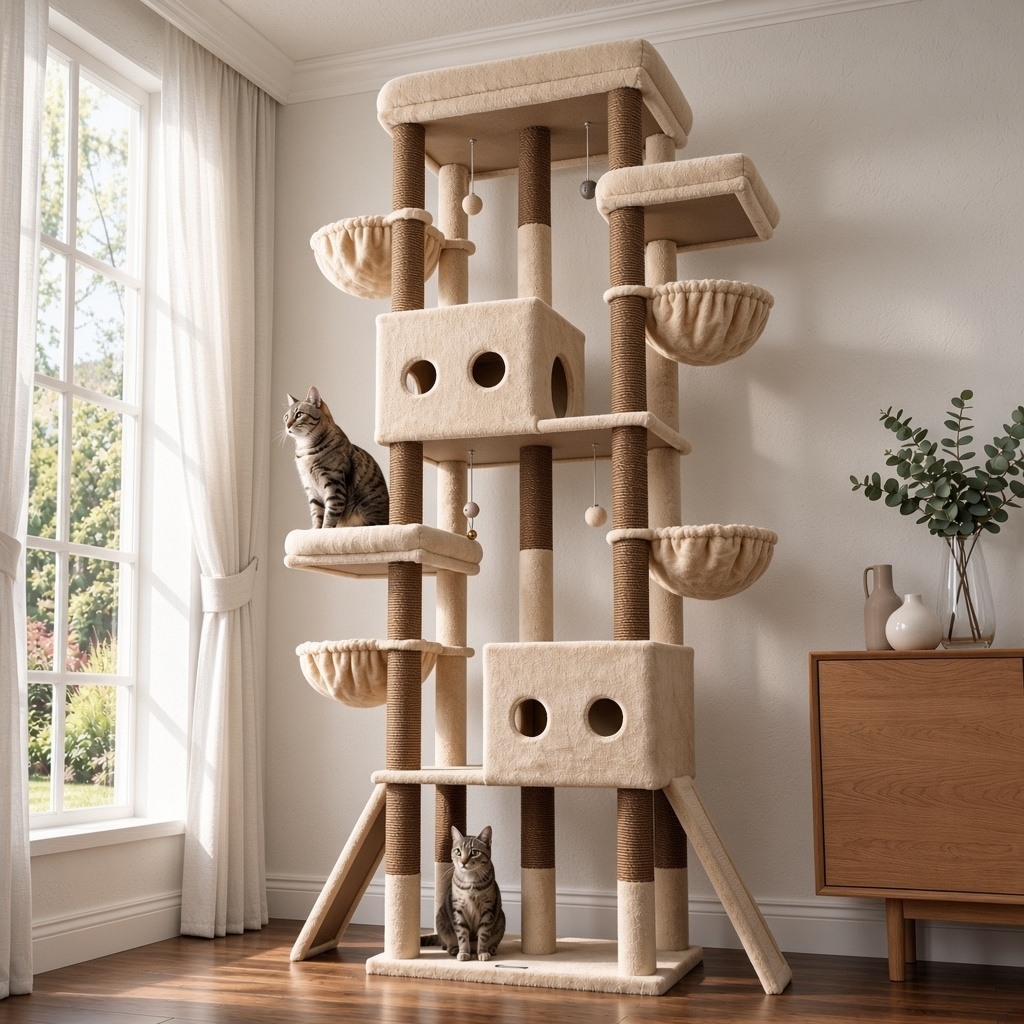
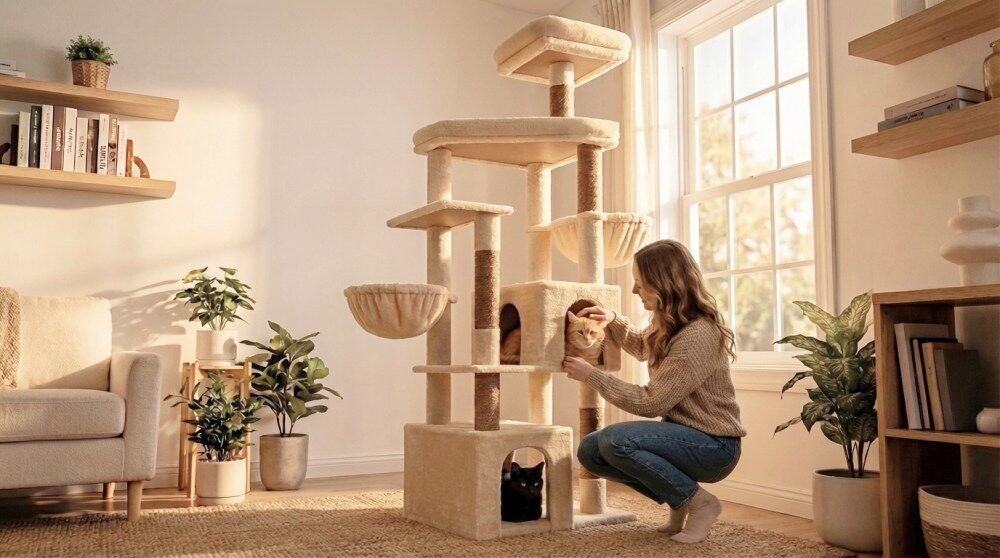
Balance also shapes how a tall cat tree sits in a room. A structure that needs to lean against a wall for honesty is a structure that fails the furniture test. We would rather ship a slightly shorter tower that stands free beside a sofa than a dramatic height that whispers for support.
We run informal push tests at two points: mid-post and top perch. Flex at mid-post often means joint or diameter trouble. Flex at the top with a stiff mid usually means footprint math is wrong—not that cats are too heavy.
Material choices follow. Denser column stock costs more and reads slimmer in photos. We accept that trade when it keeps a tall line from looking like a toy. Sisal wrap tension participates too—too loose and the post feels like a handle; too tight and it fights the underlying structure.
We also weigh empty versus occupied stability—platforms with a cushion and a cat-shaped sand bag during push tests. A tower that only feels planted when bare is not finished.
We keep a photo wall of failed tall concepts—not to mourn them, but to remember which proportions lied in CAD. The tower that survived is often 15 percent wider at the base than the rendering that excited us on day one.
That discipline followed us into every later collection. Height became a conversation with owners, not a headline—because a trustworthy climb outlasts a dramatic silhouette in reviews and return rates alike.
Designing for height without sacrificing balance is not a slogan in our studio. It is the argument that ends every review: if the top perch is not trustworthy, the height is decorative—and Globlazer is not building decorative cat trees.
New Arrivals
Fresh designs, new colors, and limited releases for modern cat homes.