
The Most Important Design Lessons We Learned
Perfect launches are rare. Useful lessons are not.
As 2024 closed, our product team paused—not to celebrate a flawless year, but to name the design truths that kept showing up in prototypes, support messages, and the towers cats actually chose at night. These are not slogans. They are the constraints we argue with less now.
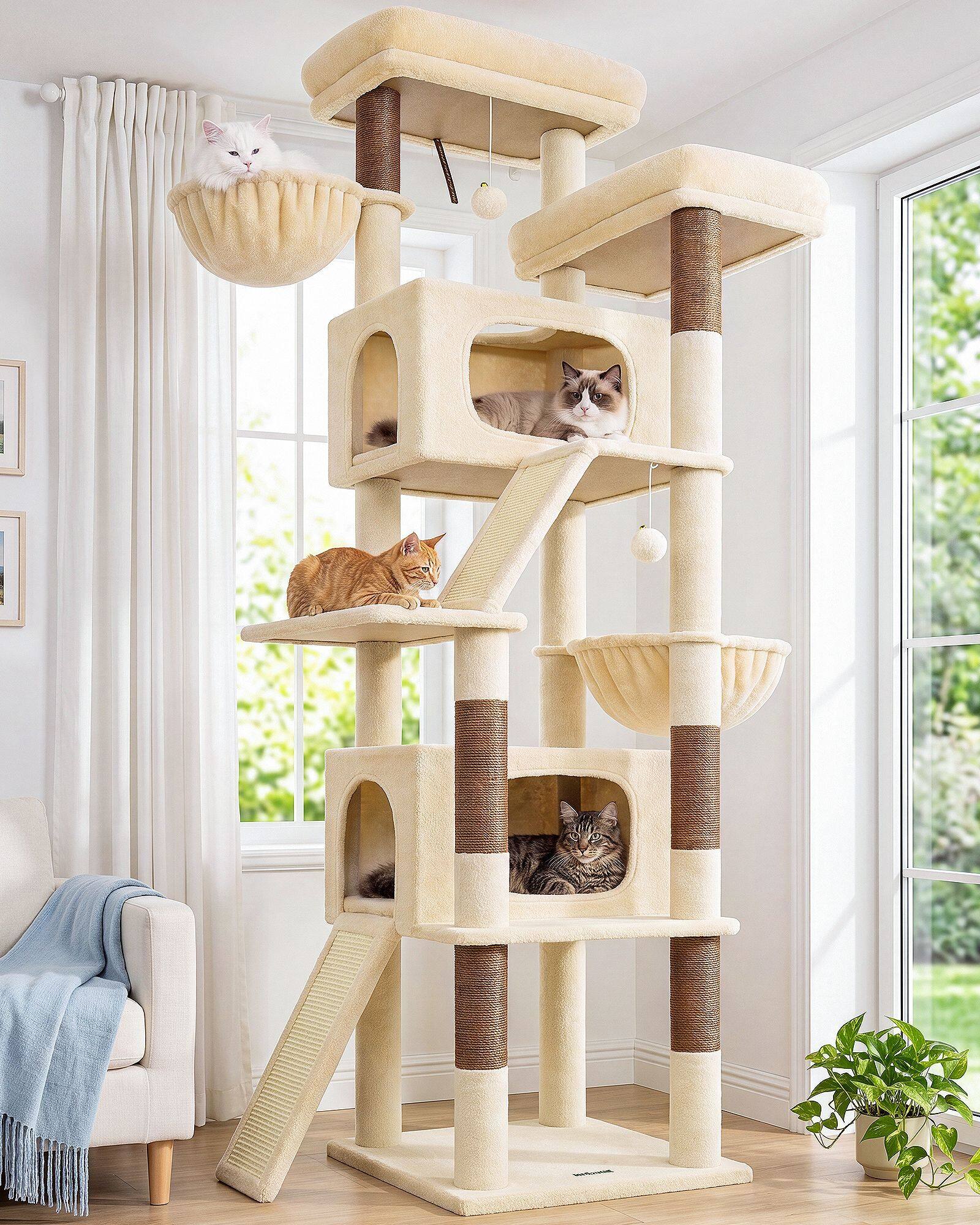
Stability is a feeling first. We can widen a base on paper and still lose cats if micro-movement shows up at the top perch. Owners decide with their hands and their pets’ feet long before they read dimensions. That lesson pushed us to keep mass low, widen footprints where launches concentrate, and treat “steady” as something you sense when a large cat hits a platform at speed—not a single static measurement.
Neutral is not lazy. Beige and soft grey won because they solve real matching problems in open-plan North American and European homes—not because we lack imagination. Loud color still has a place; it just cannot be the only story when the tower must live beside sofas, bookshelves, and dinner tables. We learned to edit color the way we edit silhouettes: fewer shouting elements, more calm belonging.
Platforms are bedrooms. A cat tree fails when perches are sized for photos, not for turning around. Large breeds taught us that lesson repeatedly in 2024. Wide landings, staggered heights, and edges that forgive grooming matter more than an extra decorative tier nobody uses. When we ignored that, cats voted with their feet—and returned to the couch.
Materials must survive Tuesday. Plush that shines in a spotlight but mats by Wednesday is not upholstery logic—it is pet-aisle logic. We discarded more swatches than we shipped, not because we enjoy waste, but because daily traffic exposes pretenders quickly. Sisal placement followed the same honesty: put scratch surfaces on routes, not on symmetry.
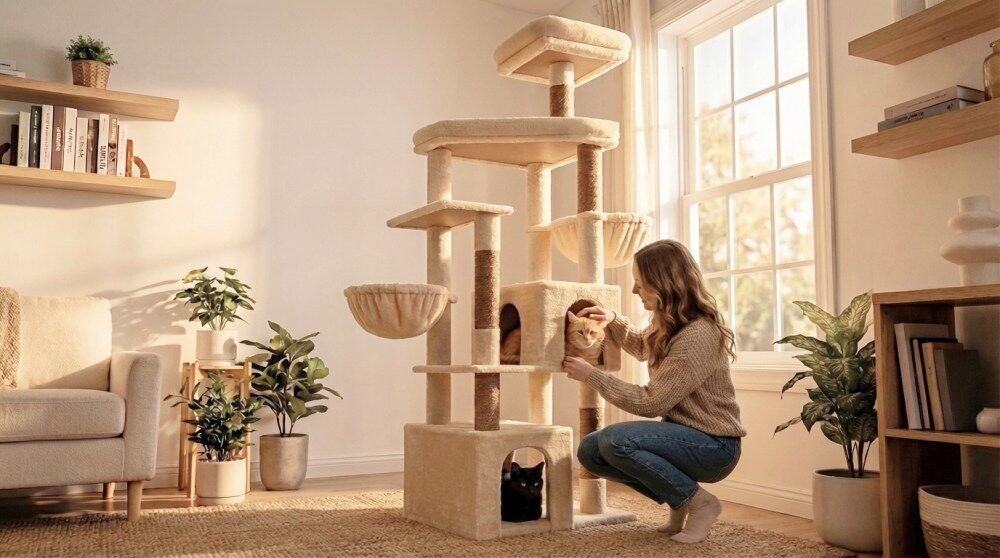
Editing beats decorating. Removing faux branches and molded paw shapes did more for living-room acceptance than any new attachment we prototyped. Families do not need another novelty; they need a tall object that looks like it belongs after the novelty wears off. Globlazer’s direction toward furniture-style proportion came from that edit, not from adding more.
Modular thinking is spatial, not numerical. Multi-cat homes do not need more towers—they need better routes. Staggered platforms, separated climbs, and mid-level rests that break sightlines reduced evening tension more than stacking identical perches ever did.
Height must earn its place. We prototyped towers that looked impressive on day one and felt apologetic by month three—too narrow, too loud, too dependent on a single heroic leap. Large-family designs now ask whether a climb feels repeatable at 10 p.m. on a Tuesday, not only whether it photographs well at noon.
We are still learning. But these lessons are the ones we will not argue with in 2025. They showed up in returns conversations, in late-night climbing patterns, and in the quiet moment when an owner stops bracing the tower with one hand. That is the bar we are carrying forward—not perfection, but honesty about what cats and rooms actually need.
New Arrivals
Fresh designs, new colors, and limited releases for modern cat homes.