
The Evolution of Global Cat Furniture Retail
Global cat tree retail did not change overnight—it changed channel by channel, region by region, as shoppers learned to judge tall structures the way they judge furniture: proportion, surface calm, and whether the object survives a living room photo without looking like a temporary import from the pet aisle.
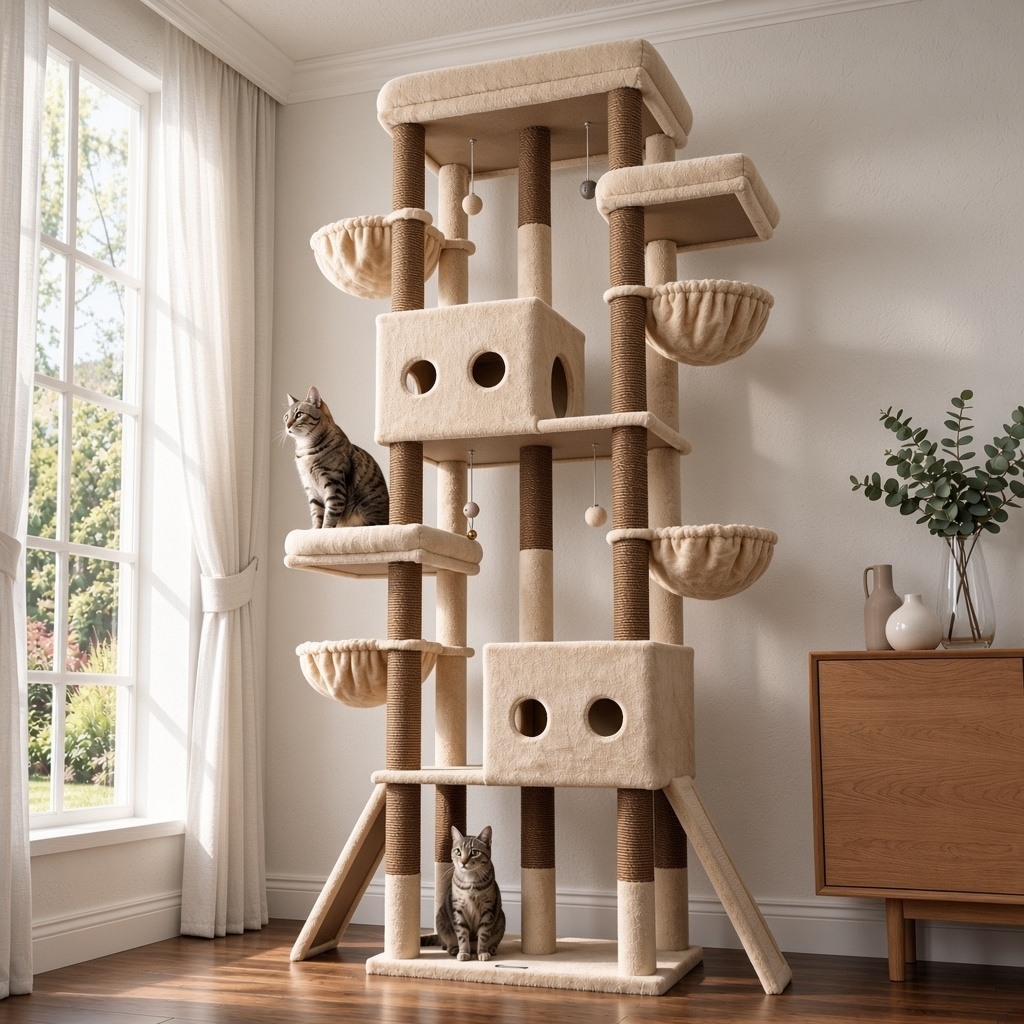
Early pet retail rewarded bright colors and compact footprints. Towers were impulse objects beside litter and bowls—useful, replaceable, rarely styled. Modern retail increasingly rewards furniture-style silhouettes that can cross aisles: neutral towers beside home decor, not only beside chew toys. Online discovery accelerated the shift because listing photography became the primary showroom.
Close-up texture, assembly clarity, and stability cues now matter as much as hero height in thumbnails. A 78-inch silhouette that wobbles in a customer’s first assembly video loses the decor argument before the cat ever climbs. Retail buyers respond with documentation requests, consistent neutral colorways, and packaging that protects edges through long transit—margin protection dressed as operations.
Three regional expressions
North American open plans often favor room-scale height with neutral palettes—towers that claim vertical space without spreading wide across already busy floors. Briefs ask for beige, dark grey, and light grey families that match existing upholstery lines. European assortments lean toward material restraint and matte textures that read sophisticated in smaller living rooms where every object is visible. Compact markets such as Japan push slim, tall footprints where height replaces floor spread and carton discipline is part of the value story.
Across regions, the through-line is design literacy. Consumers compare pet brands to home brands they already trust. They notice when plush turns shiny after a month, when sisal frays unevenly, or when a neutral drifts between batches. Retailers translate that literacy into fewer loud SKUs and more programs built for repeat placement.
From assortment depth to program discipline
The next retail era is not more SKUs—it is better SKUs: fewer novelty shapes, more towers engineered for daily trust. Marketplace algorithms reward return rates and content consistency; physical chains reward open-shelf Customer Stories that do not reset every quarter. Both push suppliers toward modular families where a flagship refresh—like an 80-inch autumn line—extends a neutral system instead of inventing a new visual language.
Omnichannel fulfillment changed damage economics. A Globlazer tower that arrives with crushed corners or confusing kitting becomes a decor purchase that never starts. Global retail evolution therefore includes carton engineering, labeled hardware bags, and instruction flows that respect customers who assemble at 9 p.m. beside a sofa they already chose carefully.
B2B buyers increasingly audit engineering credibility alongside margin: base proportion, post layout, replaceable wear parts, and material traceability when shoppers ask hard questions. The supplier who answers with documents—not adjectives—wins repeat programs.
Globlazer sees global retail evolving toward cat furniture that behaves like furniture in the store, in the box, and in the room. The countries differ; the expectation converges: calm surfaces, honest structure, and towers families are willing to leave in frame when the season changes.
Direct-to-consumer brands taught shoppers to expect assembly videos, hardware clarity, and neutral consistency—standards that wholesale programs now import even when the box carries a retailer logo. The global baseline rose together.
Discount channels once rewarded loudest color at lowest price. As open-plan homes and content-driven discovery spread, even value tiers face decor pressure: towers must survive thumbnails, not only price tags.
Seasonal resets challenge legacy assortments. Autumn flagship refreshes—80-inch neutrals with disciplined palettes—work because they extend a system buyers already merchandised, rather than forcing a new story every quarter.
After-sales economics reshaped buyer scorecards. A program with beautiful margin on paper but high damage assembly tickets gets cut regardless of hero photography. Global retail evolution is therefore operational: carton size, corner inserts, labeled steps.
Sustainability questions moved from press releases to purchase orders. Traceable sisal, documented adhesives, and replaceable wear modules answer shopper emails retail teams forward to suppliers.
Looking forward, convergence beats divergence: different countries, same living-room test. The Globlazer programs that win shelf space behave like furniture in transit, in assembly, and in daily climb traffic—calm surfaces, honest structure, neutrals that survive the next textile refresh.
Independent boutiques and marketplace giants now agree on one uncomfortable truth: the second product is never cheaper than the first if the first returned damaged or wobbly. Global cat furniture retail matured when repeat purchase became harder to earn than first click.
“””
Pop-up and marketplace storefronts introduced another variable: towers must survive repeated handling by staff who are not pet specialists. Training materials now include stability cues and neutral handling—retail evolution includes the employee who assembles the floor sample on Sunday night.
Globlazer assortments are increasingly planned as multi-year neutral platforms rather than annual costume changes. That planning horizon is the clearest sign cat furniture retail has joined home decor calendars, not pet impulse cycles.
The shift is complete when buyers schedule tower refreshes beside textile programs—not beside litter promotions.
New Arrivals
Fresh designs, new colors, and limited releases for modern cat homes.