
Stability Testing Standards for Modern Cat Furniture
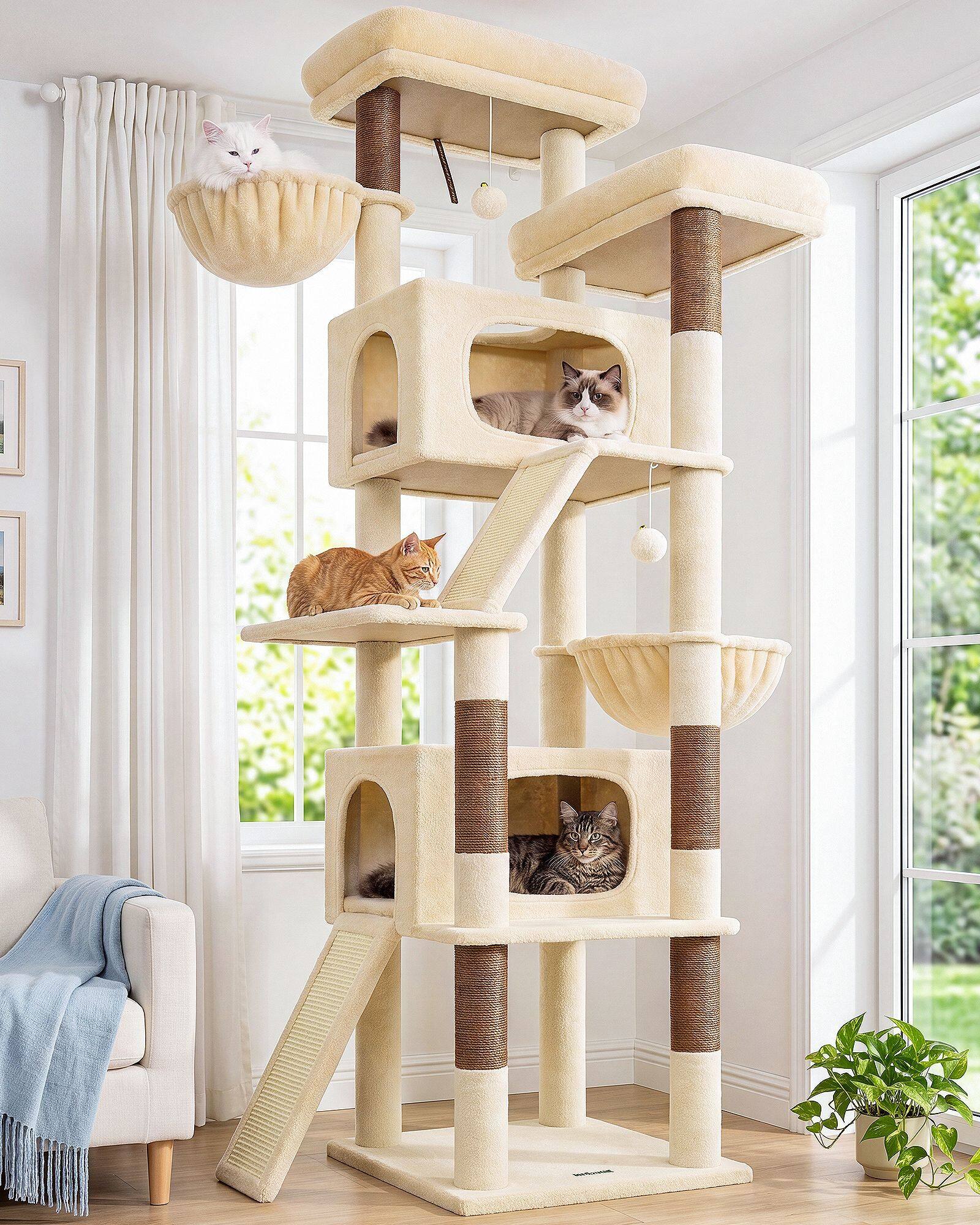
Stability on a modern cat tree is not a single measurement—it is a set of behaviors families feel before they read numbers. At Globlazer we built internal stability evaluation around that reality: base plantedness, mid-post reassurance, and how the structure behaves when load moves up the tower during ordinary climbing, not staged demos.
Our protocols start with footprint relationship—how base size relates to visual height—and mass placement that keeps leverage manageable. We evaluate micro-sway at the mid-post with hand pressure, not to chase laboratory scores, but to mirror the check many owners perform instinctively when they first assemble beside the sofa.
That instinct is data. If a tower fails the living-room hand check, no spec sheet rescues the decor promise.
Load scenarios that match real homes
We run loaded mockups that approximate daily use: wide platforms weighted for large indoor cats, sisal posts torqued to production spec, and transitions where two cats might share a landing. The question is always the same—does the climb still feel trustworthy higher up?
Joint tolerance and connector discipline are part of the standard. Modular towers fail in the field when interfaces loosen under repetition—moves, seasonal refreshes, re-tightening after shipping vibration. Our evaluation includes repeat motion on post-to-platform locks and base hardware, because stability is a lifecycle property, not a day-one photo.
We also document outcomes for retail and OEM partners: what was evaluated, which interfaces were reinforced, and how replaceable wear parts preserve calm feel after months of scratch traffic. Transparency here reduces after-sales surprises without turning a design article into a lab report.
Surface interaction matters too. Plush compression and sisal fray patterns change how owners perceive wobble even when structure is sound. Standards therefore include rest-platform firmness and scratch-zone wrap integrity—not only frame metrics.
These standards inform upcoming tall lines across the Globlazer catalog. The outward sign is simple: towers that feel calm when touched, and cats that keep using height because the structure earned their trust on day two, day thirty, and long after the unboxing video ends.
Carton and assembly influence stability outcomes more than buyers admit. A tower tightened correctly on a flat living-room rug behaves differently than one rushed on carpet pile at midnight. Our standards include assembly-sequence checks because owner behavior is part of the product environment.
We benchmark against tall neutral programs where two-cat homes are common—shared landings, staggered scratch sessions, occasional leaps from sofa arms. Evaluation notes capture those patterns so retail partners understand why base mass and mid-post discipline are not interchangeable.
When a line fails evaluation, we fix interfaces—not marketing copy. That discipline is why upcoming catalog refreshes inherit the same stability language families already trust in store.
Retail partners receive summary sheets they can share with customer teams without turning stability work into jargon. Plain language matters because the living-room hand check is universal.
“””
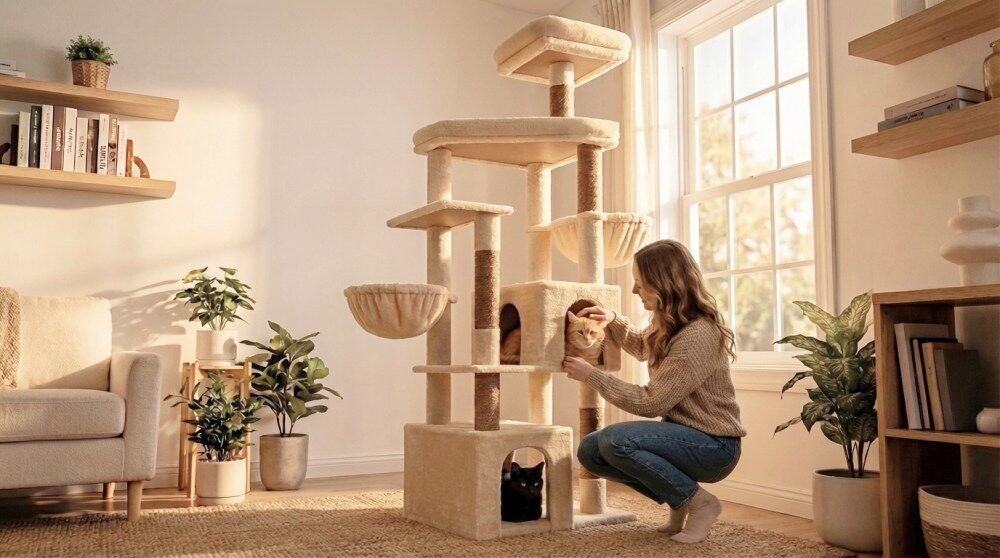
We also photograph evaluation outcomes beside everyday furniture—sofa arms, rug edges, window sills—because real homes introduce contact points no lab fixture models. Context photos keep standards grounded in rooms, not racks.
New Arrivals
Fresh designs, new colors, and limited releases for modern cat homes.