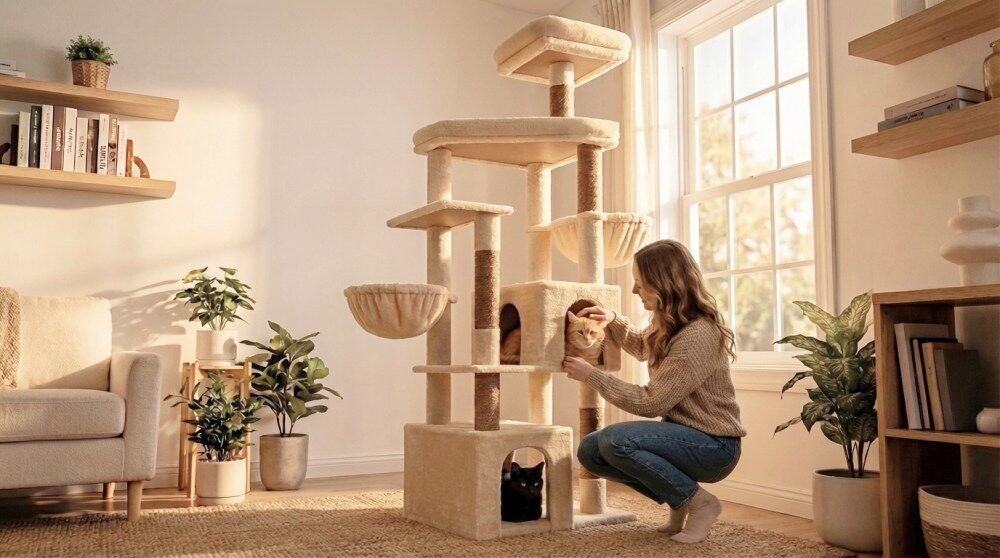

Why Height Matters More Than Floor Space
Ask a renter what they are short on, and square footage is the usual answer. Ask a cat what it is short on, and the answer is often territory—not in acres, but in routes, perches, and places to scratch that are not the sofa.
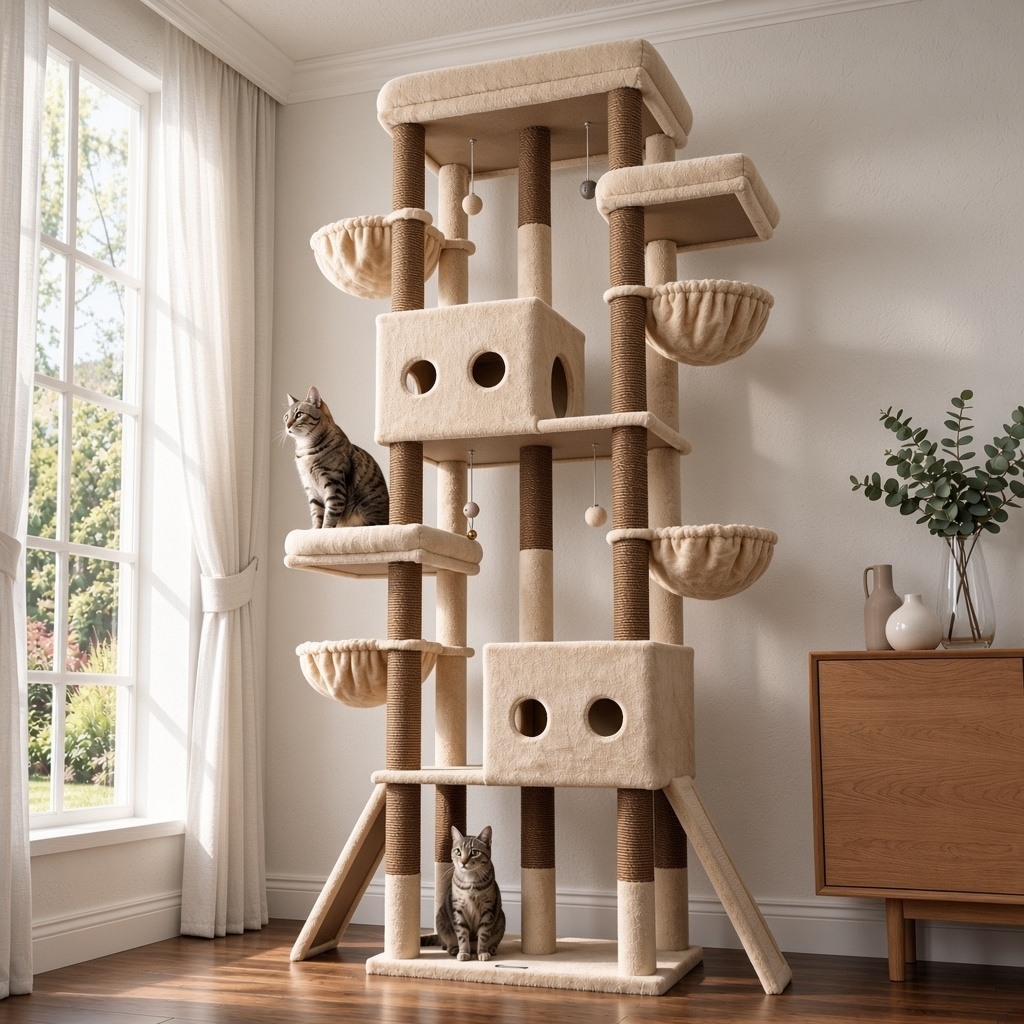
Those two shortages point in different directions. Humans spread outward when they can. Cats stack upward when they must. That is why height increasingly wins the design argument in compact North American homes: the same floor tile can host one sprawling platform or three usable levels if the structure climbs instead of spreads.
At Globlazer, we sketch towers beside rug outlines before we sketch elevations. Red tape marks the walkway from kitchen to desk; blue tape marks where a cat tree can borrow height without stealing steps. The discipline sounds simple. It is not easy—because every inch of footprint removed from the base has to be earned back with stability, not wishful thinking.
Spatial economics in a one-bedroom
In many cities, renters live with compact footprints. A wide, low cat condo consumes precious walkway. A tall, slim tower beside a bookshelf can add a scratch column, a mid perch, and a top rest while keeping the path clear. Industry Updates observation on indoor enrichment still centers vertical space, scratching, and retreat; the efficient way to deliver all three in tight quarters is rarely more floor—it is better altitude.
Height buys layers without sprawl. Three honest platforms stacked above a modest base can offer entry sisal, a turnaround deck, and a window-line rest on the same square inches that a single wide bed would monopolize. Cats read that stack as territory with chapters; owners read it as furniture that stayed in its lane.
Placement is part of the math. A tower tucked beside cabinetry or a sectional claims vertical real estate that floor furniture cannot use. The cat gains lookout; the human keeps the rug. When we trial slim silhouettes in studio layouts, the winning mockups are rarely the shortest—they are the ones that add levels without widening the shadow on the floor.
When height must earn trust
Height without stability is a liability. Cats abandon towers that shift on the first jump; owners blame preference. Veterinary guidance on enrichment means nothing if the structure wobbles. At Globlazer, we treat vertical efficiency as a package: slim silhouette above, honest base below, platforms sized for real turns—not for catalog hero shots.
We widened footprints as a language decision, not a patch. A few more inches at the floor let the climb above stay furniture-scale. Mass tucked into the base plate plants the tower before anyone reaches the second level. Cats do not read engineering drawings; they read whether the first leap feels answered.
Open-plan rentals sharpen the argument. There is no spare room to hide a bulky tree. The object in the living area must respect sightlines and social space while still offering altitude. Neutral surfaces and vertical rhythm help a tall structure read as architecture instead of equipment—because height only works when humans agree to live beside it.
Floor space is finite in apartments. Height is negotiable if the tower is well designed. The best small-room compromises are not smaller cats—they are smarter vertical furniture. That is the bet behind every slim Globlazer line we develop: inches of altitude purchased deliberately, footprint kept honest, routes mapped the way cats actually commute.
When owners describe the outcome, they rarely mention square footage. They mention the cat finally using the top perch—and the walkway still feeling open. Height mattered more than floor space long before we put it in a headline. We are just catching the brief up to the behavior.
New Arrivals
Fresh designs, new colors, and limited releases for modern cat homes.