
How Multi-Cat Homes Influence Product Design
In a multi-cat home, the problem is rarely “not enough cat furniture.” It is “not enough ways to share the same room without sharing the same spot.”
Jamie rents a two-bedroom in Austin, TX with an open kitchen-living layout and two indoor cats: a bold tortie named Rue and a quieter grey tabby, Silas. Rue wants the top perch for the street view. Silas wants a mid-level platform near the window where afternoon sun pools on the floor. When those preferences collide, tension looks like a pause, a stare, and a cat that quietly leaves the room.
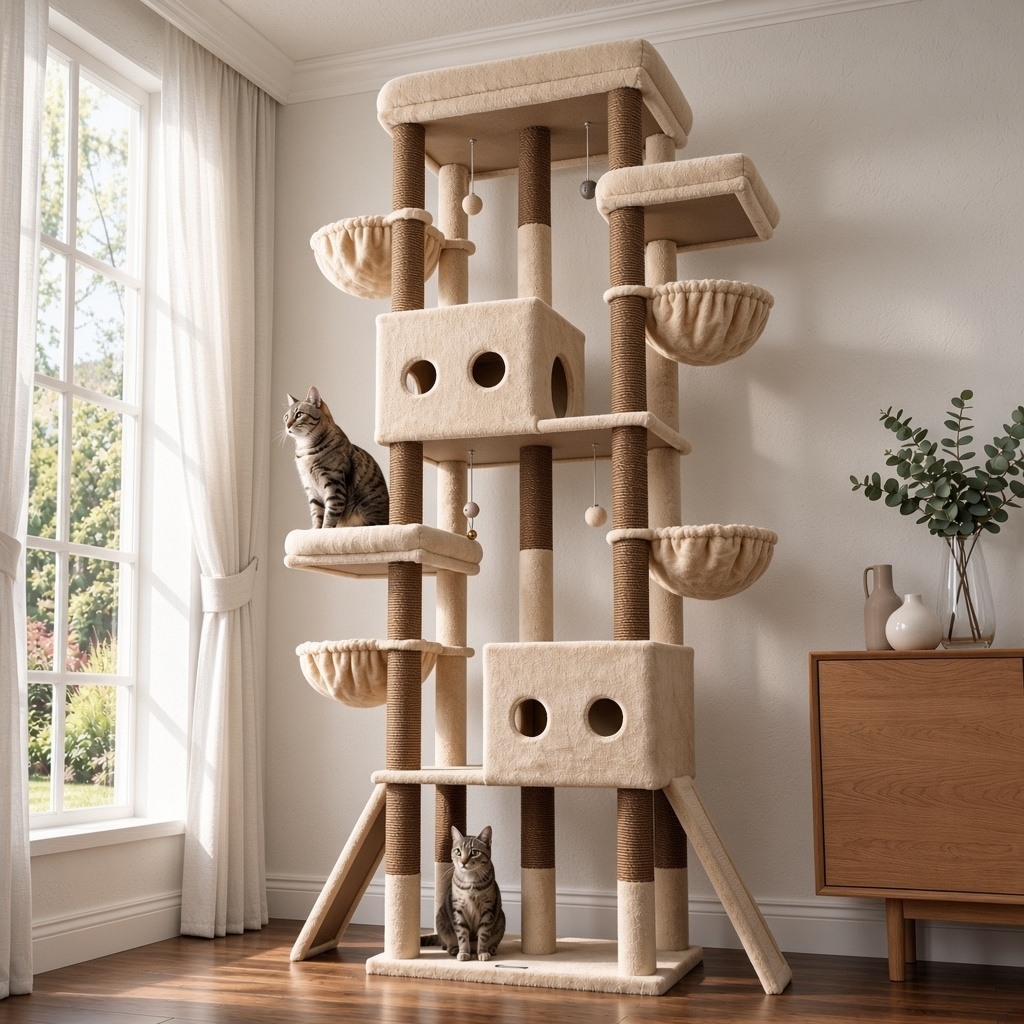
This is why multi-cat design starts with vertical separation. Different levels create different addresses in the same footprint. Cats can rest above, pass below, and avoid constant face-to-face negotiation. Jamie’s old single-post tower forced both cats to argue over one throne; the living room felt smaller than its square footage.
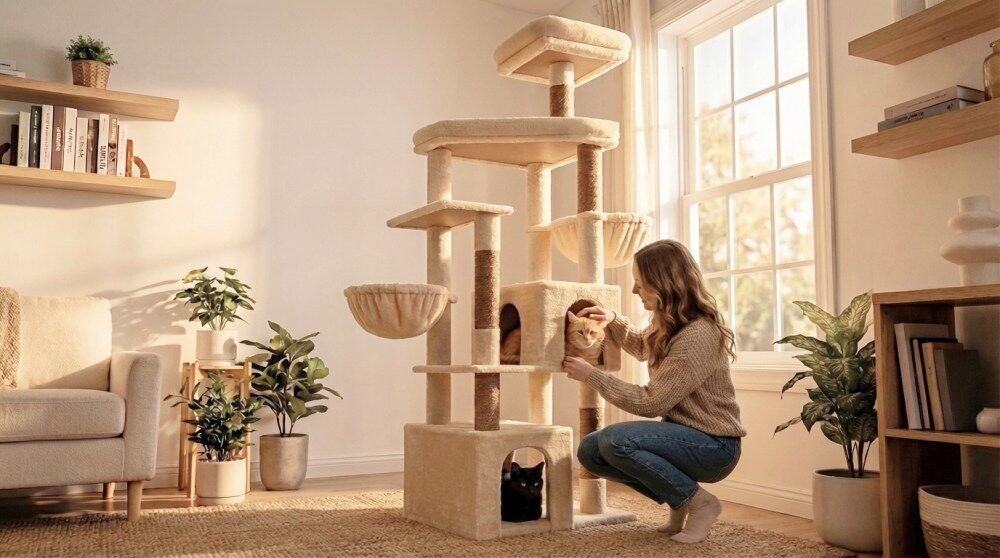
Routes matter as much as platforms. When a Globlazer cat tree offers more than one way up—a sisal column on one side, a stepped platform on the other—traffic loosens. Rue can climb while Silas stays settled. Shared space becomes calmer when movement has options instead of bottlenecks.
Spacing between perches is part of the story too. If platforms sit too close, a resting cat becomes a landing hazard for the jumper. We widen gaps on multi-cat layouts so a mid-level nap does not turn into an accidental shoulder check. That detail rarely shows in catalog photos, but it shows in fewer startled leaps at 11 p.m.
Base stability carries the social contract. A multi-cat tower has to stay steady under unpredictable timing—two cats moving at once, jumping from different directions, treating the structure like a small vertical neighborhood. Jamie noticed the difference when the sofa stopped vibrating during chase games that ended on the tower.
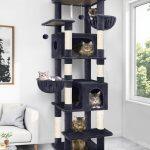
Color neutrality helps as well. A tall unit in Dark Grey reads as room architecture instead of a toy pile, which matters when you already have two personalities on display. The tower becomes shared infrastructure, not a prize to defend.
Feeding time used to spark the old conflicts. Rue would finish first and camp the top perch like a toll booth. With separate mid levels and a secondary sisal route, Silas could eat, climb, and nap without crossing Rue’s sightline. Jamie described it as two apartments stacked in the same corner—same rent, fewer stare-downs.
Scratching zones matter for the same reason. When both cats share one post, the shreds become a scoreboard. Dual columns—one wrapped, one plush-adjacent—let each cat mark territory without erasing the other’s work. That is not luxury; it is how shared rooms stay legible to the species that actually lives there.
A good cat tree does not force a hierarchy. It gives cats enough levels and routes to write their own. For Globlazer, multi-cat homes are not a niche—they are the reason perch spacing, dual paths, and base mass get debated on the workshop table long before a sku ships. Every extra route is a way to keep two temperaments in one peaceful wide shot.
New Arrivals
Fresh designs, new colors, and limited releases for modern cat homes.