
Designing Cat Furniture for Design-Conscious Homes
Jon and Eli moved into a smaller apartment in Austin with one non-negotiable rule: nothing ugly in the living room photo. Two cats, one window wall, and a kitchen sightline that made hiding impossible. Their first cat tree lasted three weeks—too loud, too toy-like, returned with the note every design-conscious buyer uses: does not fit the room.
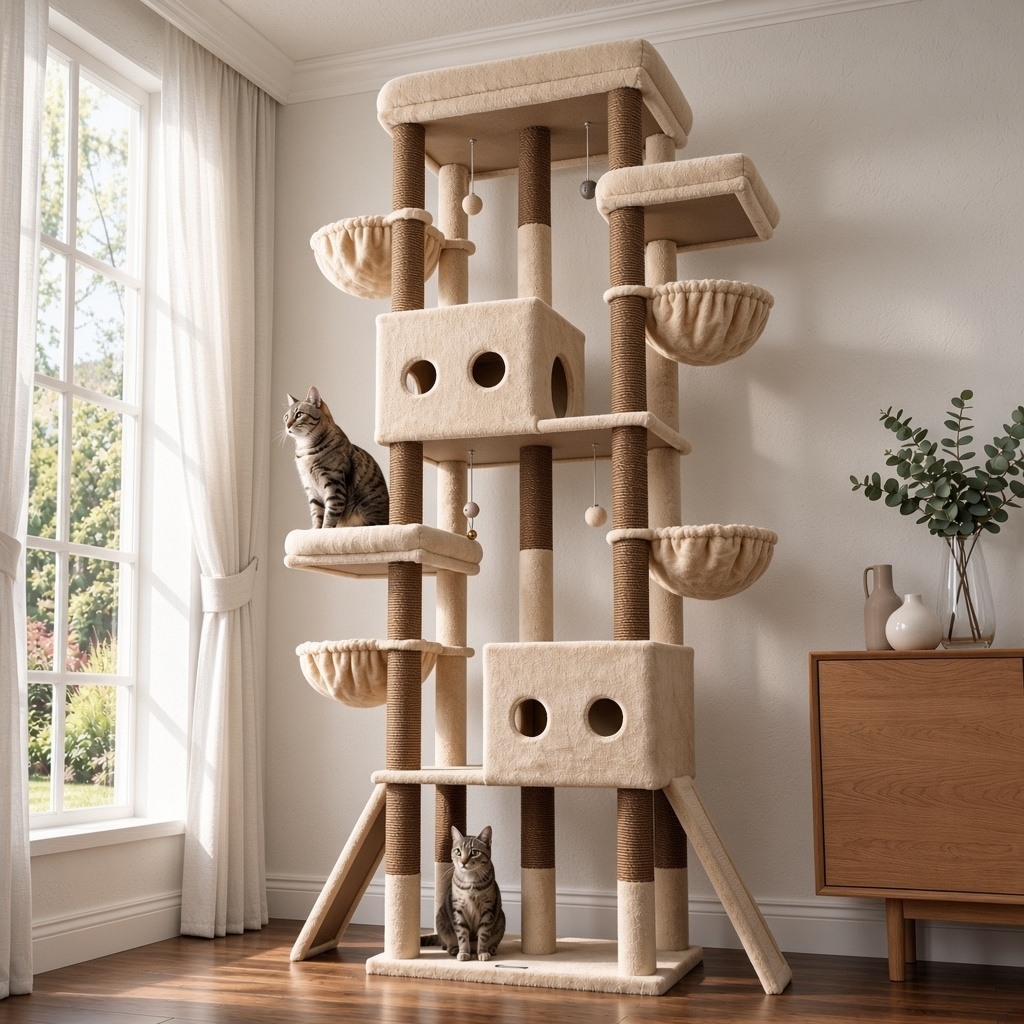
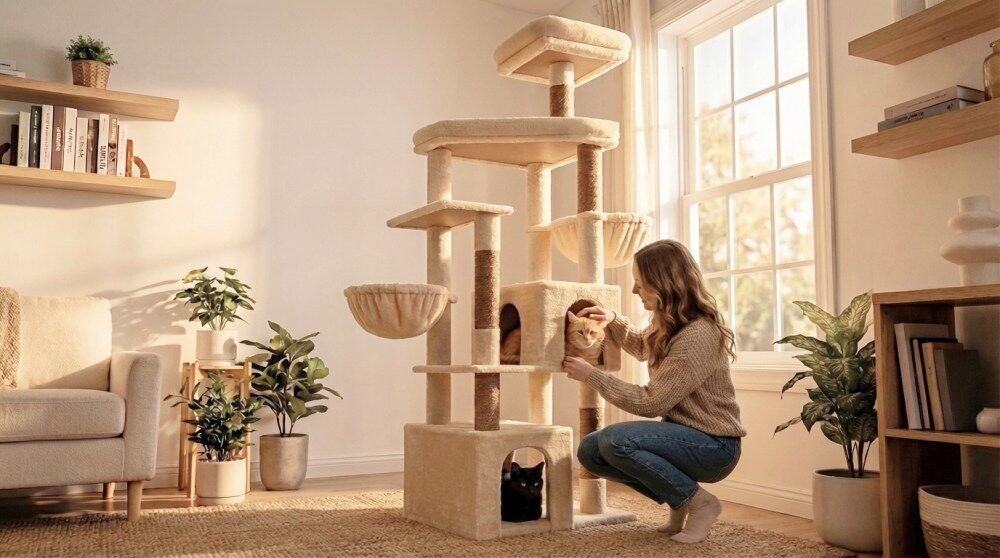
The replacement decision was closer to furniture shopping than pet shopping. They measured height against a bookshelf, chose beige and soft grey tones already repeated in the rug, and prioritized mid-tower landings wide enough for a large cat to pause without drama. Placement mattered as much as SKU: beside the window for lookout, off the main walkway so daily routes stayed clear.
Design-conscious homes do not hide pet gear—they specify it. Jon traced the afternoon sun patch on the floor before choosing where the base would plant. Eli pushed on each post the way you test a floor lamp—because wobble reads as cheap in open-plan rooms, even when a cat still climbs. They wanted vertical territory that behaved like the shelving unit already in the frame: calm silhouette, honest materials, no cartoon branches.
Weeks later, the tower reads like part of the apartment’s vertical layer—not a compromise. The cats use the climb line every morning—scratch at the arm of the sofa, pause mid-level, settle under the glass. The humans stop thinking about where to hide the cat stuff when friends visit. The living room photo rule survived because the tower shared the same edited palette as throws and the oak TV stand.
That is what designing cat furniture for design-conscious homes really means: structures honest enough to plan upfront, stable enough to trust near seating, neutral enough to survive the next rug refresh. Globlazer builds for households that treat pet verticals as room infrastructure—not weekend novelty. When the tower finally fits the room, both species get a calmer daily script.
Jon and Eli’s second test was social, not technical. Friends visited for a housewarming—no rushing to close doors, no jokes about “the cat corner.” The tower sat in the window frame like it had been there since lease signing. That is the bar design-conscious buyers describe, even when they do not use design vocabulary out loud.
They also measured replacement logic. If a scratch post wore out, they wanted a part—not a new loud tower. Modular thinking mattered as much as beige tones because design-conscious homes punish visual chaos when households change. Globlazer modular families aim at exactly that intolerance for mismatch.
Jon said the quiet win was forgetting the tower was “pet stuff” at all—it became another vertical layer in a small apartment that had no spare corners left to waste.
Eli kept a photo of the living room on his phone where the tower, the rug, and the window wall share one calm frame. That image is the whole brief for design-conscious cat furniture—nothing hidden, nothing apologizing.
Design-conscious homes reward that honesty with longevity—the tower stays because the room still likes it.
New Arrivals
Fresh designs, new colors, and limited releases for modern cat homes.