
What Japanese Cat Owners Prefer in Compact Spaces
In Japan’s dense cities, compact living is not a niche. It is a normal constraint—and it shapes what people keep in the room. For cat owners, that includes the cat tree.
When floor space is limited, the question changes from “How many features can we add?” to “How does this object coexist with daily life?” That shift is not unique to Tokyo, but Japanese interiors make the answer visible: fewer objects, calmer palettes, furniture that earns its place before it earns its features.
Globlazer sells across North America and Europe, yet we study compact Japanese preferences because they stress-test spatial intelligence. If a cat tree can behave in a one-room layout with low sightlines and strict walkways, it usually behaves everywhere else with room to spare.
Compact does not mean bare. It means intentional.
Japanese small-space interiors often favor calm palettes, low visual noise, and pieces that can shift roles. The room is treated like a system: more order, more attention to how light crosses the floor, less tolerance for objects that shout.
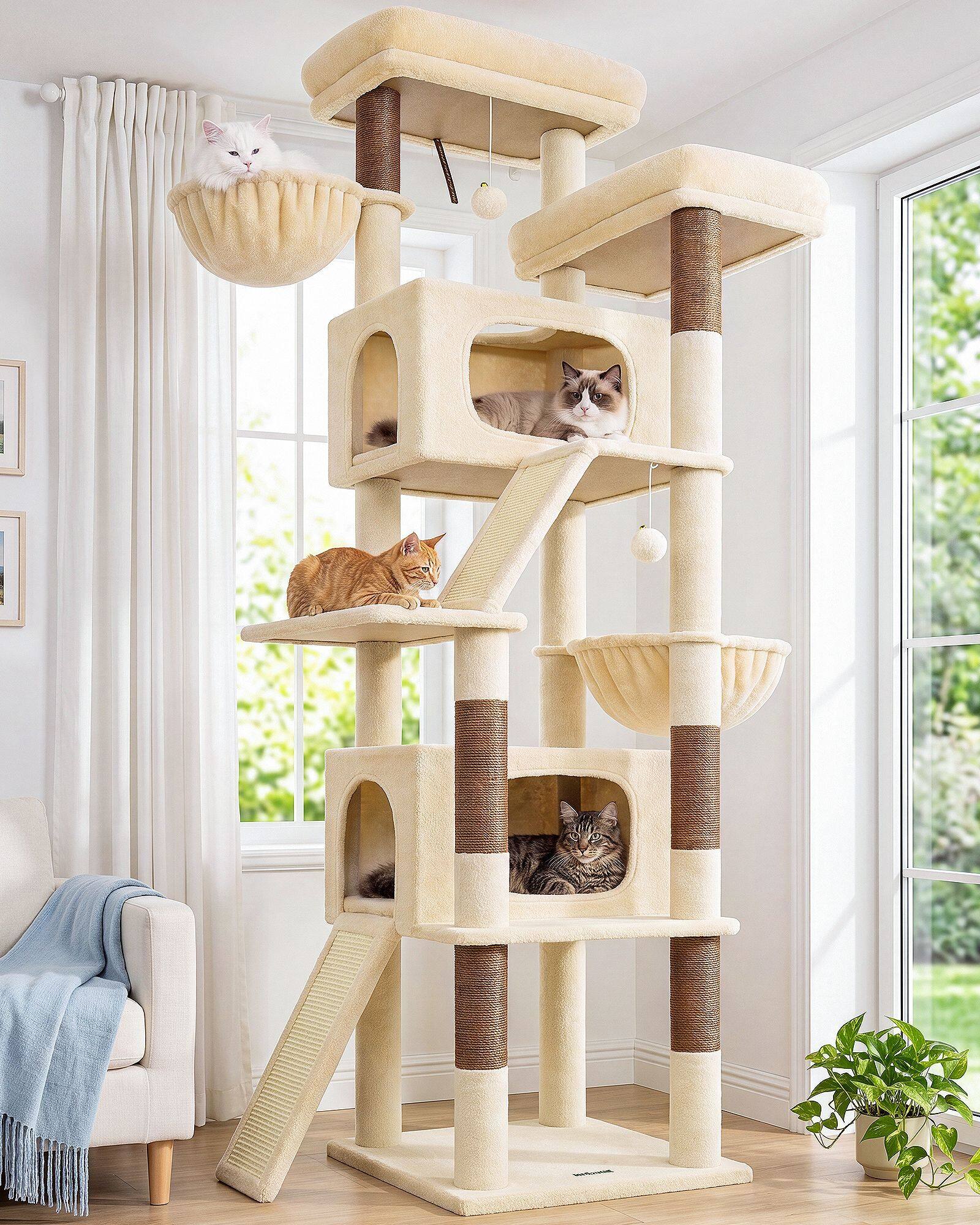
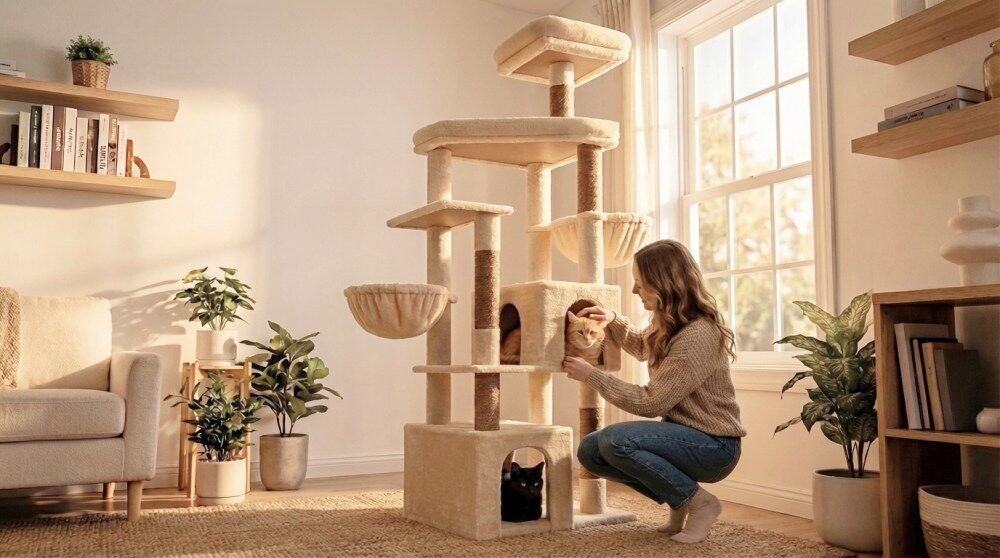
In that environment, a cat tree is easier to accept when it looks edited—simple silhouettes, neutral tones, surfaces that feel closer to interior textiles than to novelty carpet. Owners describe the ideal tower in domestic language: it should disappear into the corner until a cat is on it, then read as deliberate, not accidental.
Multi-function pressure shows up quietly. A platform that is also a scratch surface. A slim column that does not block the only path to the balcony door. Storage-minded households punish towers with exaggerated bases or dangling ornaments that collect dust. Preference here is maintenance math as much as aesthetics.
Vertical territory is the efficiency advantage
In compact homes, height is the most affordable way to add cat territory. A slim vertical structure can offer multiple levels without consuming the walkway. But the slim part matters: if the base becomes too wide, the object stops being a solution and becomes a new problem.
Preferences become specific under that pressure: stable structures, tidy footprints, platforms sized for turning without looking oversized. Owners want the room to stay walkable, and they want the cat to have a clear route—without turning the home into equipment storage.
We apply those lessons in footprint sketches before color swatches. Entry sisal aligned to door paths. Mid decks wide enough for a shoulder turn, not a photo collage. Top rests placed where window light already exists so the tower does not fight the apartment’s natural rhythm.
For Globlazer, Japan is a reminder that good cat trees are not defined by maximum volume. They are defined by spatial intelligence—vertical routes, calm design, and the discipline to keep what matters and remove what does not. Compact owners are not asking for less cat function. They are asking for function translated into quieter grammar.
We borrow one more habit from compact Japanese layouts: repositioning without drama. Towers that slide beside a cabinet after a furniture shuffle survive real apartments; towers that require a dedicated corner die in the first lease renewal. Owners in Tokyo-sized rooms treat mobility as kindness—to themselves and to the cat who must relearn routes when the sofa moves.
Sound discipline matters in thin-walled flats. A planted base that does not creak on landing keeps the tower in the living zone instead of exiled to a bedroom. Globlazer mockups get the one-hand push test beside the one-footprint test because hesitation travels through floors faster than marketing copy.
International perspective does not mean copying a single regional look. It means respecting a constraint arriving in every major city: less floor, more intention, and cat furniture that behaves like a long-term roommate rather than a weekend gadget. Compact Japanese preference is a stress test we pass in North American studios too—and that is why we keep studying it.
New Arrivals
Fresh designs, new colors, and limited releases for modern cat homes.