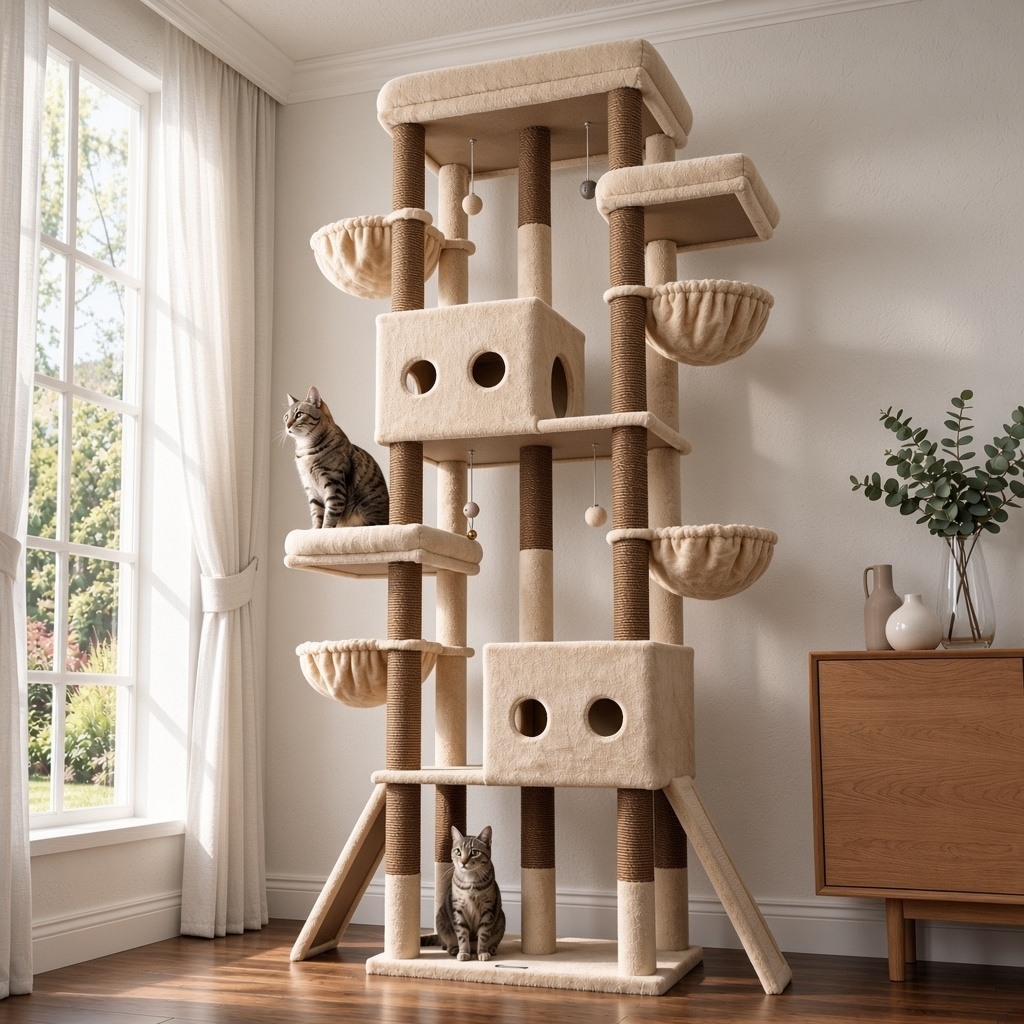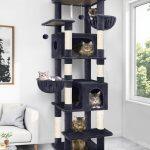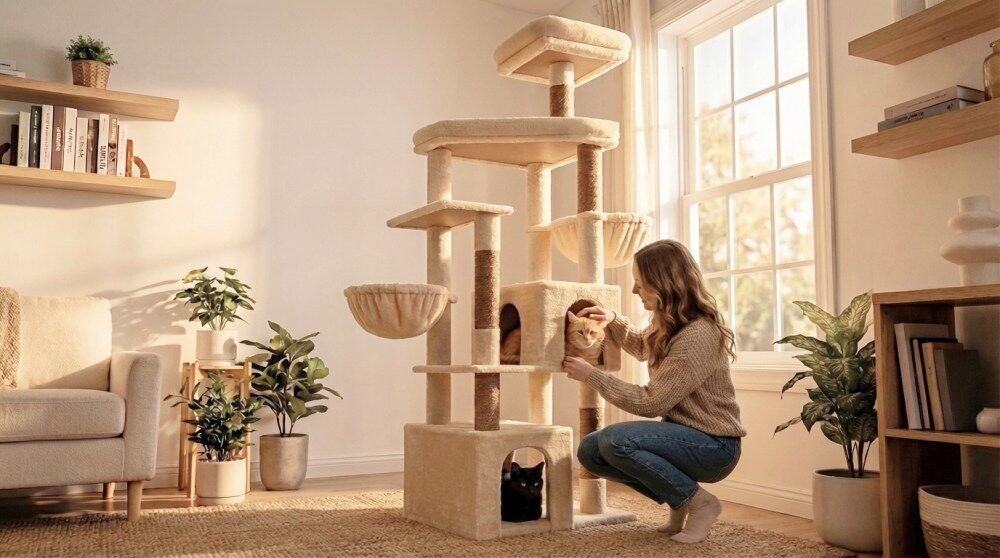

Understanding the Needs of Large Indoor Cats
When Theo—a Maine Coon mix in Minneapolis—stepped onto his first cat tree, the top perch greeted his shoulders the way a motel bed greets a tall guest: technically there, spiritually not. He used the sofa instead. Not because he disliked height, but because the perch did not believe in his size.
Large indoor cats are still indoor cats. They need vertical routes, scratching surfaces, and lookout points. But they read platforms with a stricter eye: can I turn around without hanging off the edge? Does the tower stay planted when I launch from the floor?
Theo’s owner replaced a narrow tower with a Globlazer structure built around wider rests and a base that extended beyond the post line—same footprint in the room, different grammar at the top. Theo took the highest level within a week. The difference was not motivation. It was fit.
Breed labels like Maine Coon or Ragdoll are shorthand for scale, not vanity. Large cats punish undersized perches faster than small cats punish tall ones. Understanding their needs means designing for turn-around room, honest weight distribution, and stability cats can feel in the first climb—not after a return window.
Height still matters. So does the sentence the structure whispers at the base: you are allowed to be this big up here.
New Arrivals
Fresh designs, new colors, and limited releases for modern cat homes.