
Why the Market Is Moving Toward Tall, Designed Cat Trees
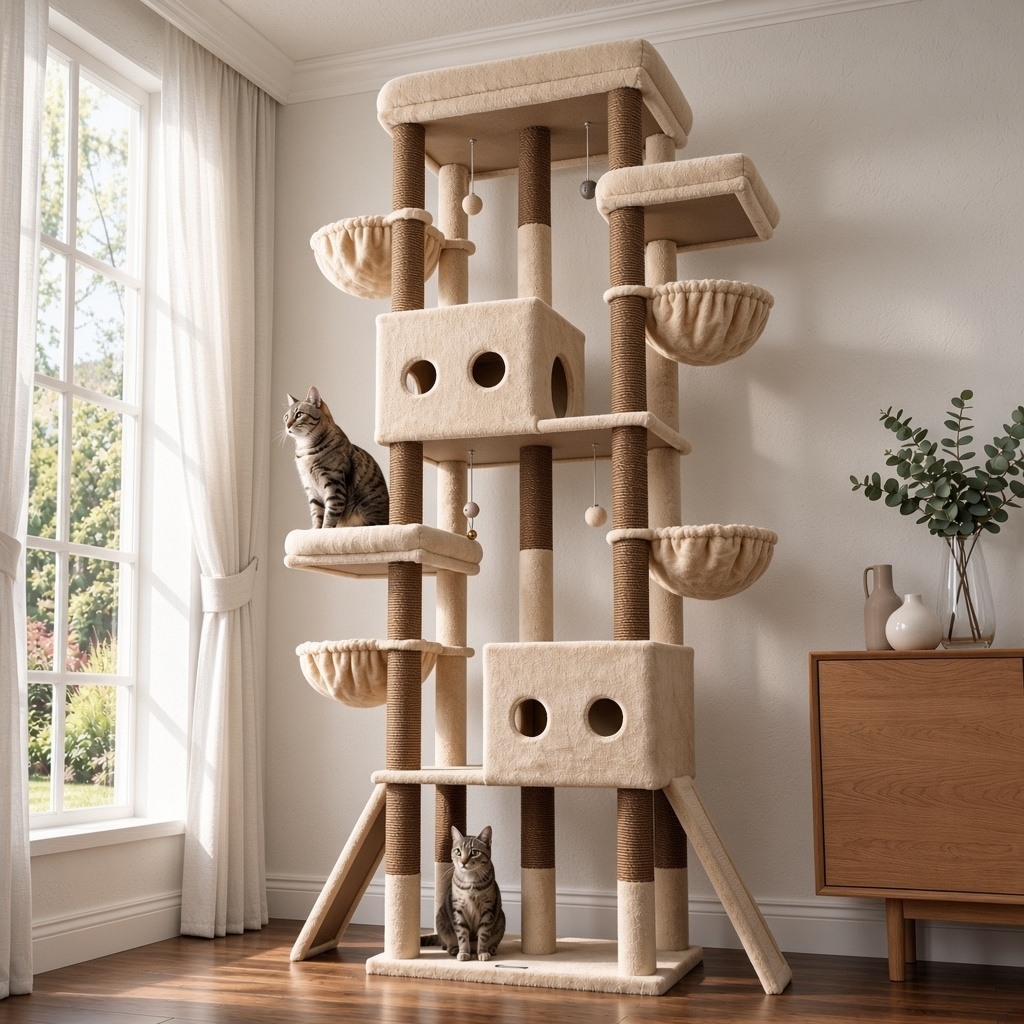
For years the default cat tree in many homes was small, loud, and easy to tuck into a corner where nobody had to look at it. That bargain is breaking. Industry Updates observation and retail floor resets both point the same way: shoppers are choosing taller, designed towers that hold vertical space the way a bookshelf holds books—not as an afterthought, but as part of how the room is composed.
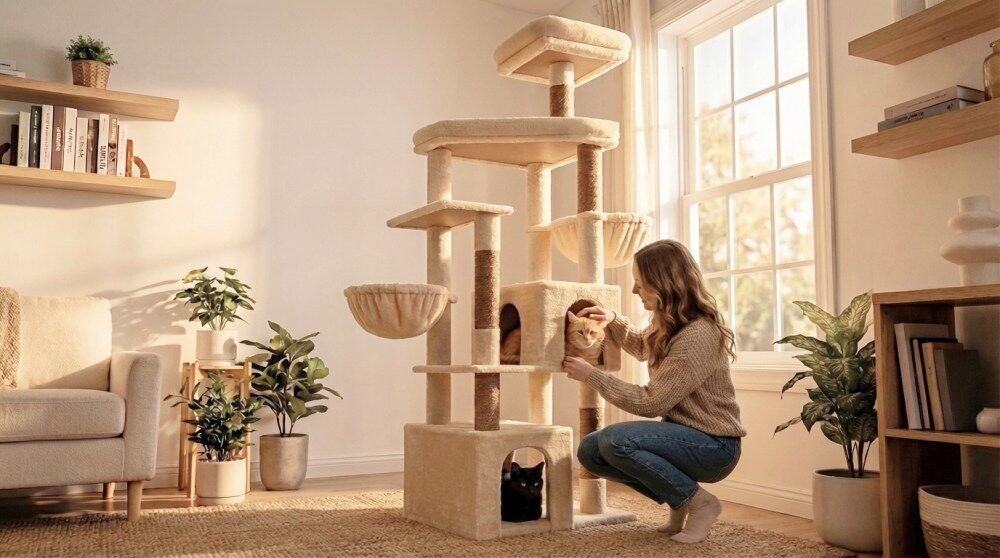
One driver is aesthetic. Open-plan rentals and owner-occupied living rooms share a low tolerance for visual noise. Neutral platforms, honest structure, and proportions that echo human furniture let a tower sit beside a sofa without becoming the joke of the photo. Retail assortments that once leaned on novelty shapes are making room for furniture-style silhouettes that can cross from pet aisles into decor conversations.
The other driver is behavioral, and it is less negotiable. Indoor cats still need height, lookout, and separate routes—especially in multi-cat homes where ground-level sharing creates friction. A short carpeted post does not answer that need for an active adult cat. Tall structures with wide landings and continuous climb paths turn vertical territory into daily infrastructure. When platforms feel narrow or wobbly, cats simply opt out; when landings feel confident, use becomes routine.
From corner utility to room-scale design
Design media and category research describe cat climbing furniture evolving from scratch-focused utility toward integrated living spaces—modular assembly, natural textures, and forms that respect modern interiors. That is not marketing language alone; it matches what Globlazer sees in product briefs: fewer requests for something small to hide, more requests for a tower that can live in the living room frame.
Room-scale height also changes how families think about footprint. A well-proportioned tall cat tree can deliver more enrichment per square foot on the floor than a wide, low condo of platforms. In compact urban units the preference may skew slim; in North American open plans the same logic often favors a neutral tower that claims height instead of spread. Vertical real estate is cheaper than floor real estate when the structure is stable.
Retail buyers reinforce the shift with assortment math. Tall neutral towers turn slower on markdown calendars because they photograph across seasons—beige beside summer linen, grey beside winter throws—without looking dated. Low novelty shapes tied to one color trend cycle age faster. The migration toward designed height is partly margin discipline dressed as design taste.
What changes when cats actually use the tower
Behavioral guides still recommend vertical territory for stress relief and territory sharing. The market finally caught up: products that look like furniture but fail on platform width get returned with room-fit language, not only cat refused. Shoppers now read stability cues—wide base, straight post rhythm, landing size—before they read color.
Manufacturers who treat height, stability, and surface calm as one design problem—not three add-ons—are aligned with where demand is already moving. The growth segment is no longer the cheapest compact post; it is the designed tower that earns placement next to human furniture. Families are not buying taller cat trees to impress guests; they are buying them because short alternatives stopped solving the daily climb, the window watch, and the quiet exit route when another cat occupies the rug.
That does not mean every household needs the tallest product on the shelf. It means the center of gravity in the category shifted. Tall, designed cat trees are becoming the reference object—the piece other SKUs get compared against for proportion, palette, and whether the living room still feels intentional.
Demographics sharpen the picture. More renters now treat a two-year lease as long enough to invest in room-scale pet furniture. Owners who renovated during recent years often upgraded the sofa before the scratch post—and noticed the mismatch immediately. Tall neutral towers bridge that gap without demanding a full remodel.
Category data also shows attach rates rising on wide-base towers in multi-cat households. Vertical routes reduce ground-level stare-downs; wide landings let two adults share a sun patch without renegotiating the rug. Retail staff report fewer this is too big conversations when they demonstrate climb paths instead of footprint alone.
Manufacturing scale followed demand. Neutral palettes simplify SKU photography across regions; furniture-style posts and platform proportions reuse engineering from earlier Globlazer tower programs. That continuity lowers the risk for buyers adding a fourth height tier to an aisle that used to carry only compact condos.
Social discovery amplified the shift without turning News into endorsement-style copy. Lifestyle frames reward products that survive daylight—beige beside linen, grey beside oak—so designed height travels in feeds that utility corners never reached. The market move is not hype; it is households refusing to hide climbing infrastructure anymore.
For Globlazer, the brief is clear: fewer towers meant to disappear, more towers meant to hold a wall like a bookcase. That is the market direction in one sentence—and the design work filling the second half of the year.
New Arrivals
Fresh designs, new colors, and limited releases for modern cat homes.