
Designing for Multi-Cat Living Environments
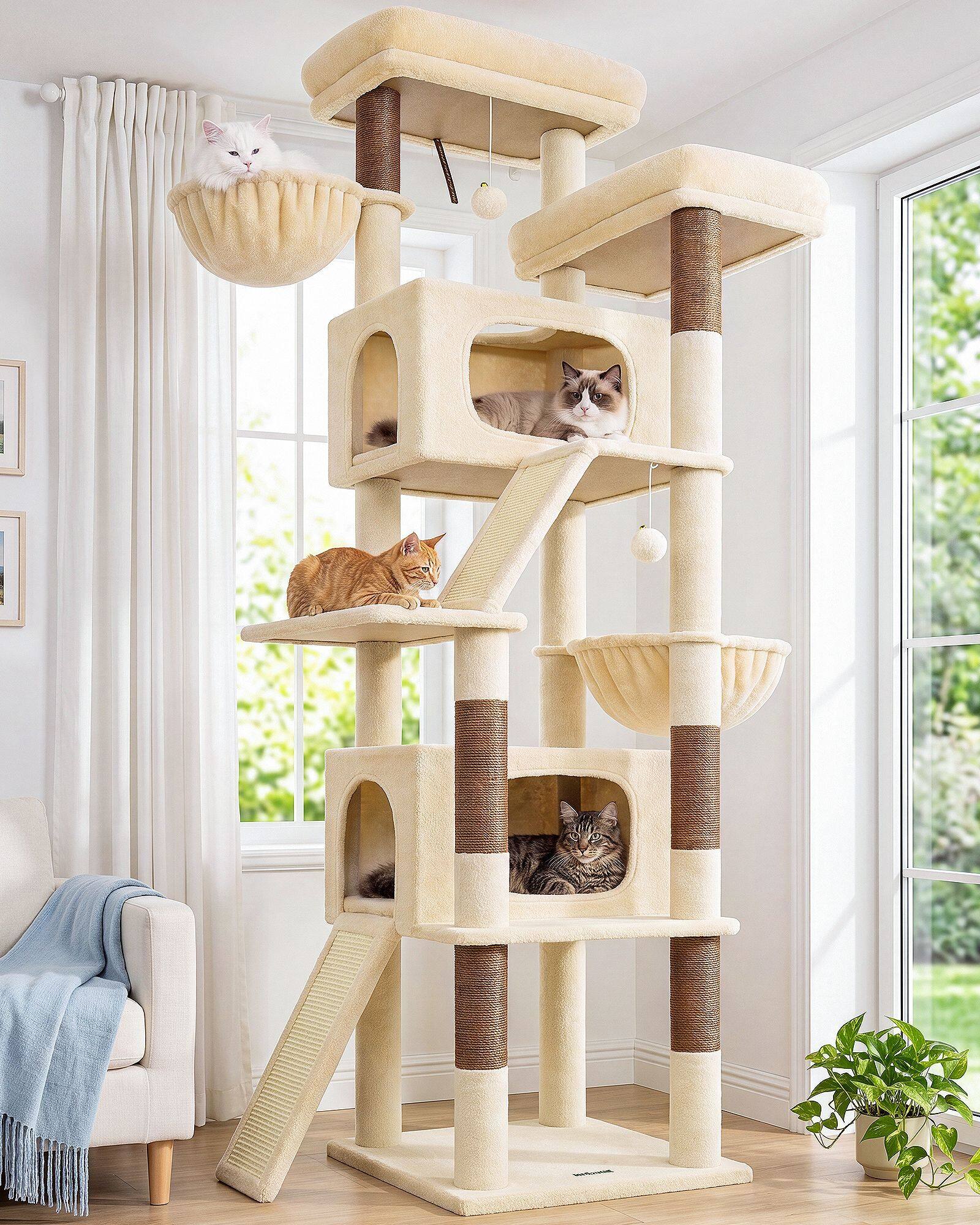
Multi-cat homes do not need more “cat stuff.” They need better routes. When two or three cats share one room, the problem is rarely that there is not enough furniture—it is that there are not enough separate paths and separate resting levels to avoid constant negotiation.
In one open-plan apartment we studied, the living room looked calm, but the cats were not. A single short tower sat near a hallway choke point. Every climb forced the same narrow approach and the same mid-platform pause. The result was predictable: one cat guarded the top perch, another stopped using the structure, and the third chose the sofa back instead.
Behavior guides like vertical territory explain why height alone does not solve conflict. Cats need choice: different elevations, different sightlines, different exit options. A cat tree that offers only one ladder and one top perch creates a bottleneck even when it is tall.
Designing for shared space
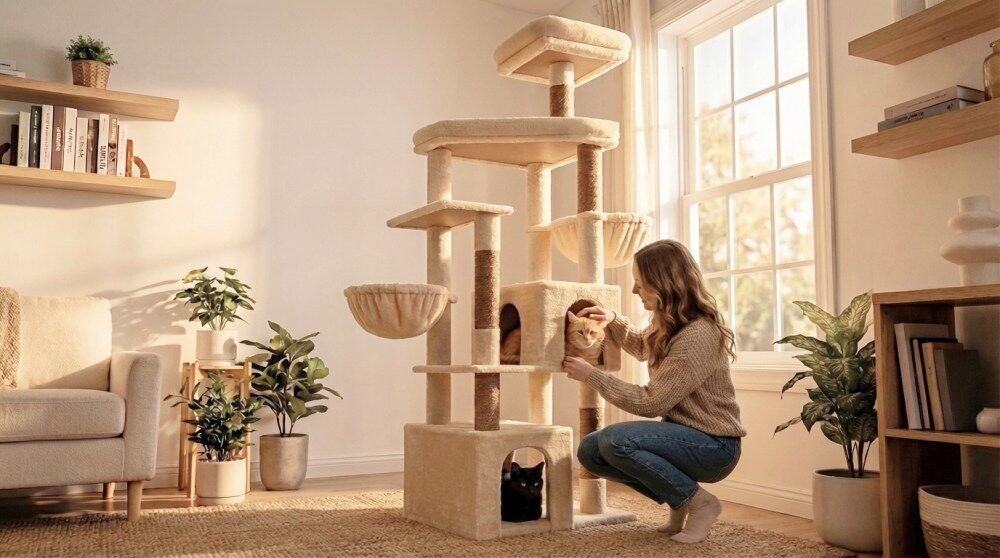
Vertical territory works when it is layered. Wide landings at two heights give cats natural exit ramps so they do not have to pass nose-to-nose on one step. A tall cat tree placed near a window creates a lookout route; a second, lower resting zone near the sofa gives a calmer option for cats who prefer proximity to people.
Placement matters as much as the object. Multi-cat towers should avoid the narrowest walkway. They work best where the room already accepts large furniture: beside a bookshelf, near a window wall, at the edge of the seating area. When the tower belongs to the layout, cats treat it as part of the home rather than a contested obstacle.
Surface and route details matter too. Sisal placed along travel paths gives each cat a scratching option without forcing shared contact. Neutral palettes help because the tower can live in the seating zone instead of being exiled to a hallway where every pass becomes a confrontation.
We often recommend thinking in routes, not objects: window lookout, mid-level pause, ground-level retreat. If two cats can occupy different levels without blocking each other, daily friction drops quickly—even in modest floor plans.
Sound and sight lines matter in multi-cat rooms. A tower that blocks the only window view can become contested even when platforms are wide. Rotating placement so each cat can claim a different vista—window, doorway, seating—reduces passive tension.
Roommates and partners notice the difference too. When cats negotiate less, humans negotiate less about where the tower should live. A neutral, furniture-scale structure earns permission to stay in the living room instead of being voted into a spare bedroom.
That permission is the hidden metric of multi-cat design: not how many platforms fit on a spec sheet, but how few arguments the tower causes after week two.
At Globlazer, we think multi-cat design is ultimately about reducing daily friction. If the routes are clear and the landings feel safe, cats stop negotiating every climb—and families get a living room that feels calmer for everyone. That calm is the real product outcome, even when the purchase started with a photo of a beautiful neutral tower.
New Arrivals
Fresh designs, new colors, and limited releases for modern cat homes.