
How Cats Interact With Elevated Spaces
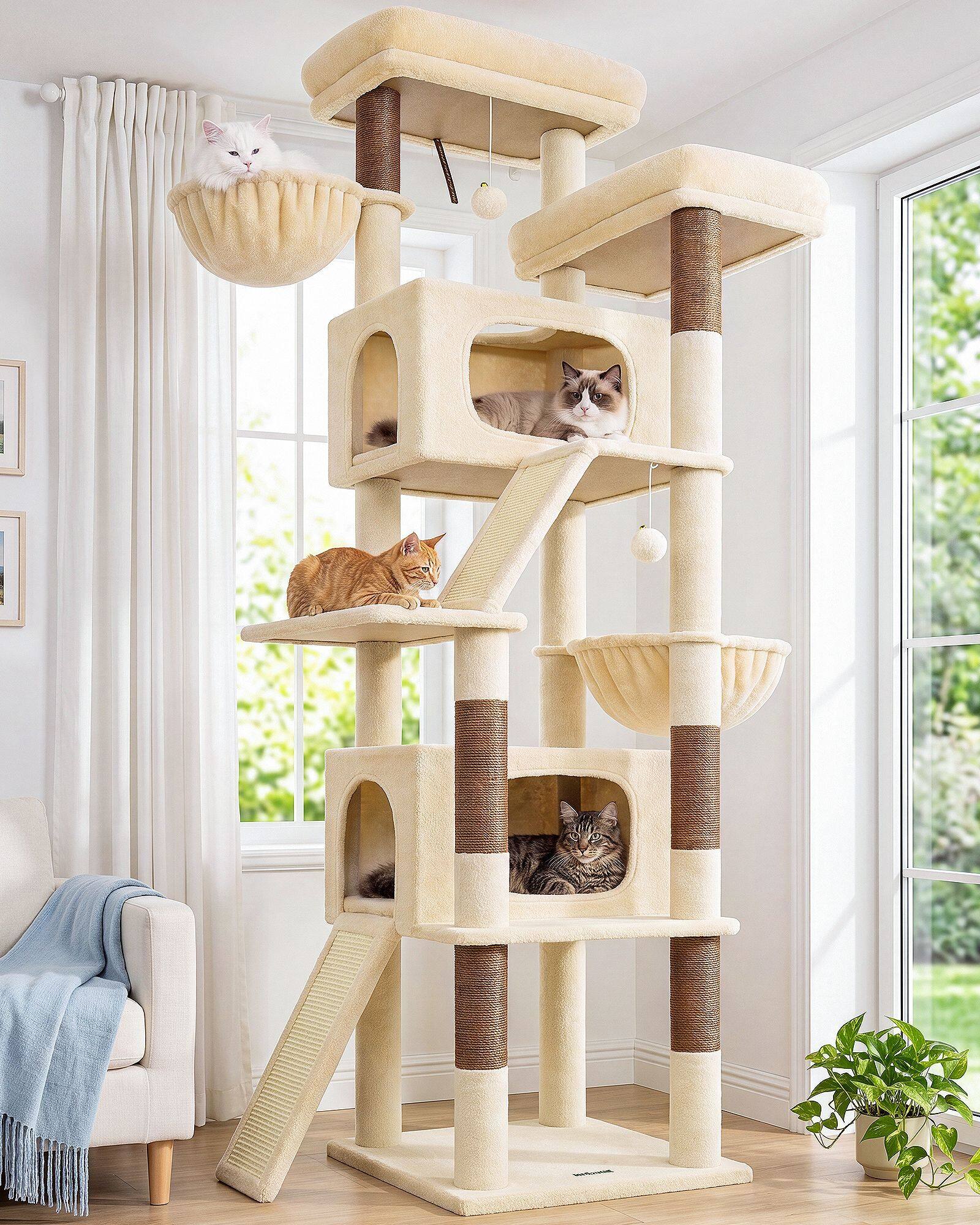
Watch a cat meet a new room and you will see the floor last. Whiskers forward, gaze up—counters, shelves, door tops, the narrow ledge above a radiator. Elevated spaces are how indoor cats survey, rest, and decide what is safe. Understanding that sequence changes how you place a tower, not just whether you buy one.
Morning belongs to the window line. A mid-level perch becomes a news desk for birds, delivery trucks, and neighbors with dogs. Afternoon drifts upward: the top platform turns into a nap bowl warmed by rising air. Evening returns to the ground for food and social time—but the high rest remains available, a kind of private balcony that never closes.
Cats do not use height uniformly. Some sprint the full column in one motion; others climb in stages, pausing to listen. Structures earn loyalty when each level feels like a choice, not a ladder rung. Wide enough to turn. Stable enough to lean. Close enough to the window to matter.
In a Denver apartment we followed for a lifestyle piece, a shy rescue named Pepper ignored a tower placed in a spare corner. Moved beside the living-room window—same tower, different address in the room—she adopted the top rest within days. The product did not change. The cat’s relationship to elevation did.
Sound and scent travel differently upstairs. A perch near the kitchen hears cabinet clicks; a top rest above the sofa catches warmth and human conversation without requiring contact. Cats time-share elevation the way they time-share sun—morning window, afternoon height, evening floor.
Multi-cat homes add negotiation. One cat may own the top while another owns the mid perch, swapping after meals. Elevated spaces work when platforms are wide enough to turn and spaced enough to avoid whisker collisions on passing climbs.
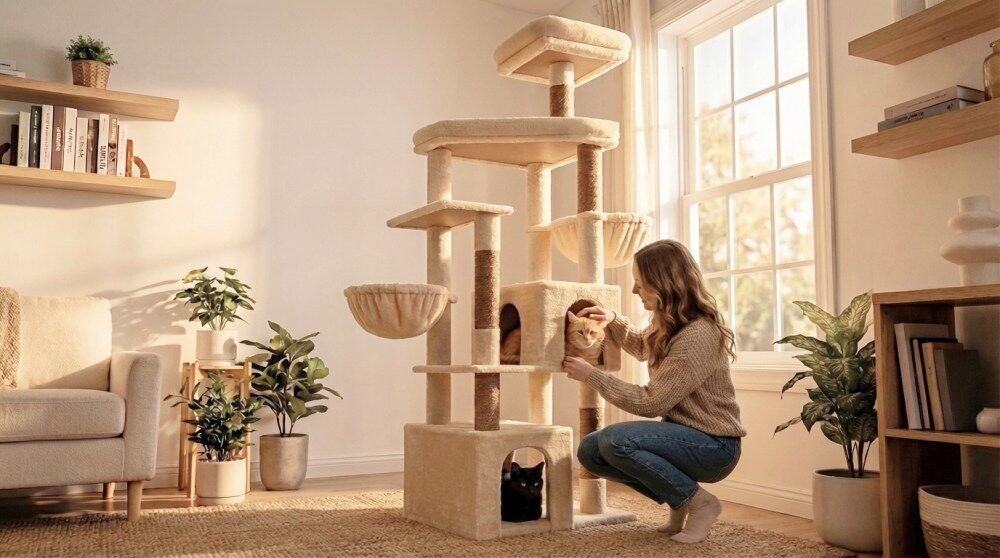
Globlazer towers are drawn with those daily sequences in mind: sisal at entries, rests at window lines, top platforms sized for naps—not only photos. A cat tree earns use when each level answers a different hour of the day.
Human routines redraw the map quietly. A work-from-home desk shifts which perch faces the room’s social center; a new bookshelf removes a former ledge and sends a cat back to the tower. Elevated spaces stay useful when the structure offers more than one meaningful address near the window line.
Rainy days compress the schedule. Window interest drops; top rests gain naps; sisal sees more bursts before dinner. Towers that only shine on sunny afternoons miss half the indoor year.
Guests change the map, too. A tower beside the sofa becomes a retreat when strangers sit in the cat’s ground-level path. Elevated spaces offer exit routes without requiring a closed door—valuable in studio layouts where privacy is scarce.
Winter drafts pull cats toward interior perches; summer heat returns them to the window line. A well-placed column earns loyalty across seasons because each level answers a different weather mood.
That is the lesson we keep writing toward at Globlazer: elevated spaces are not ornaments on a cat tree. They are the cat’s map of the home—drawn in vertical ink, updated every time someone opens a door or pulls a curtain.
New Arrivals
Fresh designs, new colors, and limited releases for modern cat homes.