
Designing Cat Trees for Modern North American Homes
Modern North American homes often ask cat furniture to solve a layout problem: open sightlines, mixed flooring, and furniture that is neutral enough to survive the next move.
Cat trees that feel at home here rarely shout for attention. They earn space by respecting how people actually live—through the kitchen sightline, beside the sectional, and in rental units where every large object feels like a commitment.
Open plans need vertical, not wider
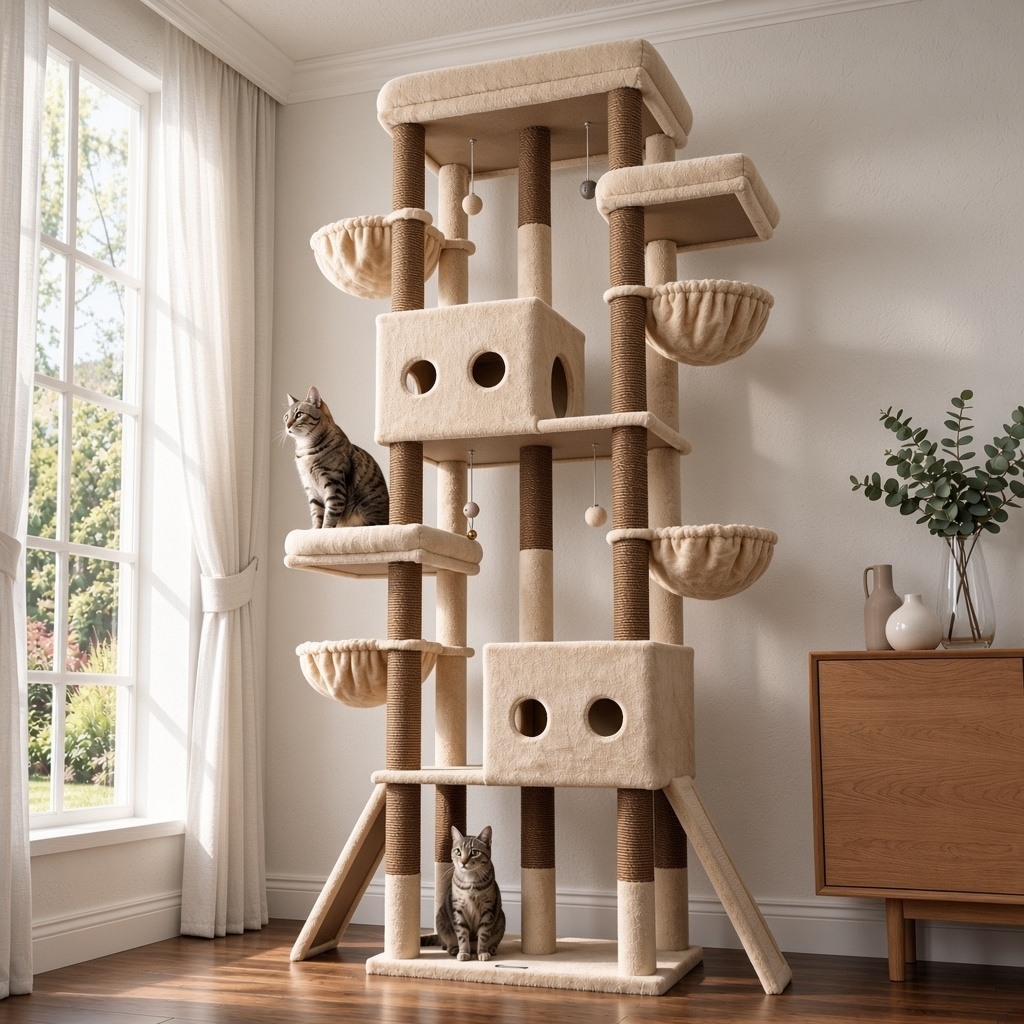
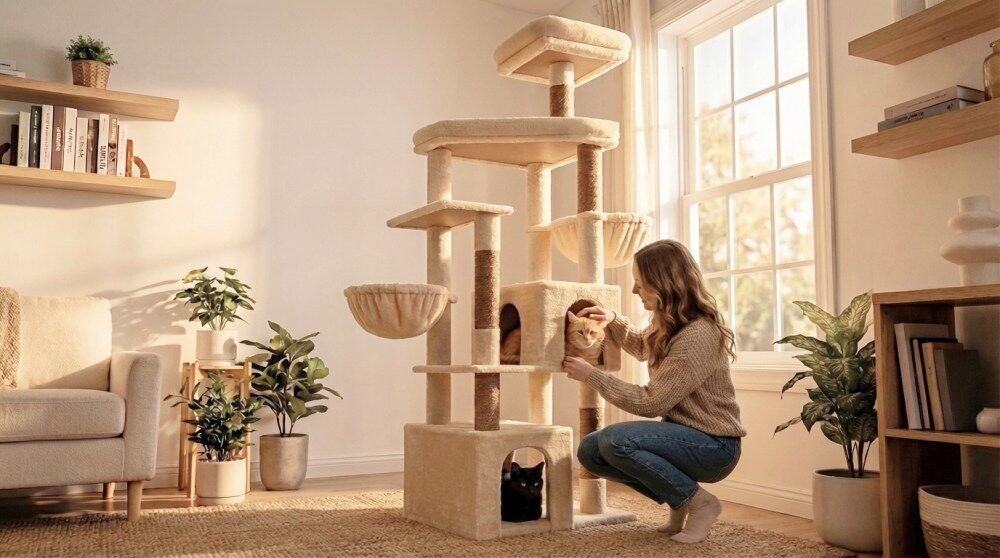
When walls disappear, floor space becomes shared currency. A tall cat tree can add territory without adding another footprint beside the media console. The best designs read slim from the floor and generous above eye level, where cats actually want to be.
Beige, warm grey, and soft two-tone combinations show up across condos, suburban family rooms, and loft conversions for a practical reason: they survive sofa swaps and paint updates. A cat tree that matches that flexibility stops feeling like pet equipment and starts feeling like part of the lease.
North American homes also mean dogs visiting, kids crossing the room, and cats sprinting at dusk. Platforms need to forgive weight. Bases need to look calm before they face real launches. That is the room story behind our 2024 design bias: vertical routes that look quiet on move-in day and stay believable on ordinary Thursday evenings.
New Arrivals
Fresh designs, new colors, and limited releases for modern cat homes.