
Designing for High-Traffic Zones: Platforms and Sisal
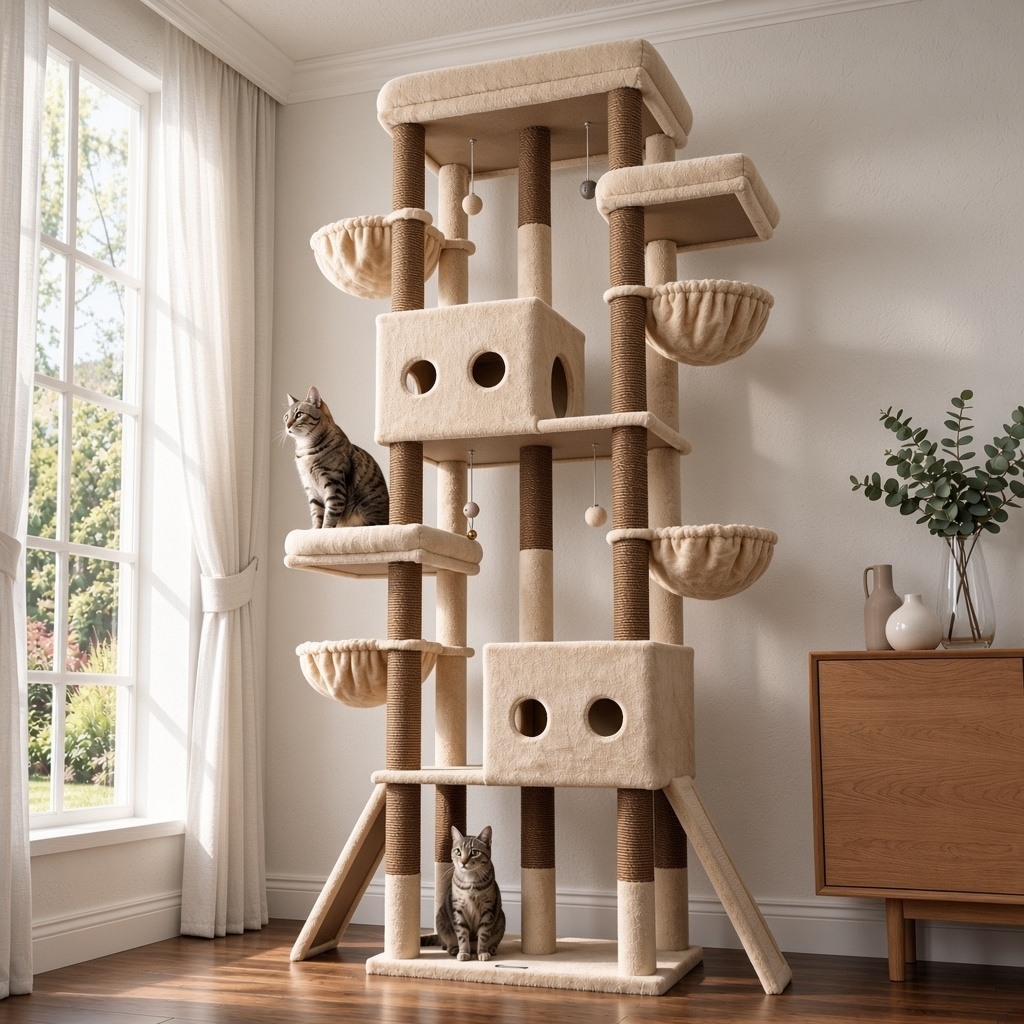
Every cat tree has a commute. Entry sisal, the platform where launches begin, the top rest that collects naps—these high-traffic zones wear first and matter most. At Globlazer, we design them with the honesty usually reserved for shoe soles and door handles.
Platforms are not interchangeable shelves. The lower platform often sees sprint landings; the top sees slow kneading and heat. We spec denser plush on rests that flatten fast and tighter weave on corners cats hook when turning. A mid-level deck might get a different pile height than the top because the traffic pattern is burst-and-go, not linger-and-knead.
We mark mockups with colored tape where paws land in room trials—entry edge, center spin, corner hook. Those tape maps become spec sheets. Without them, platforms look symmetric in photos and lie in use.
Sisal where the day starts
Entry columns take the first scratch and the last impatient rake before food. We use rope batches we trace by month, diameters that reward a full stretch, wraps that resist sliding under repeat claws. Symmetry is secondary to route—if cats enter from the left, sisal meets them on the left.
Wrap maintenance is part of the design. Posts in high-traffic zones use tighter initial tension and slightly thicker rope lots because the first six inches see more claw than the top six feet. Replaceable sleeve sections on wear paths let families refresh entry posts without retiring the whole tower—a sustainability story that starts with honesty about where cats actually scratch.
Platform edges at launch zones get reinforced binding—tonal piping that resists fray when a cat hooks the rim mid-sprint. The reinforcement stays invisible in neutral palettes; it only appears when you skip it and the corner mats in week three.
High-traffic design is admitting wear patterns upfront instead of treating them as warranty surprises. When a tower’s busy zones are built for busy work, the quiet zones stay quiet longer—and owners stop blaming cats for liking the same perch every day.
That is the work behind platforms and sisal at Globlazer: not decoration, but infrastructure with a map of where life actually happens. The commute repeats daily; the materials should be chosen for that repetition, not for a single hero photo.
We log wear photos from returned trial units—not for shame, but for pattern recognition. Entry sisal fuzzes first; top platforms mat center-first; corner binding frays on the deck cats hook when leaping down. Those photos become the next season’s spec deltas.
High-traffic thinking also changes spare-part planning. Entry sleeves and corner binding kits ship in the same neutral family as the tower so refreshes do not become color-matching projects. Owners replace wear zones; towers stay citizens of the room.
That is the long view on platforms and sisal at Globlazer: design for the commute cats repeat, document where it shows, and make renewal boring—in the best sense—for families who already chose a neutral cat tree to live beside their sofa.
Wear maps are the quiet spec sheet behind every refresh.
New Arrivals
Fresh designs, new colors, and limited releases for modern cat homes.