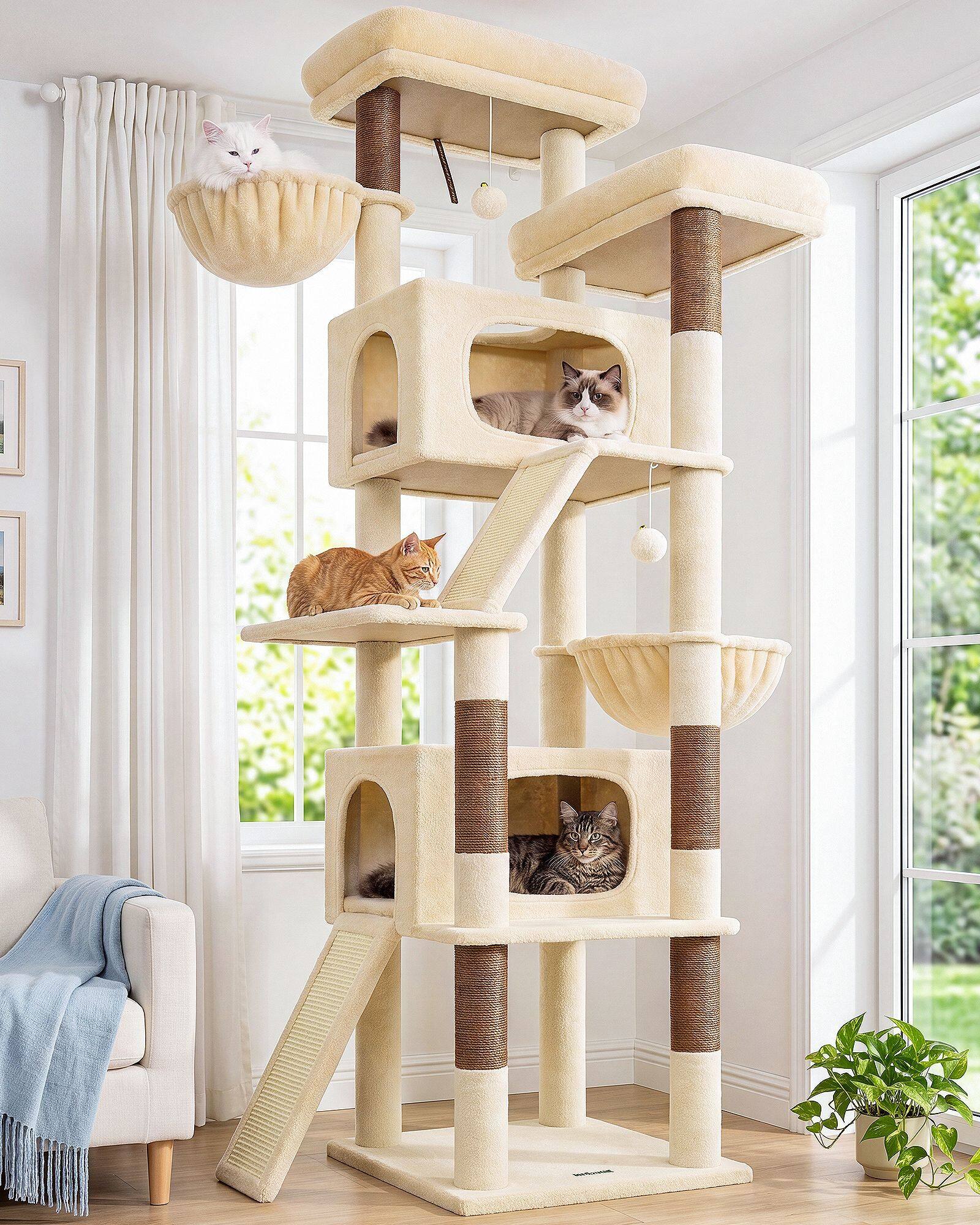

Why Cat Furniture Should Respect Your Living Space
There is a familiar compromise in cat-owning households: the tower goes where it fits, not where it belongs—and everyone pretends not to see it. That compromise made sense when cat trees were carpeted afterthoughts. It makes less sense now, when owners furnish rooms with intention and cats live entirely indoors.
We argue that a cat tree should respect your living space the way a bookshelf or floor lamp does: earn its footprint, share sightlines, borrow your color story instead of interrupting it. Respect is not a soft word. It is a design brief.
Industry Updates observation backs the shift. More households treat pet gear as part of decorating decisions, not as a separate aisle with separate rules. When a tower clashes with curated interiors, it becomes a daily irritant even if a cat loves the top perch. Respectful design removes that friction without deleting vertical enrichment.
From pet corner to shared zone
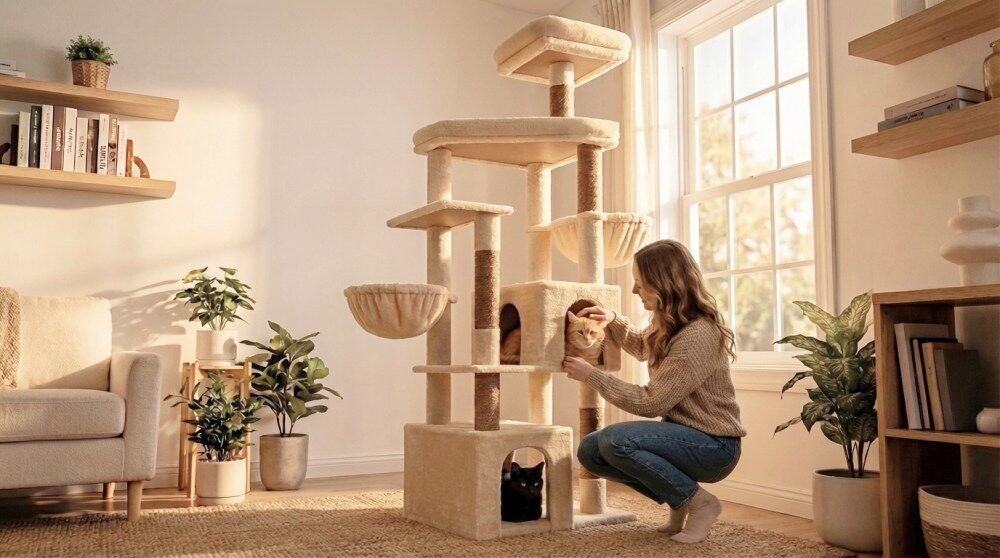
More cat owners now treat pet products as part of decorating decisions. Open-plan apartments punish loud objects. A saturated tower competes with art, textiles, and daylight. Neutral, furniture-style silhouettes let structure stay present for cats without dominating for humans.
Respect also means pathways. A tower that blocks kitchen-to-desk lines becomes a daily irritation—even if a cat loves the top perch. Slim footprints and vertical enrichment let both species keep their routes. We design towers that claim height instead of spread because square footage in urban layouts is negotiated hourly.
Sound matters too. Wobble creaks read as cheap furniture; planted bases read as intentional. Owners forgive claw marks on sisal more easily than they forgive a tower that feels temporary. Respect includes the confidence signal the structure sends to everyone in the room, not only to the cat climbing it.
What respect looks like in practice
It looks like beige and grey surfaces beside linen sofas. It looks like sisal where cats already travel. It looks like bases widened for trust without sprawl. It looks like Globlazer‘s core bet: North American and European homes deserve cat infrastructure that behaves like design—not like a concession.
Respect also shows up in maintenance. Surfaces that vacuum cleanly and corners that do not fray in a month keep the tower looking like it belongs. A respectful cat tree ages with the room instead of aging out of it.
Your living space sets the terms. The cat tree’s job is to meet them while still offering height, scratch, and rest cats cannot negotiate away. Respect is not hiding the tower. It is making the tower a citizen of the room—present, useful, and quiet enough that guests ask where you bought the furniture, not where you hid the cat stuff.
Respect scales with housing type. Studio layouts need towers that claim height without blocking the only walkway; suburban open plans need towers that sit beside sectionals without splitting conversation sightlines. The same neutral palette serves both when proportion—not ornament—does the editing.
We hear the respect test in owner language: does the tower feel like furniture you chose, or furniture you tolerate? Globlazer briefs treat that question as engineering-adjacent. Wide bases, slim upper mass, sisal on routes—the answers are physical before they are philosophical.
When respect fails, the tower migrates to a spare bedroom within a year. When it succeeds, it stays in the frame owners photograph for guests. That migration pattern is the Industry Updates’s honest scoreboard, and it is why living-space respect moved from marketing copy to default design rules.
Respect is measurable in inches: footprint that clears walkways, height that clears eye lines, fabrics that clear Sunday vacuum passes without drama.
That scoreboard is why respect became a default rule.
New Arrivals
Fresh designs, new colors, and limited releases for modern cat homes.