
Structural Improvements in Tall Modular Systems: A Cat Tree…
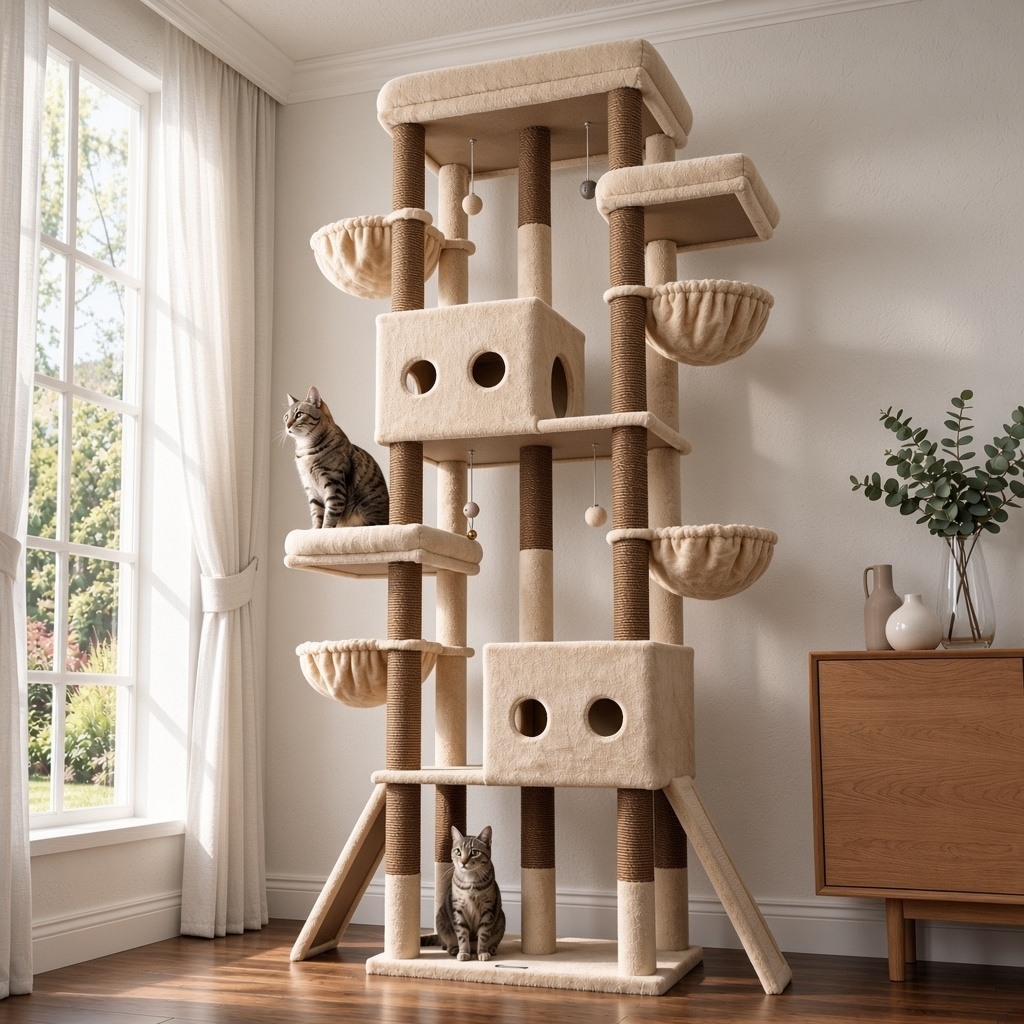
When Globlazer pushes a modular cat tree taller, the question is never only height—it is whether each joint still feels like one piece after months of daily climbing. Over the past season our product team reworked connector geometry on tall modular towers: tighter post-to-platform locks, revised washer placement, and base plates sized to match the added vertical mass above.
Modularity only earns trust when swapping a platform does not loosen what sits below. We ran side-by-side mockups—same footprint, different connector generations—and watched where micro-movement appeared first. That usually happened at the transition between a wide landing and a slim upper column, so we thickened the interface ring without adding visual bulk on the outside.
Because tall structures concentrate force toward the footprint, we paired connector work with base revisions on the same development line. A modular tower that grows upward should not ask the floor to forgive instability. The goal is a cat tree families can expand over time while the silhouette still reads as furniture, not a stack of parts.
Expansion paths matter as much as first assembly. Retail partners asked whether a mid-tower add-on would wobble the section below after six months of two-cat traffic. Our answer lives in the connector ring: load transfers through a continuous collar instead of relying on friction at a single pinch point. That means a household can add a lookout module later without treating the upgrade like a structural gamble.
Quiet joints, visible calm
We also refined how hardware hides inside neutral upholstery. Caps sit flush with platform edges; bolt paths angle away from sisal wrap zones so daily scratching does not expose metal. On beige and dark grey samples, the engineering disappears—which is the point. A tall modular line should look like one designed object whether it ships as a three-platform starter or a five-platform room anchor.
Post spacing followed the connector work. Wide landings need posts placed so climb lines stay straight; when posts drift toward corners to save fabric, cats zigzag and families perceive wobble even when the joint is sound. We aligned post centers with where paws actually land on 83-inch-class prototypes, then carried that spacing logic down to shorter modular SKUs so the catalog feels coherent.
These refinements are rolling into upcoming tall modular releases across the Globlazer tower family. If you follow our development notes, expect the same neutral palettes—beige, dark grey, light grey—with quieter engineering underneath. Height is still the headline; joint discipline is what makes height usable on Tuesday morning, not just impressive in a product photo.
Field notes from earlier modular lines mentioned faint movement at the collar after humid summers. We added isolation washers and revised torque guidance on through-bolts so seasonal humidity does not change how tight a joint feels. That work stays invisible until a coastal rental stops sending questions about a quiet tick on the third platform.
Modular should not mean disposable. Replacement collars on wear paths let a family refresh sisal in year three without retiring the whole tower because one interface aged out. That longevity story matters to retail buyers who measure returns over seasons, not weekends.
New Arrivals
Fresh designs, new colors, and limited releases for modern cat homes.