
Global Trends We’re Seeing in Modern Cat Furniture
Globlazer sells into different rooms on different continents. The trends rhyme, but they do not clone. Housing size, rental culture, and what owners already own change the brief before color or height even enter the conversation. What follows is not a market report. It is what we see when product planning, owner messages, and room photos from around the world are read together.
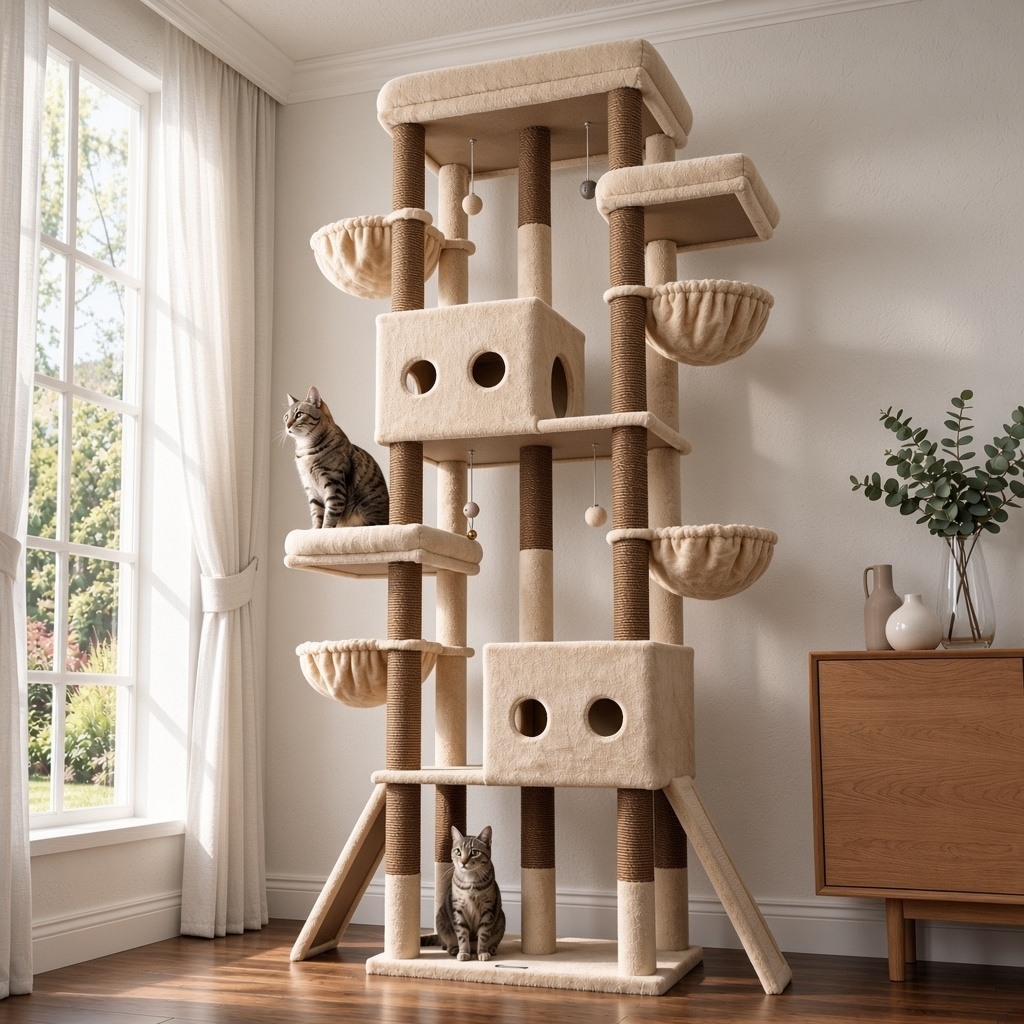
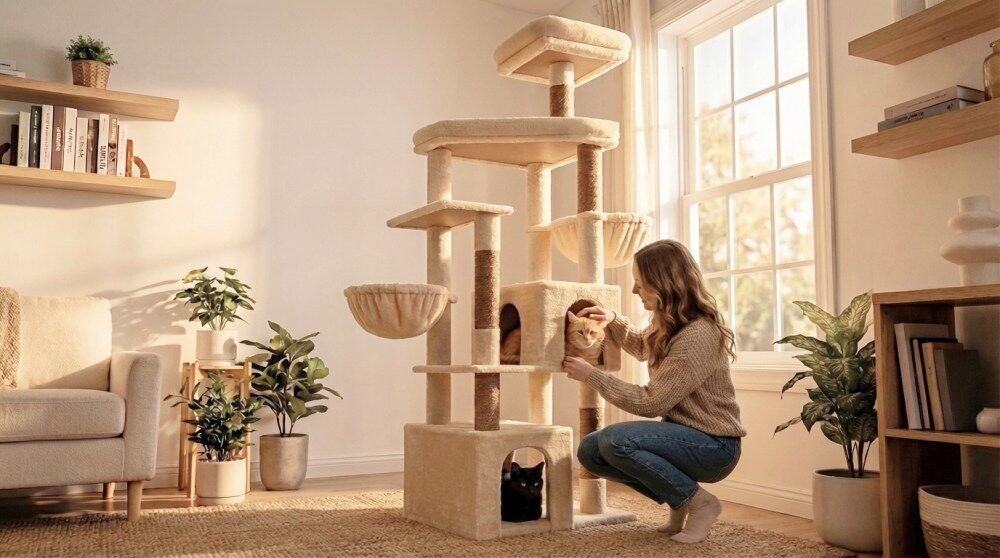
In North America, room-scale height still pulls strongly. Open plans, large indoor cats, and renters who want one vertical object instead of floor clutter keep tall neutral towers in demand. Stability and wide platforms stay non-negotiable because a impressive silhouette means nothing if a cat hesitates halfway up. Owners describe the ideal cat tree as something that uses air instead of square footage—height as a resource, not a punishment for the living room.
European rooms often push material restraint harder. Matte plush, oak-tone posts, low-odor finishes, and towers that look credible beside linen, stone, and the edited palettes common in compact flats. Footprint matters even when height is generous. A slim silhouette that still offers real climb routes wins in cities where every centimeter beside the window is negotiated.
Japan and dense Asian cities compress the footprint further. Slim towers, efficient vertical routes, calm colors that keep small rooms visually quiet. Height is valued, but width is negotiated carefully. Owners want the cat to have upward life without the tower becoming the first object the eye hits when the door opens. Integration into sightlines matters as much as perch count.
Across regions, three threads align even when scale diverges. Furniture-like neutrals instead of novelty brights. Honesty about materials—sisal, wood, plush—instead of shapes pretending to be something else. And placement in the room’s main sightline rather than exile to a pet corner nobody photographs.
Where markets diverge is proportion, not philosophy. A tower that feels right in a spacious suburban living room may feel loud in a studio where the sofa, desk, and dining zone share one wall. Global assortments need regional proportion, not one-size photo styling copied everywhere. The engineering bar can stay shared—bases that recover from real launches, platforms sized for turns—while height and width ratios shift with local housing.
We also see owners thinking longer term. A first cat tree purchase used to be experimental. More households now treat it as furniture with a job: stay stable, stay calm visually, survive the next sofa. That makes replaceable novelty less interesting than a neutral structure that still works after a redesign. Retail buyers and direct owners are aligning on durability of appearance, not only durability of hardware.
Globlazer tracks those differences in how we plan cat tree lines—tall room-scale towers for open layouts, edited footprints for compact rooms, shared neutral palettes that photograph calmly whether the floor is wide oak or small tile. Our product team returns to the same questions in every region: how much vertical life can this floor plan afford, and how should the tower respect the architecture already there.
Global trends in modern cat furniture are not one trend. They are local housing translated into vertical design. The brands that win listen to floor plans, window placements, and the quiet evidence in owner room photos—not only the loudest opinions online. Cats climb everywhere. Rooms, however, still have rules.
That is why Globlazer keeps returning to shared engineering and regional proportion in the same conversation. A cat tree should feel native to the room it enters—whether the room is wide, rented, or measured in careful centimeters beside a balcony door. Global does not mean identical. It means fluent in many floor plans, with the same respect for climb routes in every market.
New Arrivals
Fresh designs, new colors, and limited releases for modern cat homes.