
Why Modern Pet Furniture Must Blend Into Interiors
There was a time when a loud cat tree could live in a spare bedroom and nobody minded. That arrangement is disappearing. Open plans, remote work, and the casual visibility of daily life mean the tower sits in the same sightline as the sofa, the dining table, and whatever appears in a quick video call background. Blend-in used to feel like a premium upgrade for design-conscious owners. Now it is closer to a baseline expectation for anything that earns a place in the main room.
Modern pet furniture must blend into interiors because households no longer treat cats as background pets. Cats are roommates with opinions about height, texture, and window access. Owners are roommates with opinions about color, proportion, and whether an object looks temporary. When those two sets of needs meet in one shared space, the old pet-aisle aesthetic starts to feel like a costume that never belonged.
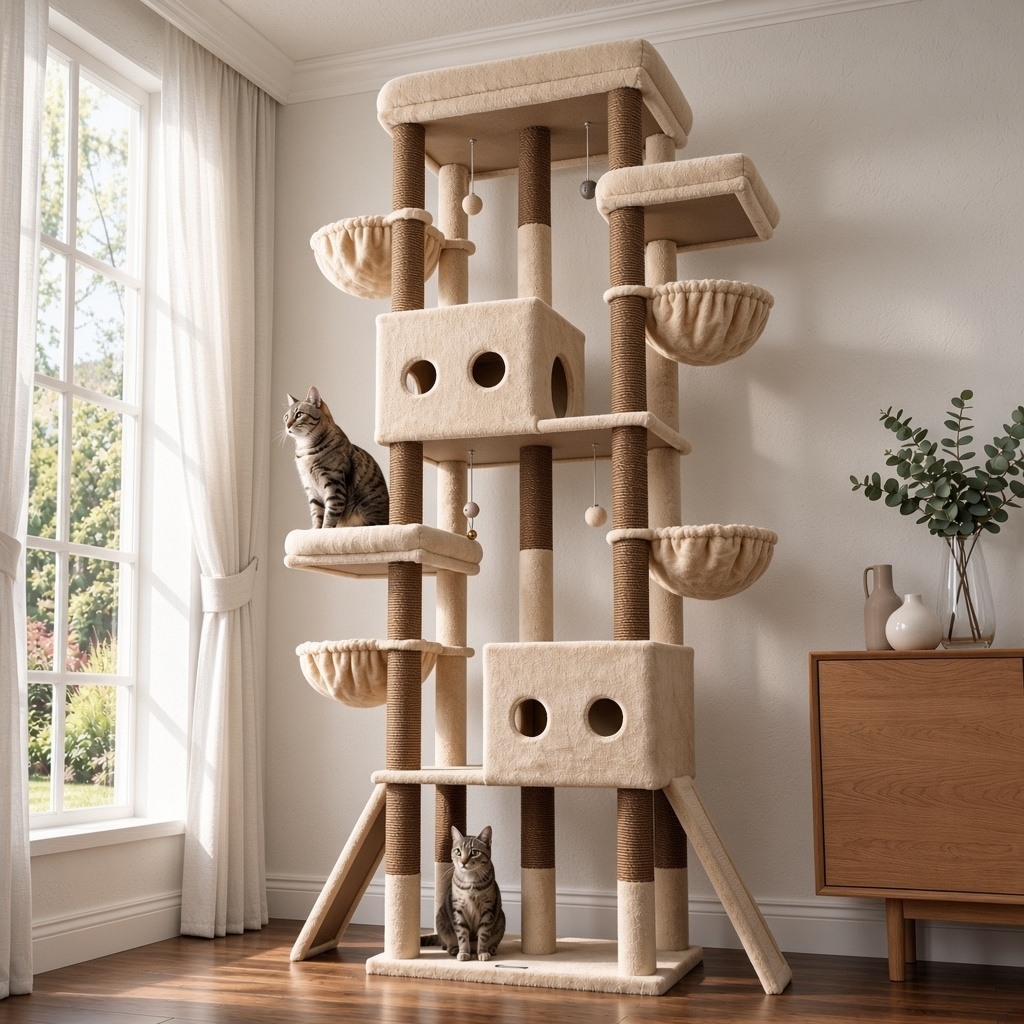
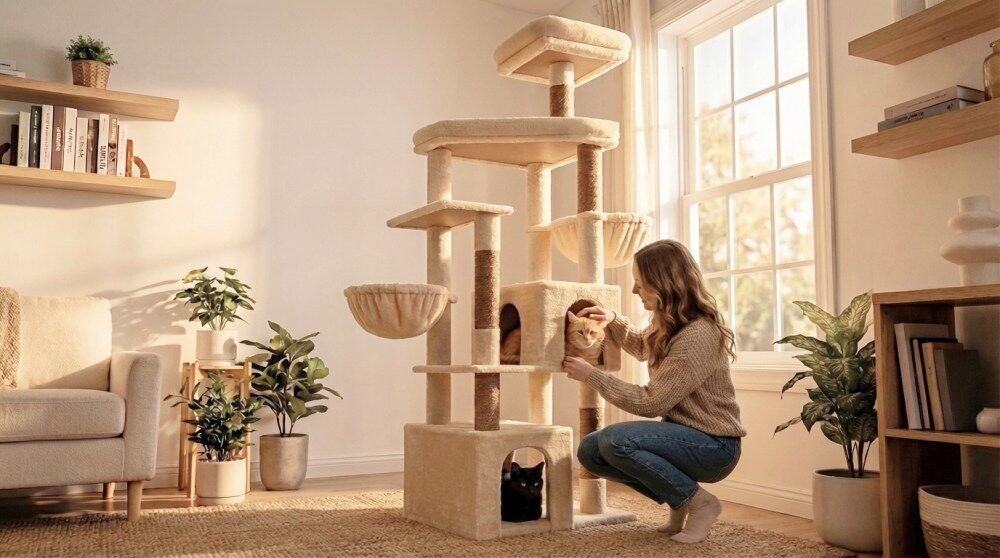
Blend-in is not the same as hiding the cat tree. Cats need visible routes, readable platforms, and materials they want to touch. What changes is the visual language around those needs. Heights that relate to bookshelves instead of towering above them. Neutrals that survive a paint refresh without forcing a product swap. Sisal and plush treated as texture in the room, not as novelty shapes shouting from the corner.
We notice the friction most clearly when blend-in fails. A tower gets exiled to a hallway because it fights the sofa. A return note mentions color clash before stability. A support message arrives with a fabric swatch photo attached, as if the owner is negotiating a truce between two textiles. Those moments are not picky taste. They are what happens when a product category still thinks in pet-store lighting while the home thinks in daylight.
Interior design moved toward edited silhouettes, matte surfaces, and fewer objects with more intention. Pet furniture is catching up because the living room already made that edit. The tower that looks like carnival carpet under a warm lamp is the same tower that feels embarrassing beside a linen sectional. Owners are not asking for invisibility. They are asking for coexistence: a cat tree that reads like part of the room’s furniture story.
That shift also changes how families plan vertical space. Instead of buying the tallest novelty shape available, more households choose one calm structure and place it with the same care they would give a floor lamp or a narrow bookshelf. Sightlines matter. So does footprint. A wide, planted base can feel quieter than a skinny tower with exaggerated platforms, because proportion does the visual work before color even enters the conversation.
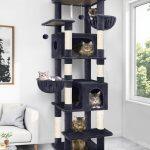
Globlazer approaches blend-in as engineering and aesthetics together. Our cat tree lines are built around room-scale height with bases that look settled rather than bolted on, platforms sized for real turns, and neutral palettes—beige, dark grey, light grey—that sit calmly against common flooring and upholstery. Plush is chosen to photograph soft in daylight. Sisal is placed where scratching actually happens, then finished so it reads as honest material rather than decorative costume.
For us, the question is no longer whether a cat tree can look acceptable in a modern living room. The question is whether it can stay acceptable after the room changes—new rug, new sofa, new wall color—without becoming the first object everyone wants to move. That is what blend-in means in practice: still fun for cats, finally tolerable for the people who share the floor plan.
Modern homes asked pet furniture to grow up. Blend-in is what growing up looks like in a category that used to celebrate being noticed. The best cat trees still invite climbing, napping, and the small dramas of indoor cat life. They simply do it in a form that does not ask the rest of the room to step aside.
New Arrivals
Fresh designs, new colors, and limited releases for modern cat homes.