
Why Traditional Cat Trees No Longer Fit Modern Homes
Walk into a North American living room in 2023 and the mismatch is easy to spot: the sofa is low-profile and neutral, the rug is textured but calm, and the cat tree in the corner still looks like it wandered in from a pet aisle a decade ago—carpeted in loud colors, bulky at the base, and visually louder than anything else in the room.
That tension is not cosmetic. Pet spending has become part of ordinary household budgeting, and cats are fully indoor family members in most U.S. and Canadian homes. When a product lives in the same sightline as your coffee table, it starts to be judged by interior rules, not pet-aisle rules.
From corner accessory to room citizen
Design media have tracked the same shift across home categories: finishes that travel—beige, warm grey, cream—are easier to live with year after year. Cat trees are late to that conversation, but the direction is clear. More owners now ask whether a tower can sit beside a neutral sofa without becoming the first thing a guest notices.
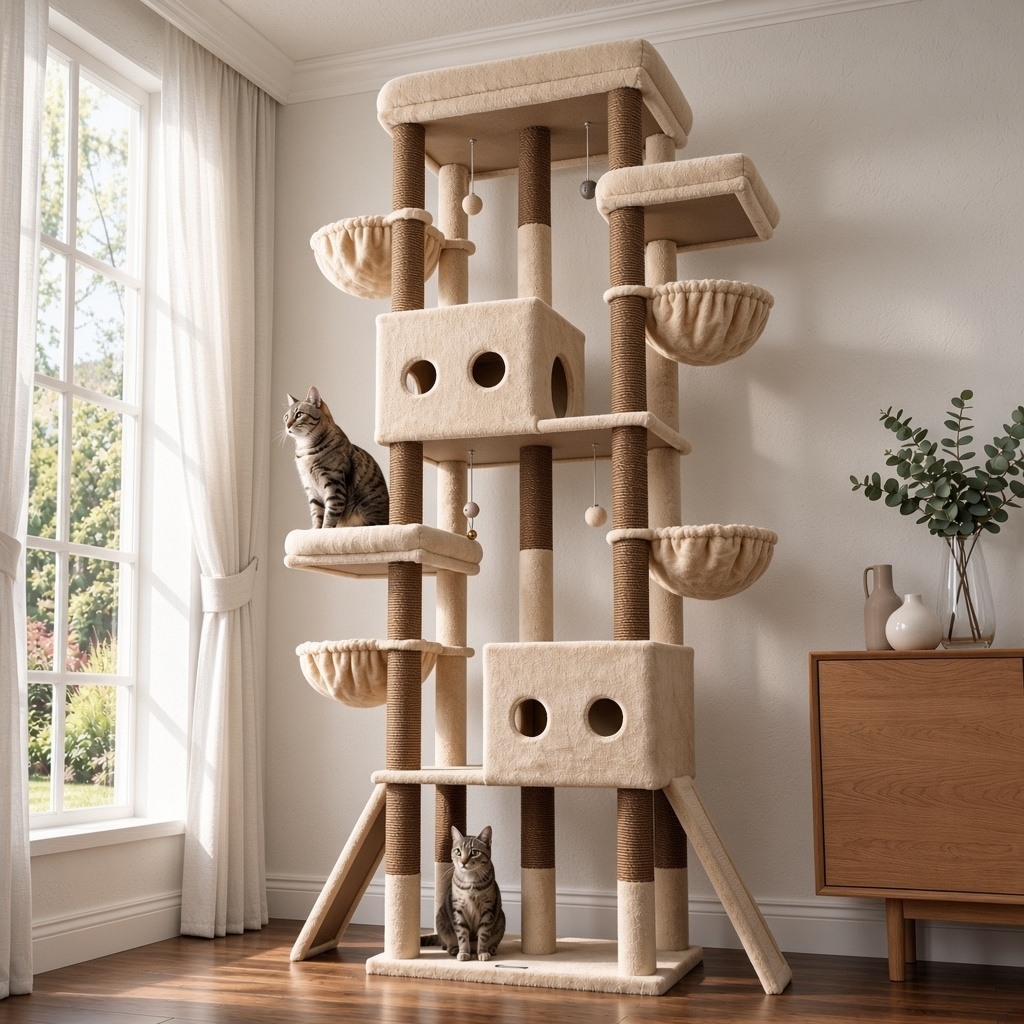
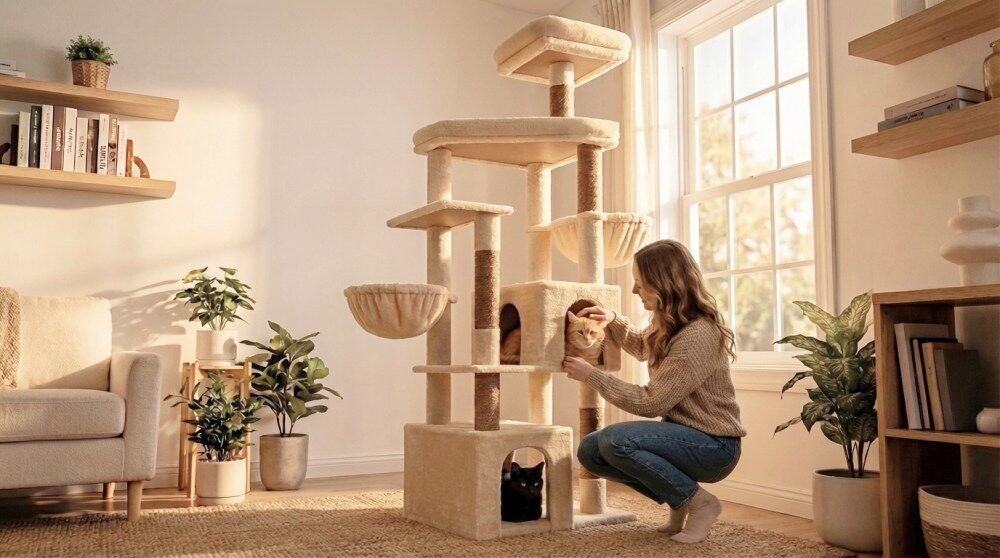
At Globlazer, that question shaped our earliest product conversations in 2023. We were not trying to hide the cat tree. We were trying to build one that respected the room—slimmer silhouettes, furniture-style lines, and the core palette we keep returning to: Beige, Dark Grey, and Light Grey.
Open-plan layouts make the contrast sharper. Kitchen islands, dining tables, and media consoles often share one continuous color story. A saturated tower resets that story every time someone walks in. Neutral upholstery on human furniture trained shoppers to expect the same discipline from pet pieces that stay in frame all day.
Rental markets reinforced the pattern. Lease-friendly decor tends toward removable, calm surfaces—grey paint, oak laminate, linen-look fabrics. A traditional cat tree in circus carpet reads like a roommate who never agreed to the lease terms. Owners started measuring fit the way they measure a bookshelf: footprint, sightline, and whether the object looks like it belongs after the first month.
Why traditional stopped working
Classic cat trees were optimized for warehouse shelves: maximum features per box, saturated colors for thumbnail clicks, and footprints that assumed spare rooms. Modern rentals and open-plan apartments do not offer spare rooms. They offer one continuous living zone where every object competes for visual quiet.
So the design task changed. Height and scratching still matter—cats still need vertical routes—but the tower also needs to read as intentional. That is what we mean by a furniture-style cat tree: structure first for the cat, silhouette second for the home.
Behavior has not become less demanding. Indoor cats still climb, scratch, and claim height. The room simply stopped forgiving products that solve behavior with visual noise. A loud tower can work in a dedicated pet room; it struggles in the only room where dinner, work, and evening television already coexist.
Manufacturing habits lagged behind that reality for years. Bulk carpet wraps, novelty shapes, and oversized bases made sense when the channel rewarded shelf pop. As purchase decisions moved online, lifestyle photography became the new shelf—and beige beside linen survives that camera better than orange faux fur.
The gap between old and new is not about luxury. It is about fit. Traditional trees ask the room to adapt to them. Modern homes, and modern cats, need the opposite. Globlazer formed around that inversion: a cat tree category ready for furniture discipline without asking cats to give up sisal, height, or secure perches.
What changed is not cat behavior. It is where cats live—on the same sightline as the sofa—and what owners are willing to tolerate when a product stays there for years. Traditional designs answered a different home. Modern homes need towers that behave like infrastructure and look like they were chosen on purpose.
New Arrivals
Fresh designs, new colors, and limited releases for modern cat homes.