
Understanding Vertical Space for Indoor Cats
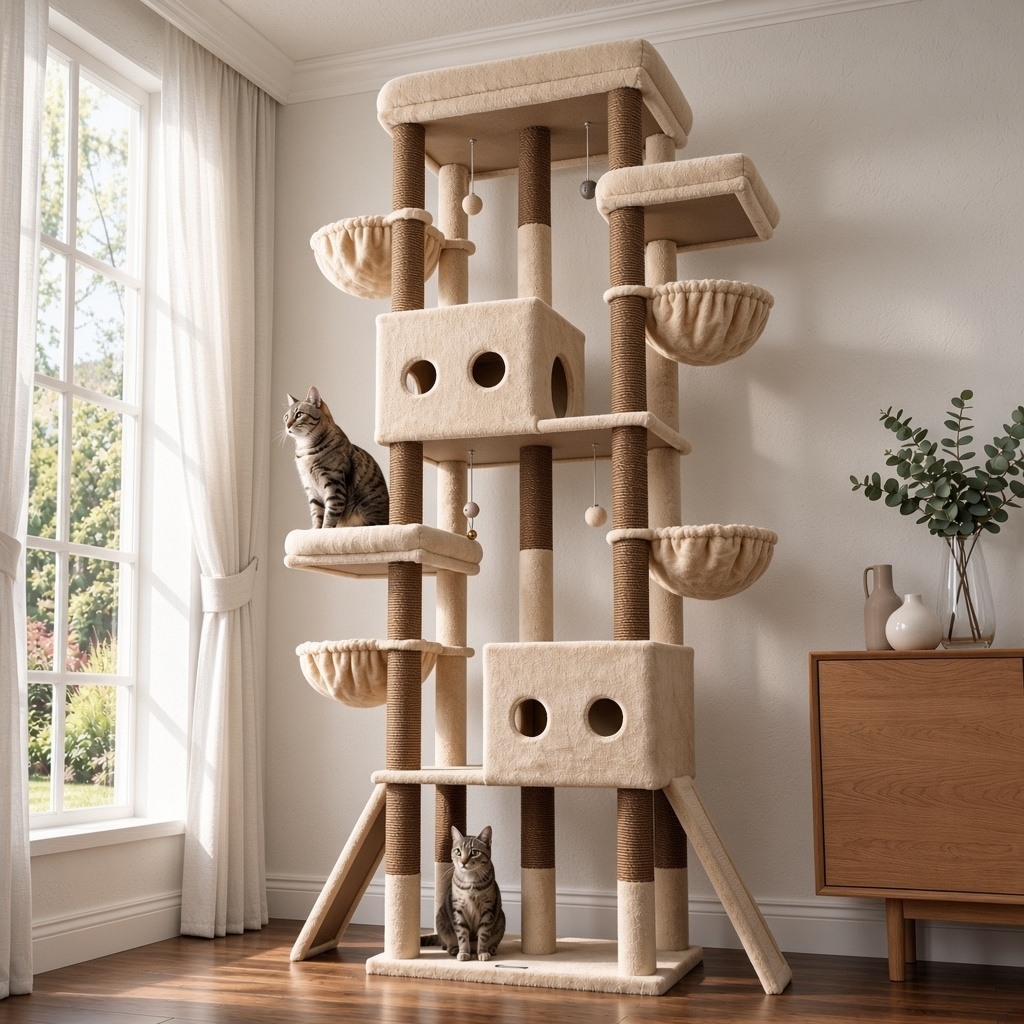
Indoor life removes a long list of risks—and a long list of choices. Without streets, fences, or changing territory outdoors, a cat’s world shrinks to whatever furniture, shelves, and human routines allow. That is why vertical space for cats is not a design trend; it is part of how indoor cats stay engaged, confident, and calm.
Veterinary guidance widely agrees that indoor cats need enriched environments—not only food and litter, but routes to climb, surfaces to scratch, and places to retreat. Even fully indoor cats keep looking for height. Perches and lookout points are not a luxury; they are how cats read a room.
Height functions as territory before it functions as decor. A top platform can operate like a private office with a view; a mid-level shelf becomes a hallway between social zones. In multi-cat homes, different elevations reduce ground-level competition without adding square footage. Cats negotiate inches of height the way roommates negotiate inches of counter space.
When climbing structures feel unstable or poorly placed, cats simply stop using them. Vertical design is therefore also a welfare question. A wobbly tower teaches a cat to stay on the couch—not because the couch is better, but because it is predictable.
Compact homes change the math
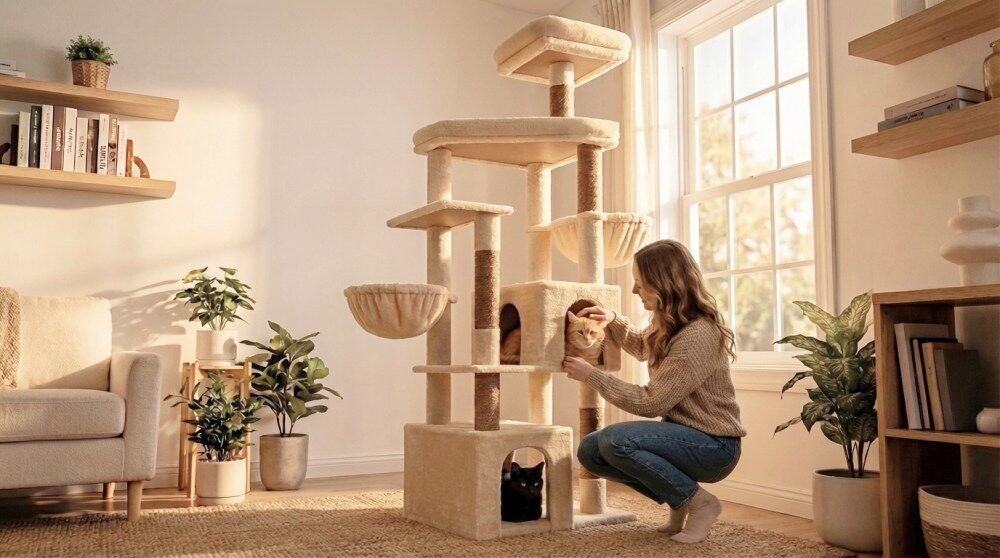
In many U.S. cities, renters live with compact footprints. The useful question becomes spatial economics: how much enrichment per inch of floor? A well-placed tall cat tree can add three or four usable levels while keeping walkways clear—something a sprawling horizontal setup rarely achieves in a one-bedroom layout.
Window lines matter as much as height. Cats map rooms from elevation first: sills, door tops, radiator ledges. A tower placed away from the window line may offer height without offering meaning. Placement is part of the vertical system, not an afterthought once the box arrives.
Platform width changes use patterns. Narrow landings invite hesitation; wide enough decks invite pauses, stretches, and shared sun patches in multi-cat mornings. Vertical space that cats ignore is usually vertical space that failed at landing scale—not at marketing height.
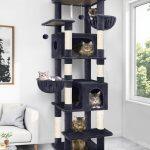
At Globlazer, we treat vertical space as a design problem with three linked variables: height cats will actually use, platform sizes that feel secure, and base proportions that earn trust on the first jump. Get one wrong and the tower becomes laundry-adjacent storage; get them aligned and it becomes part of daily rhythm—morning stretches on sisal, afternoon naps on a high perch, evening bird-watching at the window line.
Sisal placement belongs in the same conversation. Vertical routes fail when scratching sits where cats never pause. Posts at climb entries and rest exits match how indoor cats move through a day—not how symmetry looks in a product photo.
Seasonal light changes how cats use the same tower. Winter sun sits lower on the sill; summer heat pulls naps toward the top platform where warm air rises. A vertical system that only works in one season is really a decoration. Owners who relocate a tower once often describe a different cat—not because behavior changed overnight, but because the map of elevation finally matched the room.
Body language on height is easy to misread from the floor. A cat loafing on a mid perch may be resting or monitoring; a slow blink on the top rest signals comfort that a ground-level hide cannot replicate. Vertical design succeeds when those postures look relaxed, not tentative.
Understanding vertical space is the first step toward building it well. The second is respecting that cats experience height with their whole body—not as scenery, but as infrastructure. A thoughtfully placed Globlazer tower turns that infrastructure into something a compact home can afford.
New Arrivals
Fresh designs, new colors, and limited releases for modern cat homes.