
Designing for Daily Scratching Behavior
Scratching is not a feature we add to a cat tree at the end. It is a map of the day—morning stretch by the bedroom door, a burst after a nap, a territorial punctuation before dinner. At Globlazer, sisal placement starts with that map, not with symmetry.
We watch how indoor cats move through apartments: entry lines, sofa corners, the path from bowl to window. Veterinary guidance widely agrees that indoor cats need enriched environments with scratching surfaces. The practical design question is where those surfaces intercept real routes—not where they look balanced in a product photo.
Our sample wall tracks rope lots by month because cats vote slowly but clearly. The post they return to becomes the spec; the post they ignore gets redesigned before it ships. That feedback loop is slower than a lab chart and more honest than any mockup score.
Vertical, horizontal, and in-between
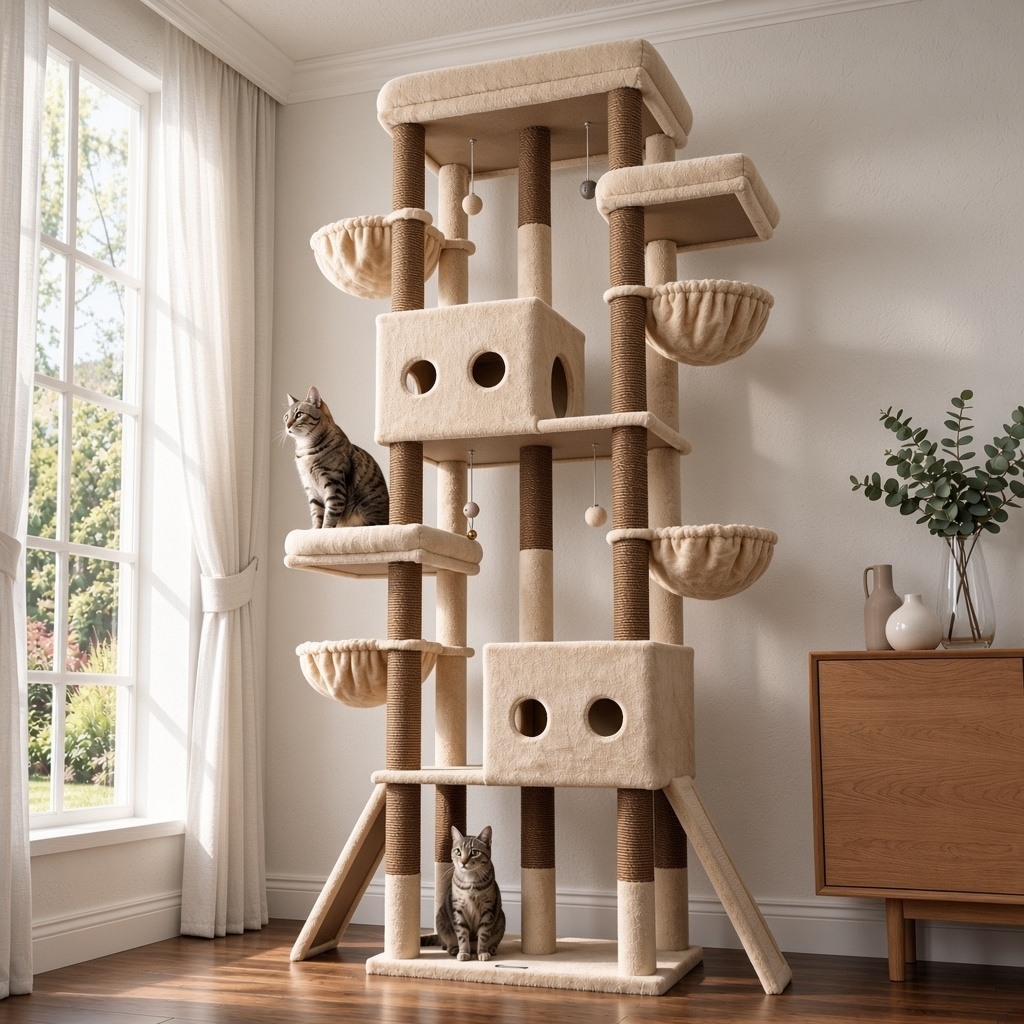
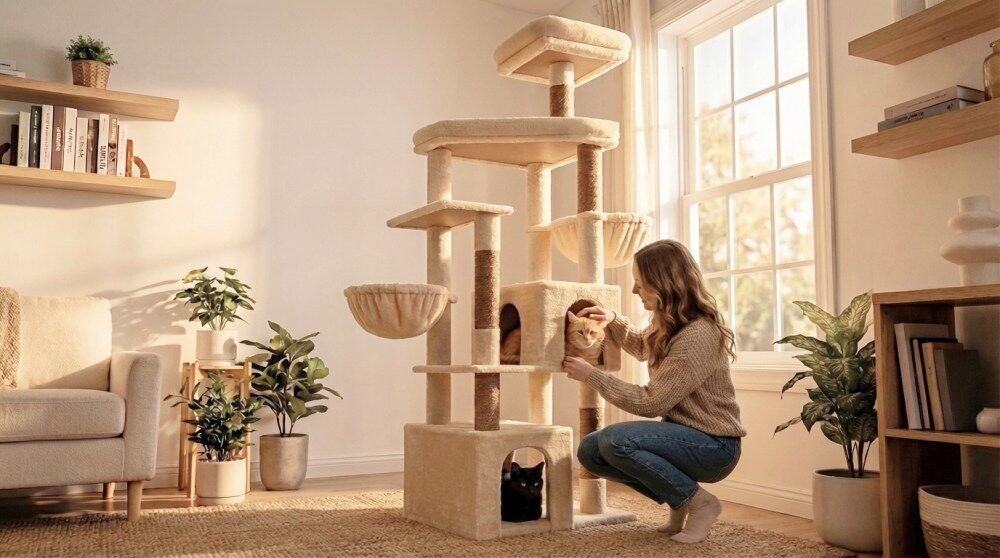
Some cats prefer a full vertical stretch along a post. Others rake horizontally at sofa-arm height. Our early towers carry sisal at multiple heights—not to maximize column count, but to offer honest options along the climb. A post angled slightly off vertical can match a shoulder stretch; a straight column beside the entry catches the first scratch of the day.
Rope diameter and wrap tension still matter—too loose feels hollow, too tight feels glassy. We compare 6 mm and 8 mm lots on the same mockup footprint and watch which spool empties first in room trials. Diameter is not vanity; it is whether a claw finds purchase without sliding.
Wrap direction follows use. Entry posts see downward rakes and upward stretches in the same hour. We bias wrap tension at the bottom third where impatient claws arrive before breakfast, then ease tension higher where cats pause rather than shred.
Placement follows behavior. We cluster sisal where climbs begin and where cats pause—not centered for decoration alone. A beautiful tower fails quietly when the best scratch point sits behind a platform cats rarely touch. We sketch routes on floor plans before we sketch elevations: doorway to window, bowl to couch, bedroom threshold to hall mirror.
Angle matters when space is tight. A post leaned five degrees toward a hallway can catch a shoulder stretch that a perfectly vertical column misses. We prototype those micro-angles on slim towers destined for studio layouts where every inch of sisal must earn contact.
Designing for daily scratching behavior is designing for rhythm: the same routes, the same sounds, the same wear patterns that tell you a column is earning its place. When wear concentrates at entry height, we know the map was right. When wear never appears, we move sisal before we move marketing copy.
That is the standard behind every Globlazer structure we develop—not scratching as an accessory bolted on, but scratching as infrastructure aligned with how indoor cats actually live.
We also watch secondary scratch zones—sofa-adjacent posts, mid-tower columns beside window lines—because cats do not scratch only at the door. Secondary placement catches the rake that happens when a nap ends and the sprint begins. That is still daily behavior; it simply happens six feet from the entry.
New Arrivals
Fresh designs, new colors, and limited releases for modern cat homes.