
Why Modern Fabrics Are Redefining Cat Tree
For years, the default cat tree surface was carpet—often the same loud, looped pile you would never choose for a human chair. It scratched an itch in the warehouse aisle: durable enough, cheap enough, colorful enough for a thumbnail. In 2023, that default is quietly losing the argument in living rooms where owners already chose linen, boucle, and matte paint.
At Globlazer, we watch fabric the way textile teams watch upholstery: touch first, then density, then whether a platform still looks intentional after six months of kneading and vacuum passes. That is why we say modern fabrics are redefining the cat tree category—not as a trend word, but as a material upgrade with three linked dimensions.
Touch: from novelty pile to everyday ritual
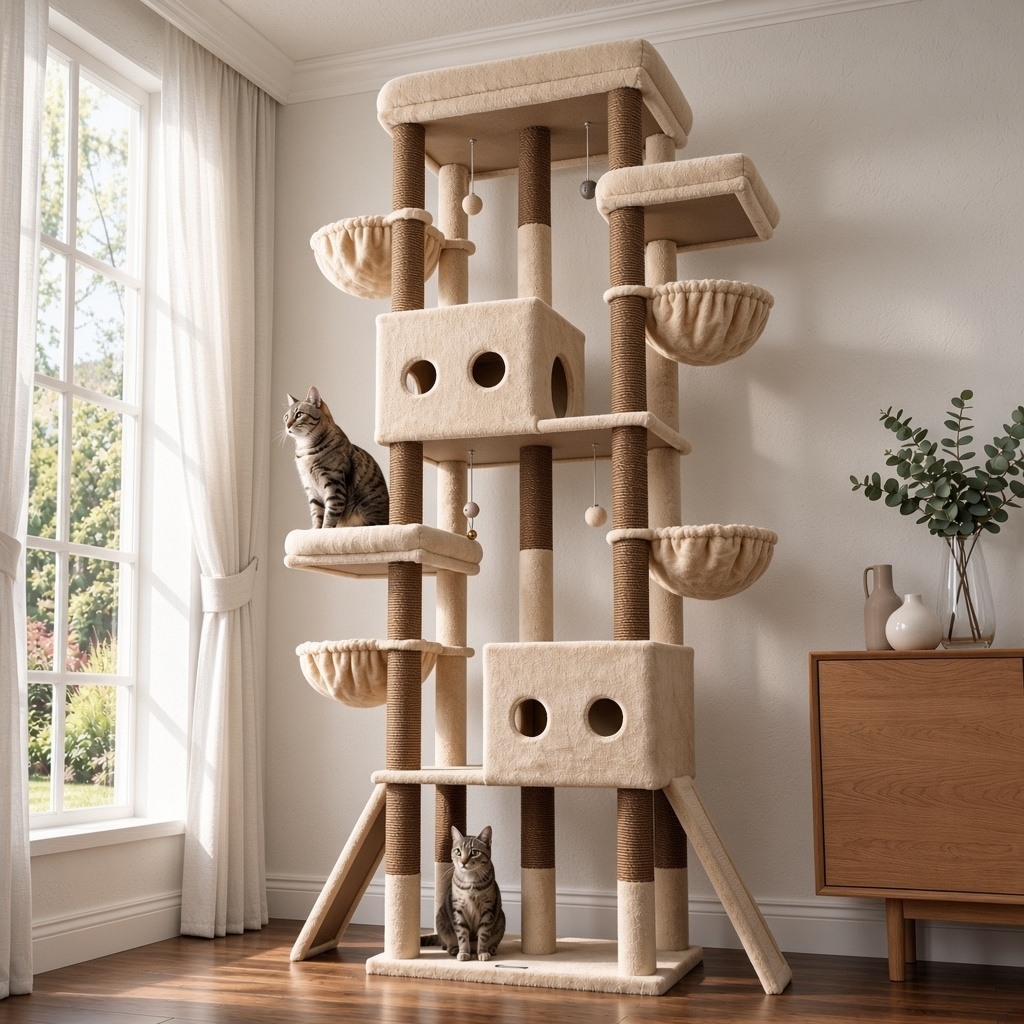
Scratching and resting are daily rituals. Cats return to surfaces that feel right under claws and paws—not surfaces that merely survive abuse. Short, resilient plush reads closer to home textiles than to carnival carpet. It invites contact without the synthetic shine that photographs cheap in daylight.
When owners compare swatches beside their sofa fabric, the question changes. It is no longer “Will my cat use this?” alone. It becomes “Will I want this beside my sofa for years?” That shift is structural. Pet products are being judged by interior standards, not pet-aisle standards.
Industry Updates observation points the same way: furniture-style pet products borrow upholstery logic—hand-feel, nap direction, how a surface recovers after compression. A tower that feels like a throw blanket earns repeat contact; a tower that feels like utility matting gets used reluctantly, then ignored in the corner.
Durability: the boring tests that matter
Modern fabric selection for cat trees is unglamorous work. We simulate vacuum passes, corner fraying at platform edges, and the slow flattening where a cat lands twice a day. A pile that looks luxurious in a roll but mats in a week fails—even if a cat still naps there, the room loses calm.
Sisal columns still do the hard labor of scratching; platforms do the soft labor of trust. When plush density is right, owners stop treating the tower as a compromise and start treating it as part of the room’s textile story. We track wear at platform corners separately from center kneading zones because cats use those surfaces differently—and because replacement decisions follow different timelines.
Density also changes cleaning behavior. Looser novelty pile traps hair and reads dingy after one season; tighter short-pile plush releases debris in a normal vacuum pass. That practical difference is why modern fabric work is not vanity—it is maintenance math owners feel every Sunday.
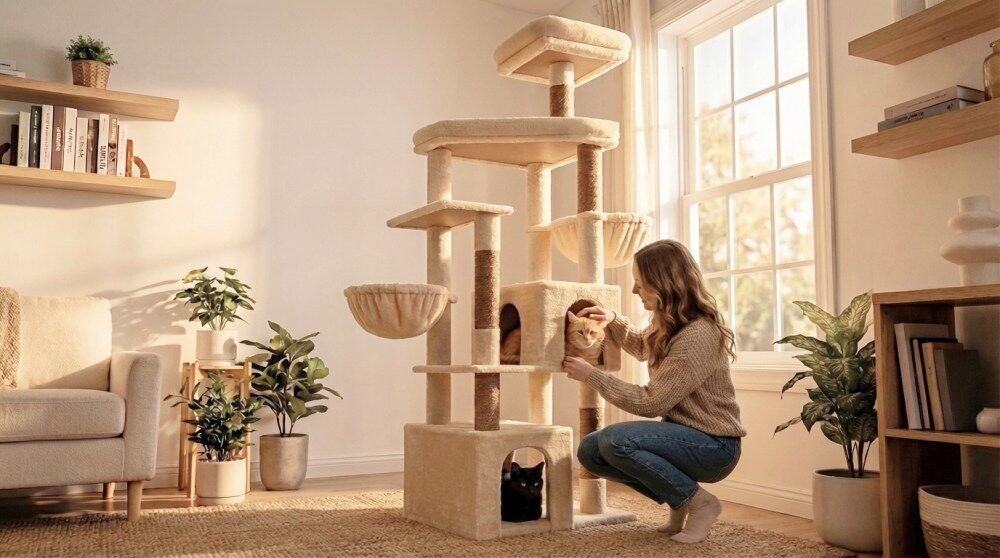
Aesthetics and home logic. Design media have tracked the same move across categories: neutral palettes, textured surfaces, restrained profiles. Cat trees are finally borrowing that logic instead of fighting it. Beige, warm grey, and light grey are not absence of color—they are compatibility with oak floors, white trim, and the grey upholstery common in North American rentals.
Retail floors reinforce the pattern. Neutral towers photograph across seasons without looking dated; loud carpet towers age in one decor cycle. When a SKU sits beside throw pillows in a lifestyle shot, fabric honesty matters as much as silhouette—matte surfaces, visible weave, no plastic sheen pretending to be wool.
Globlazer formed around a narrow belief: the category was ready for furniture discipline in fabric as much as in silhouette. The rise of modern plush and woven surfaces is not about making cat trees prettier. It is about making them belong—touch, durability, and aesthetics aligned so the tower earns its sightline.
The old carpet era asked cats to adapt to materials chosen for warehouses. The modern fabric era asks materials to adapt to homes. That is a harder design problem. It is also the one worth solving—and the one shaping every platform sample on our wall this year.
New Arrivals
Fresh designs, new colors, and limited releases for modern cat homes.