
The Future of Tall Vertical Cat Furniture
Tall vertical cat furniture has already crossed a threshold: it is no longer a corner accessory. In many homes, a room-scale cat tree now occupies the same height budget as a bookcase. That reclassification changes what the future looks like.
The next wave is not simply taller. It is more configurable, more architectural, and more honest about living in a shared space. Height without proportion reads as stunt; height with calm landings and disciplined bases reads as furniture.
Configurable systems over one-size towers
Families change: cats grow, moves happen, multi-cat homes expand. Vertical systems that can add landings, swap modules, and adjust routes will outperform rigid single-build towers. Modularity only works when joints stay disciplined and the silhouette stays calm—expansion should feel like a design choice, not a pile of parts.
We expect more programs to ship core towers with expansion paths: an additional perch kit, a wider base option, a sisal refresh sleeve. The future favors structures that age with the household instead of retiring after one life stage.
Architecture language, not costume
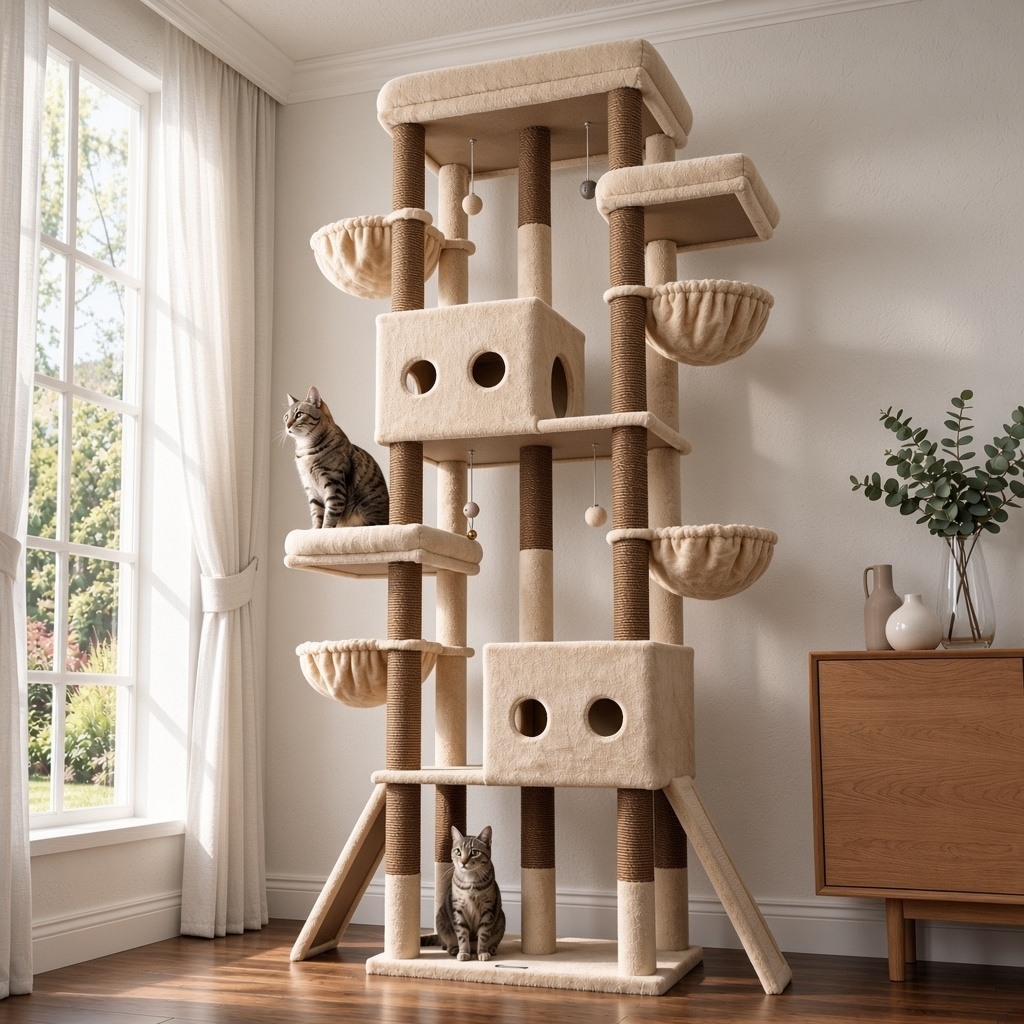
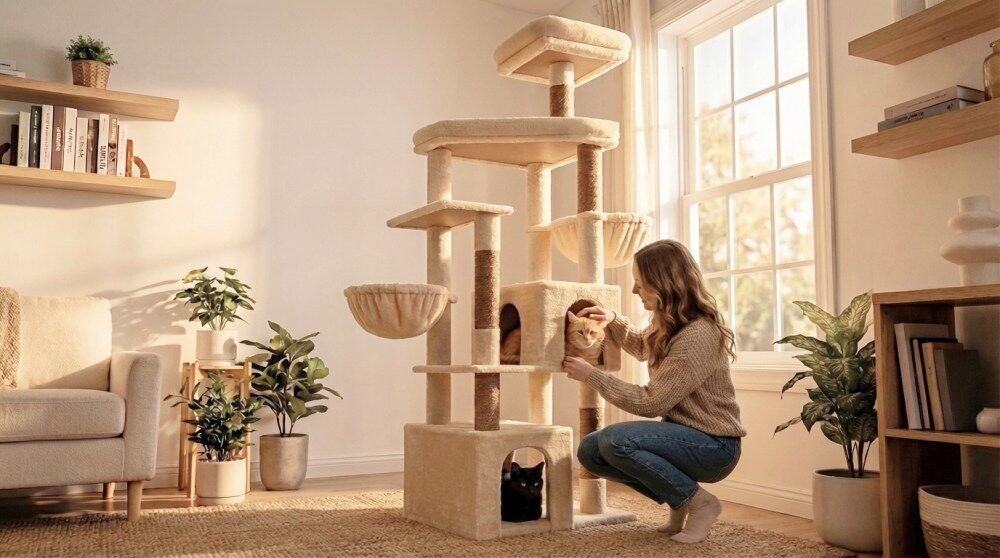
Design trends increasingly favor honest structure: posts, platforms, and materials that look like they belong with furniture. That means proportion first—landings sized for confident pauses, bases sized for quiet stability—and surfaces that read clean in daylight. The goal is less pet product and more vertical furniture made for cats.
Room-scale presence also changes color strategy. Neutral systems dominate because tall objects cannot hide behind novelty graphics. An 80-inch tower in warm beige behaves like a shelving unit; a tower in primary colors behaves like a temporary toy.
Engineering will keep pace with aesthetics. Taller programs need wider footprints, better joint interfaces, and sisal layouts that do not compromise the load path. The future belongs to brands that treat height as a system problem, not a headline number.
Market expression will differ. Compact homes may prefer slimmer towers that trade footprint for height. Larger open plans may favor wider landings and stronger room presence. European apartments may stress material quiet and low odor; North American open plans may stress sightline integration beside seating.
Retail will increasingly merchandise tall towers beside shelving and floor lamps rather than in aisle endcaps covered in cartoon graphics. That placement shift reinforces the furniture story consumers already expect.
We also expect more dialogue between vertical cat furniture and architectural storage—similar height budgets, similar neutral palettes, similar need to stay quiet when someone walks past with coffee. The next decade of tall towers will be judged on whether they feel like part of that furniture family.
Behavior research keeps pointing the same direction: indoor cats want height, but humans only grant height when the object respects the room. The future of tall vertical cat furniture is where those two truths meet without compromise.
Modular expansion, architectural proportion, and neutral palettes are not separate trends—they are the same future expressed in different workshops.
At Globlazer, tall vertical programs are being developed with that combined future in mind—not as taller novelty, but as room furniture cats can trust.
Height will keep rising only where stability and calm silhouettes rise with it.
But the direction is consistent: tall vertical systems that respect both cat behavior and interior composition will keep gaining ground. At Globlazer, we are building toward that future—structures tall enough to matter for cats, calm enough to matter for rooms.
We expect vertical programs to keep borrowing from architectural furniture: room-scale height, honest materials, neutral palettes that survive years beside a sofa. The cat tree category is growing up—and the future belongs to towers that look like they were always part of the floor plan.
New Arrivals
Fresh designs, new colors, and limited releases for modern cat homes.