
Why Consumers Expect Better Design From Pet Brands
Consumers expect better design from pet brands because pets have moved closer to the center of daily life. When a product is used every day and seen in every room photo, “good enough” stops being good enough.
The shift is easy to spot in return language. People rarely say “the cat tree failed.” They say it feels too loud, too toy-like, the wrong proportion, or that it simply does not fit the room. Blend-in is not a luxury promise anymore—it is baseline compatibility for large objects that live in shared spaces.
Social feeds accelerated the standard. A tower in the background of a dining photo is judged like a chair. Consumers now carry interior literacy from furniture purchases into pet purchases: they notice edge quality, color drift, and whether an object looks provisional.
What better design looks like in practice
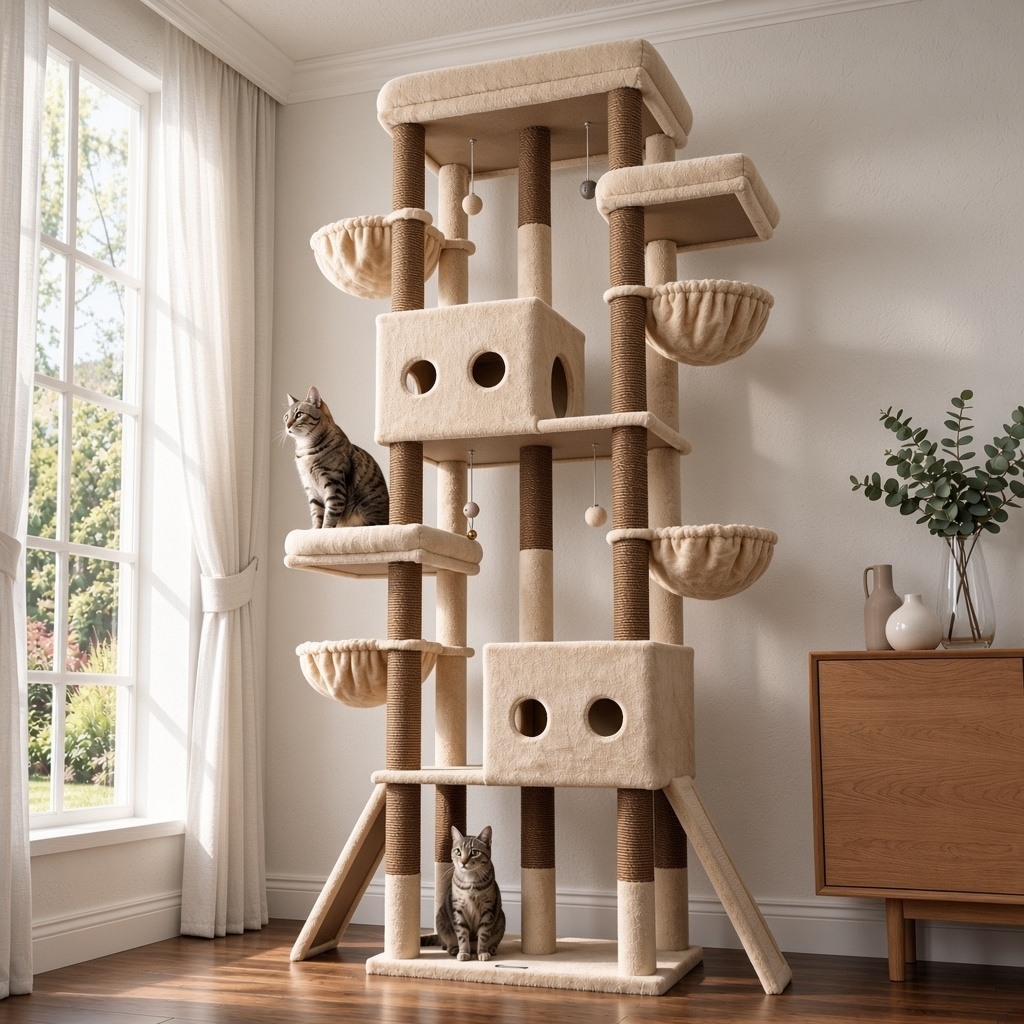
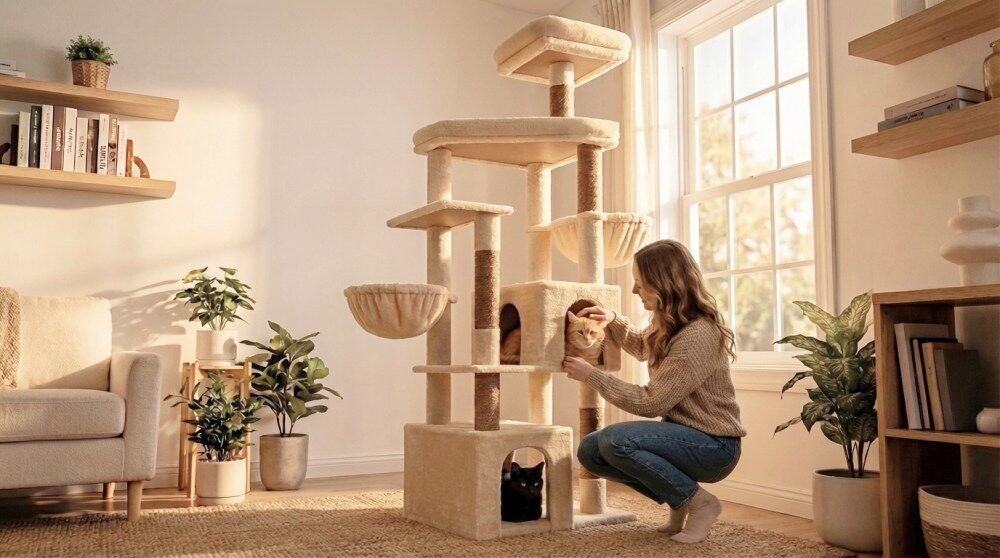
Better design is often quiet. It shows up as proportion that echoes human furniture, structure that looks honest instead of decorative, and a surface palette that behaves under daylight. It also shows up in engineering choices that people feel: stable bases, confident landings, routes that do not force cats into awkward leaps.
Design-literate buyers compare pet products to home objects they already own—sofas, shelves, lamps. A brand that treats a tall cat tree as a real piece of the room earns trust; a brand that treats it as a novelty accessory earns skepticism.
Materials matter in this comparison. Cheap-looking pile, shiny binding, and loud printed patterns signal “temporary.” Matte plush, honest sisal, and neutral palettes signal “staying.” Consumers may not name those details, but they feel them during the first week beside the sofa.
Service language follows the same curve. Assembly friction, missing hardware, and scuffed corners out of the box read as design failures even when the climb path works. Better design now includes the unboxing moment—not only the silhouette.
Price sensitivity has not disappeared, but the definition of value changed. A slightly higher ticket for a tower that stays in the living room for years beats a bargain object that gets relegated to a hallway within a month.
Younger households especially expect pet brands to speak the same visual language as the rest of their home. That does not mean luxury—it means intentional proportion, calm color, and structures that look like they were planned with the sofa, not dragged in after it.
We see the expectation show up in product questions too: fewer requests for bright novelty, more requests for neutral towers that can stay in photos year after year. Better design is becoming the price of staying visible in a curated home.
Pet brands that ignore that curve will keep shipping objects cats use in secret while families apologize for them in public.
Design expectation is no longer a premium segment—it is the default bar for any large object that shares a living room with people every day.
Consumers are not asking pet brands to become fashion houses; they are asking them to stop looking like an afterthought in a well-designed room.
That is a durable shift—and it is already reshaping what “good enough” means for every tall cat tree in the category.
At Globlazer, we believe the direction is permanent. As pet households continue to curate their homes, the winners will be brands that understand one truth: design is not decoration—it is how a product earns a place in a life.
That expectation will keep rising as more large pet objects move into shared rooms. Brands that treat design as a surface wrap will keep losing to brands that treat it as engineering, material, proportion, and packaging—everything a family touches before the cat takes the first climb.
New Arrivals
Fresh designs, new colors, and limited releases for modern cat homes.