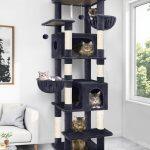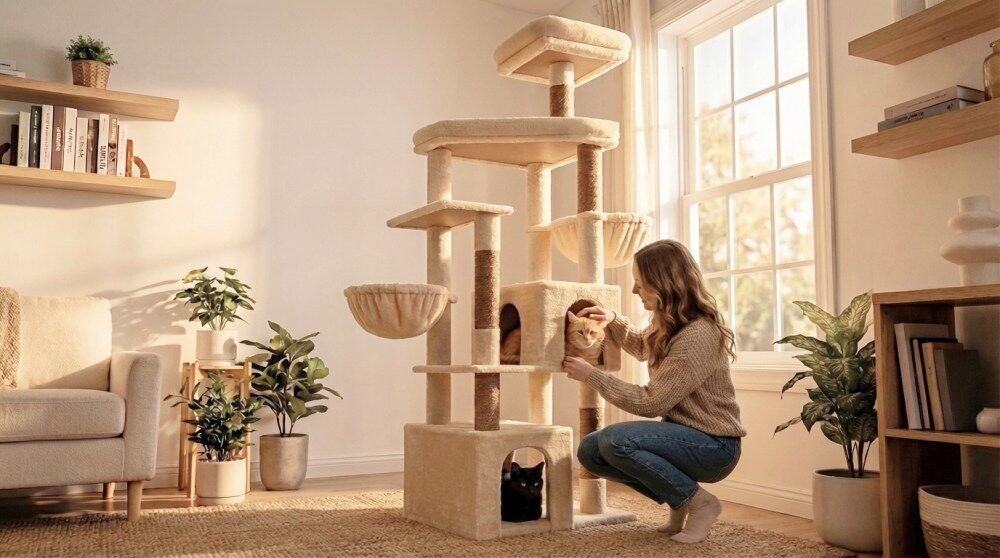

Refining Structural Details for Large Breed Support
Large indoor cats do not need a different category—they need different details. A Maine Coon or a big domestic shorthair still climbs, still scratches, still claims height. But on a standard cat tree built for average proportions, the failure points are predictable: platform edges that feel too narrow, posts that flex when a heavy cat launches, and landings that wobble just enough to make the top perch unused within a week.
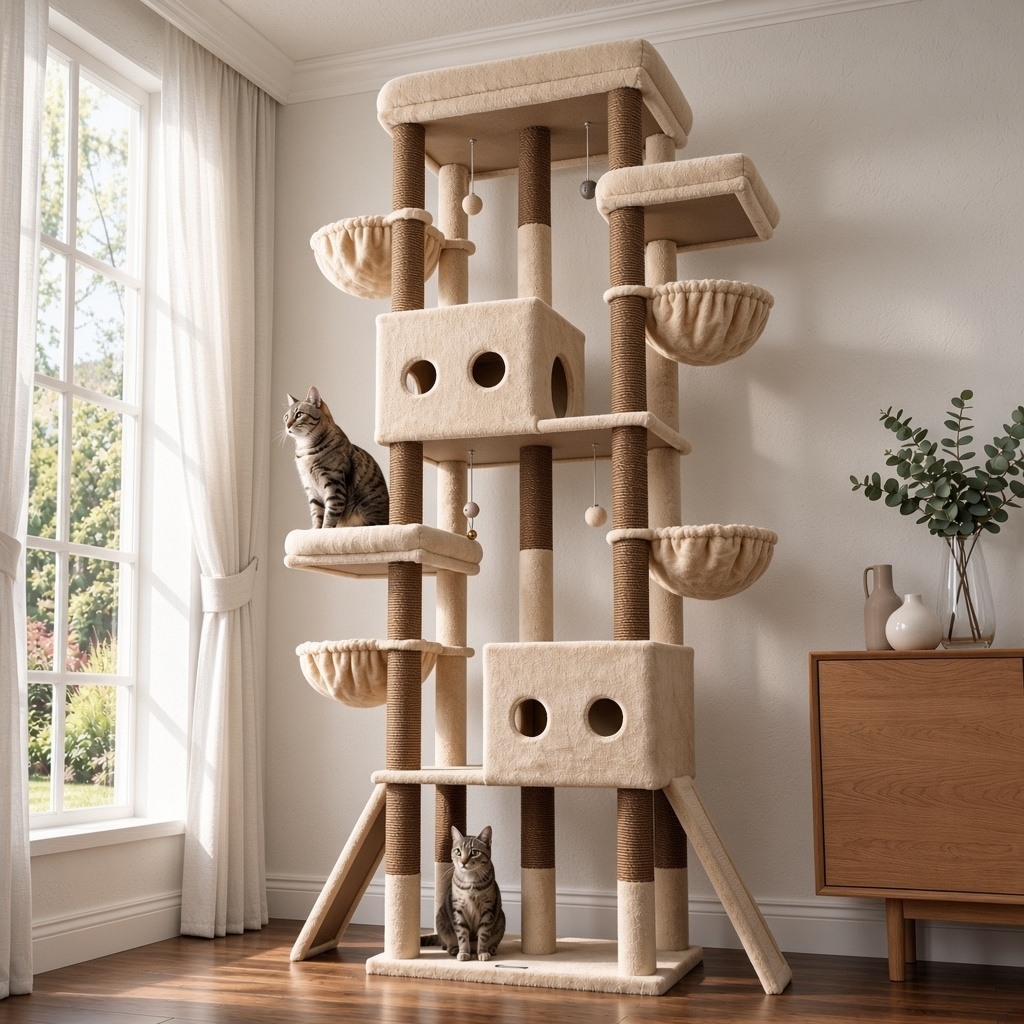
At Globlazer, large-breed support work starts with platform scale—not only width, but usable edge. Cats do not balance in the center of a saucer; they sit with paws near the rim and tails hanging. We widen key rest surfaces and reinforce post interfaces where mid-tower load concentrates, because that is where a 14-pound cat turns a decorative step into a daily stress test for joinery.
Structural details also include climb geometry. Large cats need straighter routes and fewer awkward leaps. When a step feels like a gamble, they choose the sofa. When landings feel generous and posts feel planted, daily use becomes routine. That means fewer diagonal hops between undersized platforms and more honest vertical rhythm—height earned through confidence, not novelty.
Base proportion matters as much as perch size. A tall Globlazer line only works for large breeds when footprint and mass placement keep leverage calm. We align base width with visual height so the tower reads room-scale without spreading like furniture that lost its discipline. The goal is not the tallest silhouette in a listing photo; it is the tower a large cat still trusts on day sixty.
Surface choices follow the same logic. Plush that mats under heavy rest traffic, or sisal that shreds unevenly, signals instability before structure fails. We pair durable scratch zones with rest platforms sized for paws and tails, so wear patterns stay even and families are not surprised by early replacement cycles.
Condo entries deserve the same attention. Large cats squeeze through openings that look generous on paper but feel tight in motion—shoulders catch, exits become hesitant, and a premium perch loses value when the path up feels argumentative. We widen entries and soften interior corners so circulation matches how big bodies actually move.
Scratch post diameter is another quiet detail. Undersized columns tempt large cats to wrap with too much torque, accelerating wear and telegraphing flex. We scale sisal zones for full-extension scratching so the post feels planted, not like a pencil someone glued to plywood.
Retail feedback on tall neutrals keeps confirming the pattern: returns framed as “my cat won’t use the top” often trace back to geometry, not color. When we fix landings and mid-tower calm, usage climbs without changing the silhouette families already merchandised.
These refinements are rolling into upcoming tall lines built for confident climbers—not novelty height, but height that large cats actually trust. If your home centers on a big indoor cat, the difference is rarely one heroic feature. It is dozens of structural details that let climbing feel ordinary again.
We also watch how large cats use scratch zones—not only rest platforms. Full-extension scratching puts torque on posts that average-breed towers tolerate quietly until a heavy cat makes the flex visible. Scaling sisal diameter and wrap tension for that load keeps the mid-tower calm owners judge with one hand during assembly.
Upcoming tall programs inherit these details as defaults, not upgrades. That is how a Globlazer cat tree earns repeat height use in homes where one big cat sets the standard for whether furniture stays or gets replaced.
“””
New Arrivals
Fresh designs, new colors, and limited releases for modern cat homes.