
Validating Our Latest Structural Designs: A Cat Tree Perspective
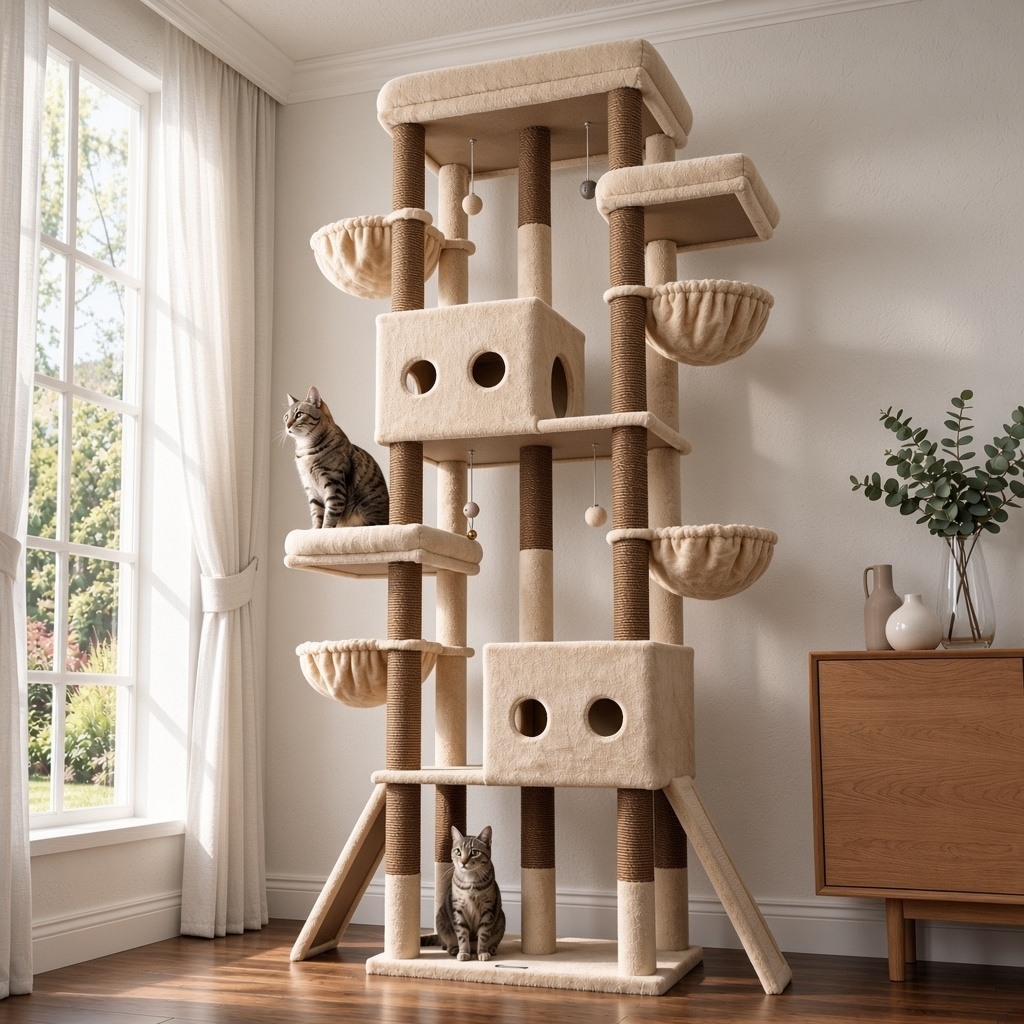
Tall Globlazer structures live under two kinds of pressure: the physics of height, and the physics of cats. Our latest structural work focuses on how joints, posts, and bases behave when everyday launches replace careful demos. Think of it as a validation loop grounded in engineering standards—not a lab report, but a design practice that listens to real movement.
We build partial frames, apply controlled load at platform heights, and observe where flex appears first—usually at a connector, sometimes at a base corner, rarely where owners expect. Those observations do not stay in spreadsheets. They return to the drawing board as wider gussets, post bays narrowed by an inch, or base plates that distribute load differently. Owners should experience the result as confidence, not hardware.
Recent iterations targeted reinforced metal connections on mid-tall towers. The goal was not a bigger spec sheet. It was a calmer answer when a large indoor cat hits the third level at full speed. Because force concentrates at joints before a tower looks visibly troubled, we refined engagement depth, alignment tolerances, and how metal seats within plush-wrapped columns without compromising the finish owners see in their living rooms.
We also map how weight travels when platforms are unevenly occupied—one cat sleeping up top while another climbs below. A cat tree that feels fine under static push can still telegraph movement under staggered use, so our validation includes those patterns. That means reviewing routes, not just components: where sisal meets carpet, where a hammock softens a landing, and how platform edges guide direction changes during a chase.
Standards, for us, are less about publishing numbers and more about repeatable behavior. A Globlazer cat tree should feel similarly planted on month twelve as on week one, across seasons, reassembly after a move, and the unpredictable enthusiasm of multiple cats. We document internal benchmarks for base slip, connector set, and perceptible sway at upper perches, then refine until the structure reads as one piece of furniture rather than a tall stack negotiating with gravity.
Material choices participate in the same story. Sisal density, platform core stiffness, and how plush recovers after compression all change how loads read at metal joints. Our structural reviews therefore sit beside fabric and color reviews—not as separate departments, but as one conversation about whether a design can live politely in a shared interior while surviving energetic use.
This work continues across multiple tall designs in our line, from slim apartment towers to layered multi-cat configurations. Stability remains the non-negotiable before silhouette, color, or packaging ever ship. When we validate a frame, we are also validating the promise behind the Globlazer name: that vertical space for cats should not cost visual calm for the people who share the room.
The loop does not end at approval. Field feedback, assembly notes, and how owners describe wobble in support conversations all feed the next round. Structural validation is how we keep tall cat trees honest—engineered for launches, naps, and the ordinary chaos of home life. That discipline is what lets height feel generous instead of risky.
New Arrivals
Fresh designs, new colors, and limited releases for modern cat homes.