
The Importance of Texture in Large Cat Tree Design
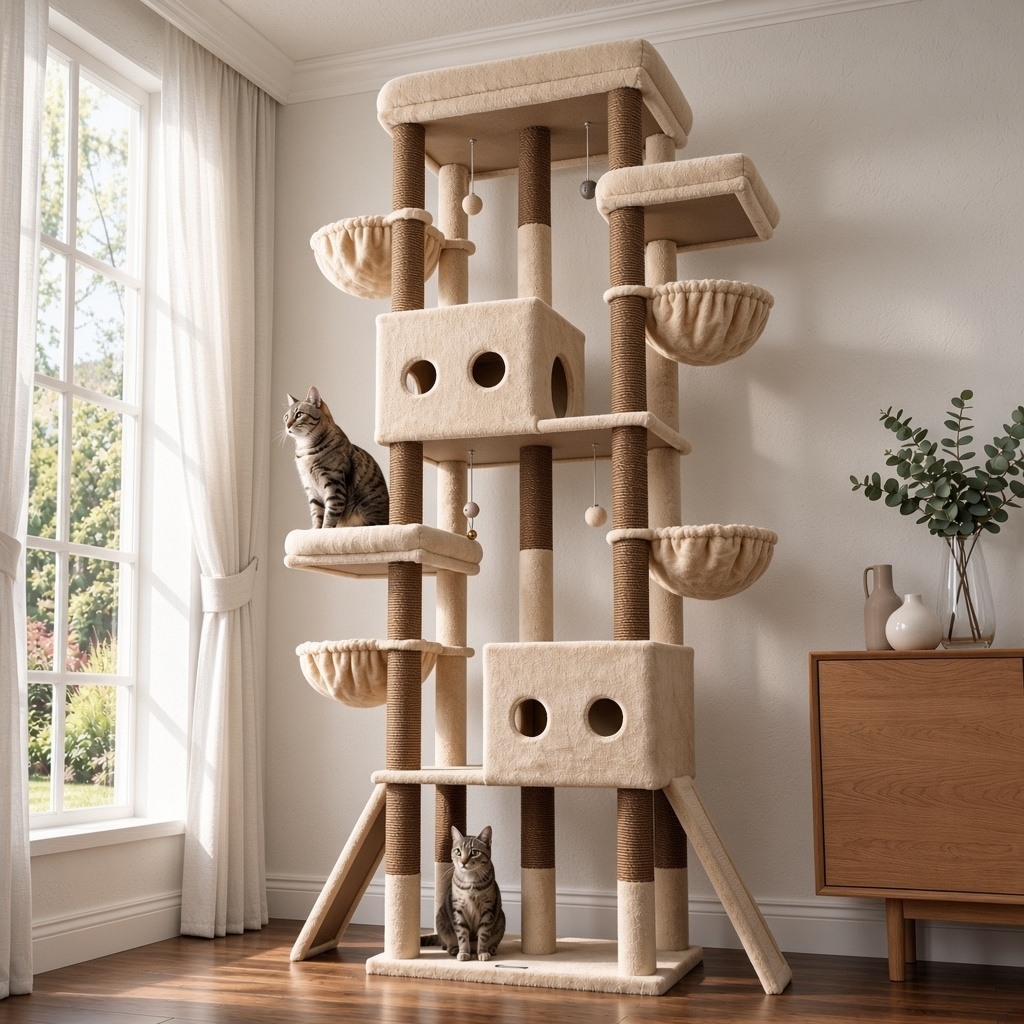
Large cat trees photograph as shapes, but cats experience them as surfaces. On a tall Globlazer tower, texture is where design meets daily life—where a platform invites a nap, where a post earns repeat scratching, where materials still look honest after months beside a sofa.
Scale amplifies everything. A small tree hides mediocre fabric in photos; a room-scale structure cannot. Pile height, sheen, and edge finishing read from across the living room. That is why we sample plush under window light, not only under studio spots. What looks soft under a single bulb can look plastic under the grey afternoon light that actually fills European and North American apartments.
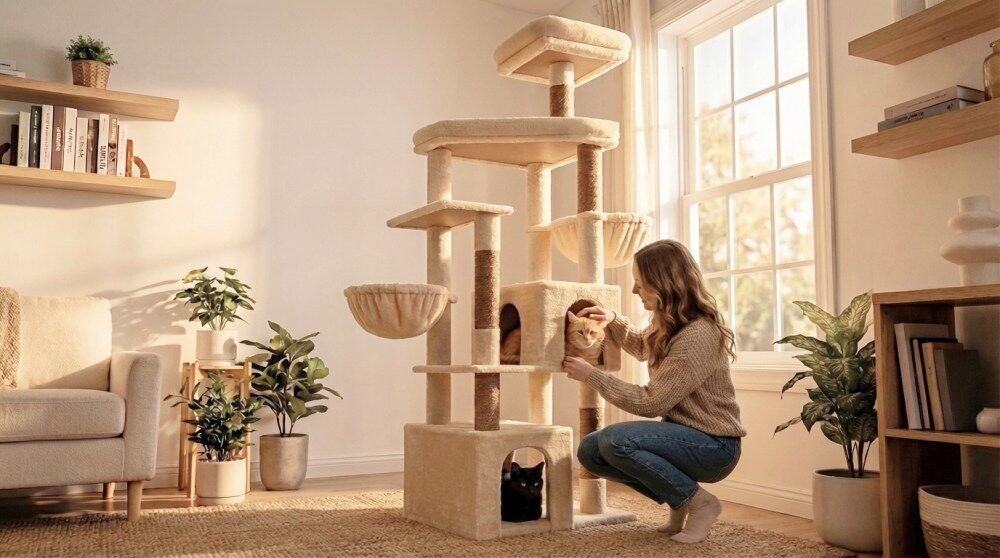
Platforms need touch that feels welcoming without trapping heat. Short-to-medium pile often outperforms novelty long fur for large cats that groom and resettle. The goal is a surface that recovers after compression and does not shine on camera like synthetic carpet. When a wide perch holds a twelve-pound cat that turns twice before settling, the fabric either forgives that motion or betrays it with matting and shine.
We compare swatches the way interior designers compare upholstery—not for novelty, but for how a hand reads calm. Matte short pile has become a recurring direction because it survives vacuuming without looking tired. Slightly warmer beige-grey tones sit beside linen sofas without turning the tower into a second sofa.
Sisal carries a different texture story—rough enough for claws, consistent enough in wrap tension that cats return to the same column instead of migrating to the armchair. On large structures, sisal placement is routing: guide scratching along paths cats already use when they climb. A post placed for photos but ignored in motion is wasted rope. A post placed at the turn between levels becomes part of muscle memory.
Edge finishing matters more as towers grow. A plush platform with a hard trim feels like a lip; a plush platform with a softened edge feels like an invitation. Cats notice with their chin and their paw pads before owners notice with their eyes. That is why we treat binding and seam height as part of the texture map, not as factory detail.
Contrast matters, but quietly. A neutral tower should not be monotone mud. We use texture shifts—plush rest beside rope climb, matte beside slightly warmer wood tone—to help cats read levels with their paws while owners read calm with their eyes. The living room gets depth without pattern noise.
Texture is also maintenance psychology. When fabric feels furniture-grade, owners are more willing to vacuum and spot-clean. When rope feels professional, they tolerate sisal dust as part of use, not as a sign of cheap construction. Large cat trees live in traffic lanes. Materials that shame owners end up covered with throws; materials that respect the room stay visible.
For large indoor cats, texture is trust. A wide platform with cheap pile feels like a trap; a wide platform with considered fabric feels like a choice. That perceptual difference decides whether the top perch becomes a bedroom or a bypass. Paw spread on a large cat is unforgiving. If the surface feels slick or shallow, the animal will simply choose the bed.
We treat texture as engineering, not decoration—measured, compared, revised across seasons. It is one reason Globlazer large towers aim to feel soft in the home and still survive ordinary traffic from the heaviest climbers. The best compliment we hear is not that a cat tree looks expensive. It is that it feels like it was always part of the room—and that the cat’s favorite nap spot is not the human’s chair.
New Arrivals
Fresh designs, new colors, and limited releases for modern cat homes.