
Refining Reinforced Metal Connections: A Cat Tree Perspective
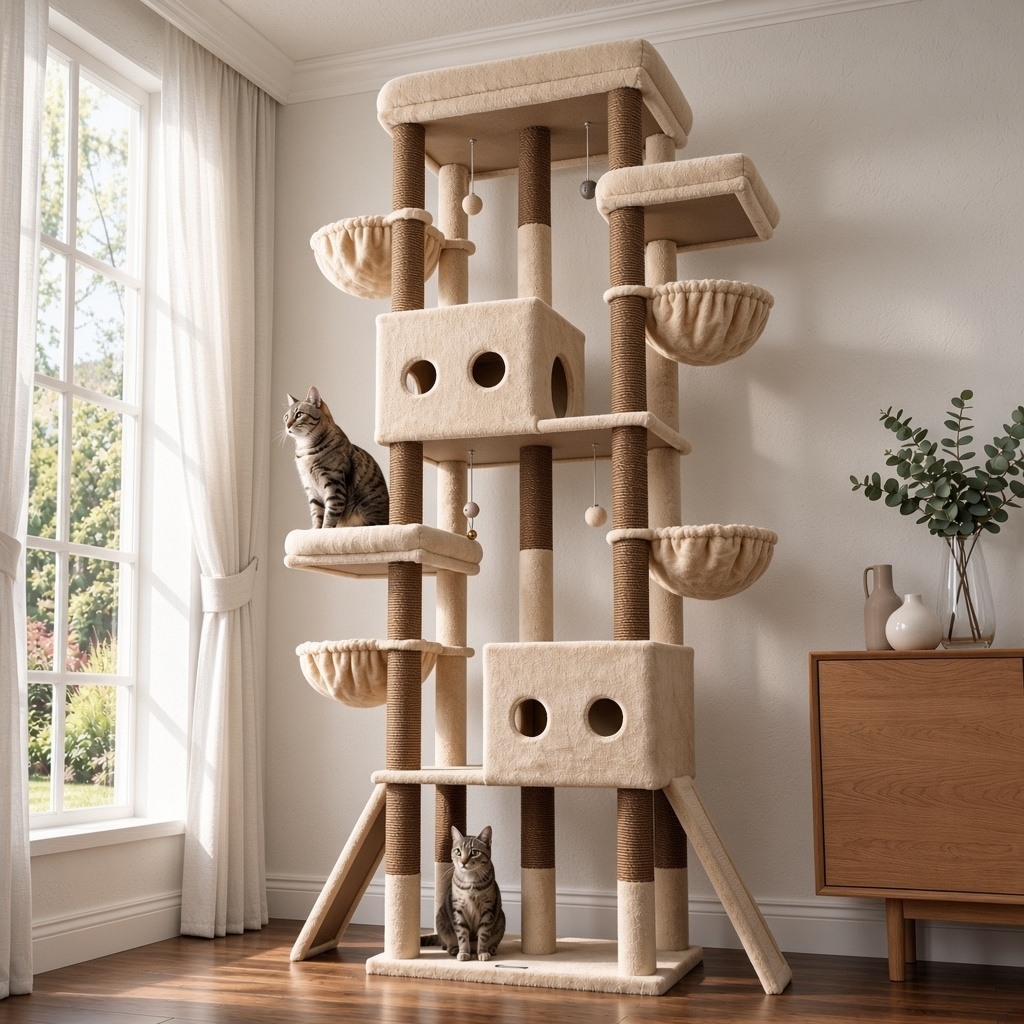
On a tall cat tree, the smallest movement rarely starts where you expect. It often begins inside a joint—where a post meets a base, where a platform meets a column, where two parts agree to behave like one. At Globlazer, we spent this season refining a reinforced metal connection system that sits quietly under the plush. It is not a feature you photograph. It is a feeling you notice when a cat launches upward and the structure answers with calm.
Owners describe instability as a single word. In reality, it can be a chain: a tiny gap in fit, a soft compression in surrounding material, and a fast change in direction when a cat pushes off. Each link may be small, but together they create the micro-sway that makes a top perch feel less trustworthy. That is why we focused on the connection itself—tighter engagement, clearer alignment, and a more predictable set as parts come together. Reinforced metal elements help the joint behave consistently across repeated assembly and years of daily use.
Cat trees live in living rooms, not pristine workshops. People assemble them after work, on flooring that is not perfectly level, sometimes with an impatient cat circling the box. A connection system has to guide the hand. It needs to feel obvious, resist cross-threading, and lock into place without asking for guesswork. We iterated toward joints that reward correct alignment and reduce ambiguity, because when you tighten a connection, the structure should feel more stable—not merely finished.
Our refinement loop looked at how load travels through mid-tall towers when weight shifts suddenly. A large indoor cat hitting the third level at full speed concentrates force at connectors long before the base shows any obvious flex. We mapped those moments in partial frames, adjusted gusset geometry, and narrowed post bays where extra rigidity mattered more than visual slimness. The changes are often invisible in product photography, yet they change whether a climb feels secure on month six.
Metal also interacts with the materials around it. Plush wraps, sisal sleeves, and platform cores compress differently under torque. We developed assembly sequences that protect surrounding layers while metal hardware seats fully—so owners do not have to choose between a snug joint and a clean finish. That integration work is slow and unglamorous. It is also what separates a furniture-style cat tree from a stack of parts that merely looks tall.
Across our line, reinforced connections now support the same stability language we use in design reviews: a tower should not ask the owner to choose between silhouette and confidence. When platforms are unevenly occupied—one cat sleeping up top while another climbs below—the joints must still read as one structure, not a loose collaboration of platforms.
These refinements are part of the promise behind every Globlazer cat tree. Stability is not a paragraph in the manual. It is the moment a cat trusts the climb, and the owner stops flinching when the evening launch happens again. We will keep developing connection details as heights grow and room-scale concepts advance, because the quietest engineering is often what makes a cat tree feel like it belongs.
New Arrivals
Fresh designs, new colors, and limited releases for modern cat homes.