
Engineering Stability Into Extra-Tall Structures
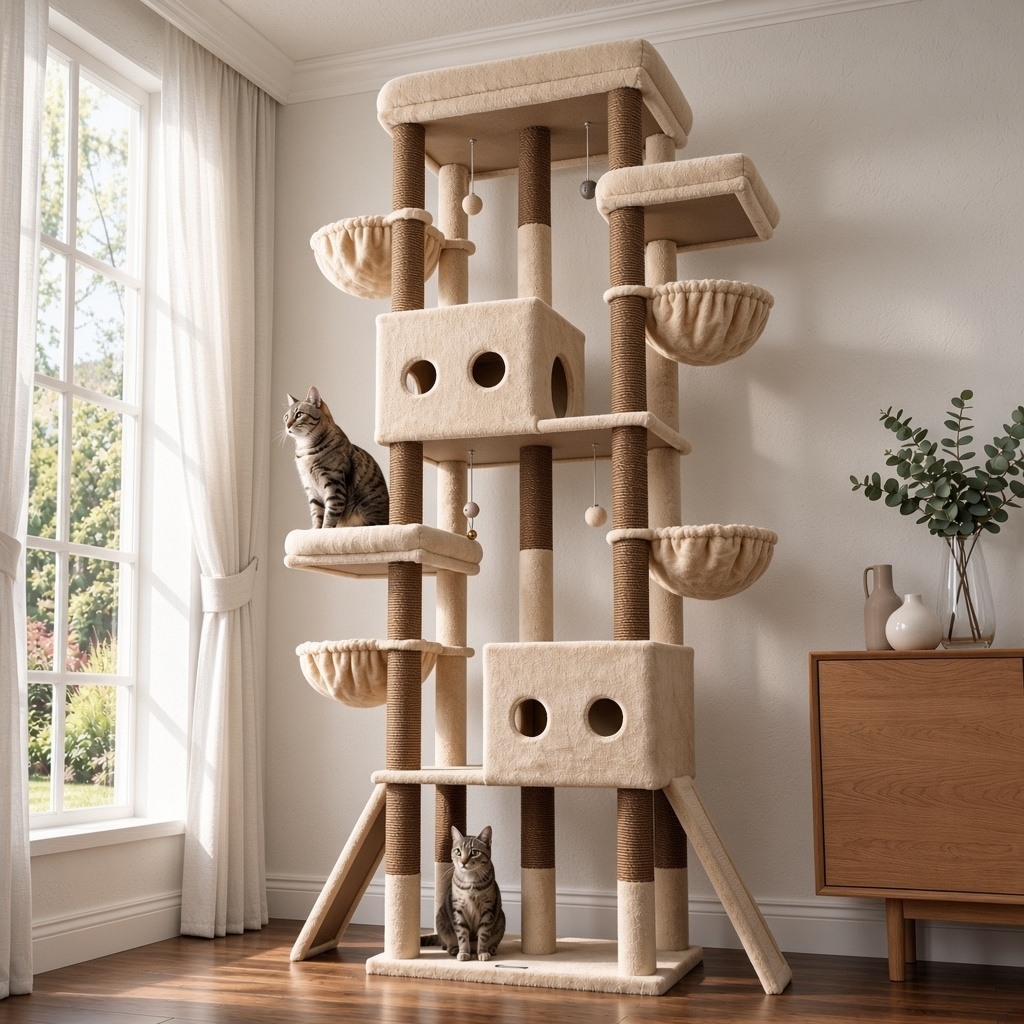
Extra-tall structures create a unique promise: the height feels architectural, but the daily use must feel effortless. The hard part is stability. On an 80-inch-plus cat tree, stability is not one component—it is base proportion, mass placement, post layout, and joint discipline working together.
Globlazer approaches this as a system problem. A taller tower changes leverage. A platform that feels generous at mid-height can become the moment where hesitation appears higher up. If cats do not trust the climb, the entire height becomes decoration.
We learned this early in tall-line development: owners rarely complain about height on paper. They complain when a post moves under a hand, when a landing flexes, or when a cat pauses halfway and chooses the sofa instead. Stability is therefore a behavior problem before it is an engineering spreadsheet.
Base, mass, and the trust gradient
We start at the footprint. Stability begins with how the base relates to the tower’s visual height budget. A narrow base on a room-scale tower may look elegant in a render and feel wrong under use. We widen where the floor can answer load, then shape the upper volume so the silhouette stays calm rather than top-heavy.
Mass placement follows. Weight belongs where leverage is lowest—close to the floor—not clustered under the top perch where it only makes the structure feel eager to tip. Reducing top-heavy feel also reduces micro-sway that humans notice with a hand on the post. That micro-sway matters because it influences cat confidence long before any specification is read.
Post layout is the next layer. Extra-tall towers cannot rely on a single straight column and hope for the best. Wide landings, aligned climb lines, and support points placed where load actually transfers keep the route consistent. When the route is consistent, cats move with fewer pauses; when it is inconsistent, they search for an alternative and stop using height.
Landings deserve their own engineering attention. A perch that flexes under a large cat teaches hesitation faster than any wobble at the base. We size platforms for adult indoor cats, reinforce undersides where traffic is highest, and align sisal zones so scratching does not fight the climb path.
Joints are where tall towers live or die. Modular systems only work when interfaces stay tight under daily motion and do not loosen because the structure is tall. Small choices—washer placement, interface rings, how a platform locks onto a post—become the difference between planted and persuasive. We treat joint discipline as a design feature families can feel, not a factory detail they should never think about.
Material choices reinforce the same story. Board grades, post wall thickness, and sisal wrap tension all change how force travels through a tower. A tall cat tree that looks minimal still needs honest structure underneath—because the cat does not care about the silhouette; it cares whether the next step is trustworthy.
We also test for off-center loading—the way cats actually jump. A tower that feels solid when pushed straight down may still whisper uncertainty when weight lands near a platform edge. Our tall-line reviews include those eccentric loads because real homes do not distribute weight like a lab fixture.
Sisal placement interacts with stability too. Scratching posts that sit on the primary load path must not introduce twist into the column stack. We route sisal where cats want it without turning the post into a torsion problem three feet off the floor.
Finally, we think about the human touch test. Families rest a hand on the post when coaxing a hesitant cat. Micro-movement they notice becomes a story about quality even when the tower never technically fails. Quiet physics—no drama when touched—is part of the product promise.
We document those learnings across tall-line iterations so each new platform height inherits the last generation’s joint lessons. That continuity is how extra-tall structures move from impressive in a photo to dependable on a Tuesday evening when three cats are racing for the top perch.
Stability engineering also shapes silhouette choices. A tower that needs excessive cross-bracing to stay planted may solve physics while failing the living room. Our teams balance structural honesty with visual calm—wide enough to trust, quiet enough to keep.
Replacement and service paths matter at height too. Wear surfaces and sisal zones are planned so maintenance does not require disassembling half the tower and reintroducing wobble. A tall cat tree that cannot be refreshed gracefully will leave the room sooner than a shorter one that can.
Our stability work continues across upcoming tall lines. The goal is a tower that holds room-scale height while feeling calm under touch, so cats can climb with confidence and families can place it where it belongs in the home—not where it is least embarrassing, but where cats actually want to be. Every extra inch of height we add is reviewed against that trust gradient, because tall structures only succeed when both species in the room believe the next step.
New Arrivals
Fresh designs, new colors, and limited releases for modern cat homes.