
How Cat Furniture Became Part of Interior Design
Interior design used to treat pets as an exception—a bowl tucked away, a bed hidden under a desk. Cat furniture lived in that exception zone for decades: loud carpet, faux branches, objects that worked for cats but failed the living room photograph.
The crossover happened when homes changed faster than the pet aisle. Open plans merged kitchen, work, and lounge into one sightline. Remote work made the main room a full-day habitat for people and cats. Renovation culture turned pet corner into an outdated compromise.
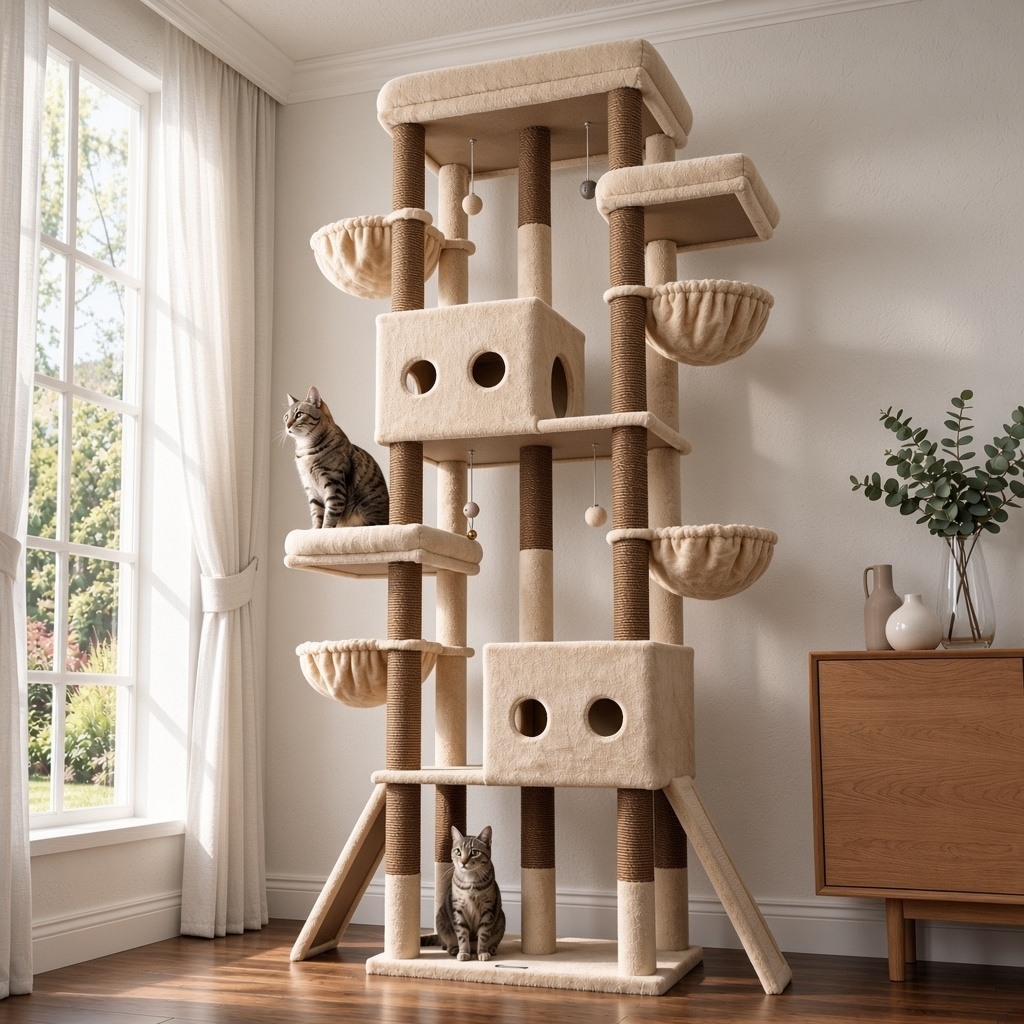
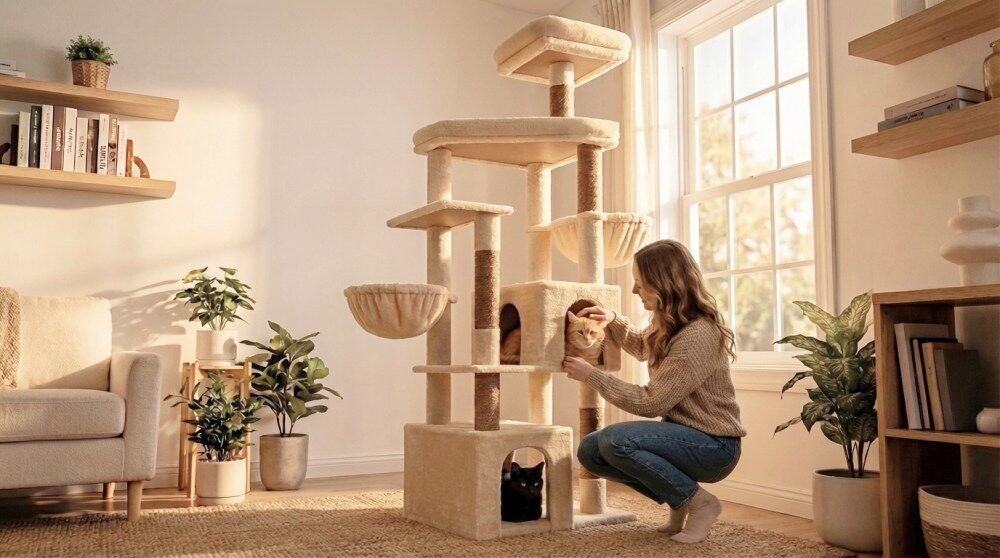
Design media now describe pet-friendly interiors with the same vocabulary as human furniture: durable fabrics, planned routes, integrated storage, vertical space used intentionally. Cat towers entered mood boards not as novelty, but as vertical pieces that must match palette and proportion.
When cat furniture answers interior questions
Cat furniture became part of interior design when it started answering interior questions: Does this object respect the sofa color story? Does it preserve walkways? Does it look permanent enough to survive two redesign cycles?
At Globlazer, we sketch towers beside rug outlines before elevations. Red tape marks the walkway from kitchen to desk; blue tape marks where a cat tree can borrow height without stealing steps. Integration is a sightline test, not a color swatch test—if a tower reads as a prop beside human furniture elevations, it returns to the board even when every perch spec checks out on paper.
Retail and social proof reinforced the shift. Neutral towers photograph credibly beside linen sectionals. Bright pet colors look instantly dated in minimalist rentals. Owners share room tours where the cat tree is visible—because it is no longer shameful.
Materials specified like upholstery
Professionals specify materials differently now—matte plush, visible sisal weave, wood tones that align with flooring. The goal is honesty: performance without costume. Sisal looks like sisal; plush is chosen for touch and recovery after compression, not for carnival pile.
Globlazer’s design language tracks that migration. BG/DG/LG systems, edited silhouettes, room-scale heights, bases tuned for hardwood—these are interior decisions translated into cat routes. We sample fabrics beside sofa swatches now, not beside pet-aisle carpet chips.
Pet-friendly interiors also plan vertical routes the way they plan lighting layers. A platform at window height is not an afterthought—it is part of how the room uses daylight. Entry sisal aligned to door paths respects how cats commute without turning the floor into an obstacle course.
The category is still uneven. Plenty of products remain pet-aisle theater. But the center of gravity moved: cat furniture is discussed alongside lighting and seating because households demand one coherent room—not a human design with a pet exception taped to the side.
Maintenance completes the interior argument. Surfaces that vacuum cleanly and corners that resist fray keep the tower looking chosen, not tolerated. Owners forgive sisal wear; they rarely forgive a structure that looks dated after one season beside a sofa they plan to keep for five.
Sound discipline matters in thin-walled flats. A planted base that does not creak on landing keeps the tower in the living zone instead of exiled to a bedroom. We mockup beside human furniture elevations because integration is a sightline test—if the tower reads as a prop, it returns to the board.
Lighting layers matter as much as color Customer Stories. A north-facing rental punishes shiny pile; a south-facing loft punishes colors that fight afternoon sun. Neutral platforms survived both because they borrowed the room’s existing light story instead of inventing a second one.
That is how cat furniture became part of interior design—not by marketing rebrands, but because modern homes ran out of spare rooms to hide the cat in. The tower that earns the window line earns better behavior too: cats use routes more when routes sit where light and motion already are.
New Arrivals
Fresh designs, new colors, and limited releases for modern cat homes.