
Designing Large Cat Trees for Modern Families
Modern families rarely have a dedicated “cat room.” They have one living area where homework, video calls, dinner plates, and a seventeen-pound cat compete for the same vertical airspace.
Designing large cat trees for that reality means balancing three pressures at once: height cats crave, stability humans demand, and calm aesthetics open plans require. Miss any one and the tower ends up in the hallway—or not in the home at all.
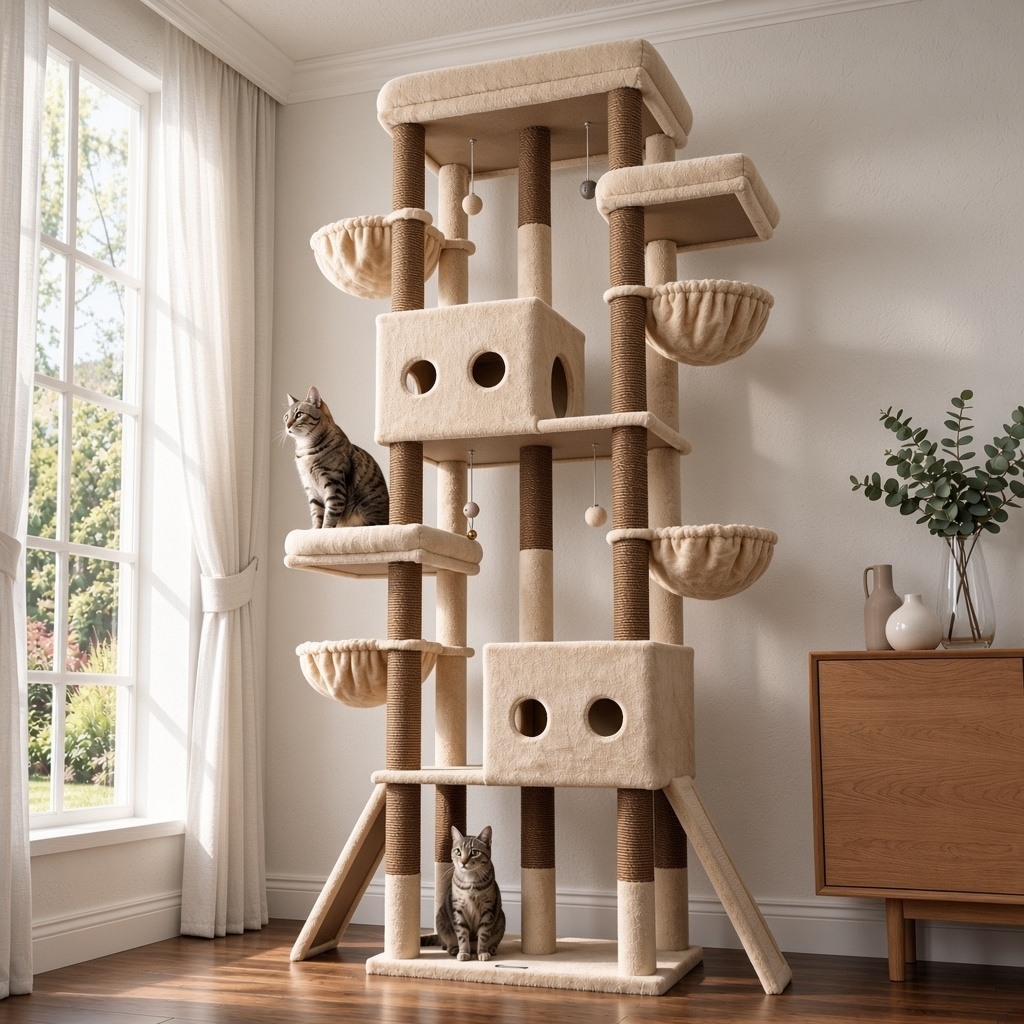
Height is not vanity. Large indoor cats and multi-cat households need real vertical routes, not a decorative ladder. Height buys territory: a high perch lets a confident cat watch the room without blocking the floor path of a second cat. But height without width becomes theater. Platforms must forgive turns, grooming, and the slow confidence check before a cat commits to the top. We stagger landings so climbs feel like furniture stairs, not a single risky leap.
Stability is the family contract. Kids cross the room, guests sit nearby, someone always walks past at the wrong moment. A tower that telegraphs sway loses trust from both species. Globlazer addresses that contract with wide bases, mass biased low, and post bays tuned for diagonal launches. Because large cats hit platforms off-center, we widen footprints where routes converge and stiffen connections at the transitions owners cannot see but cats always feel.
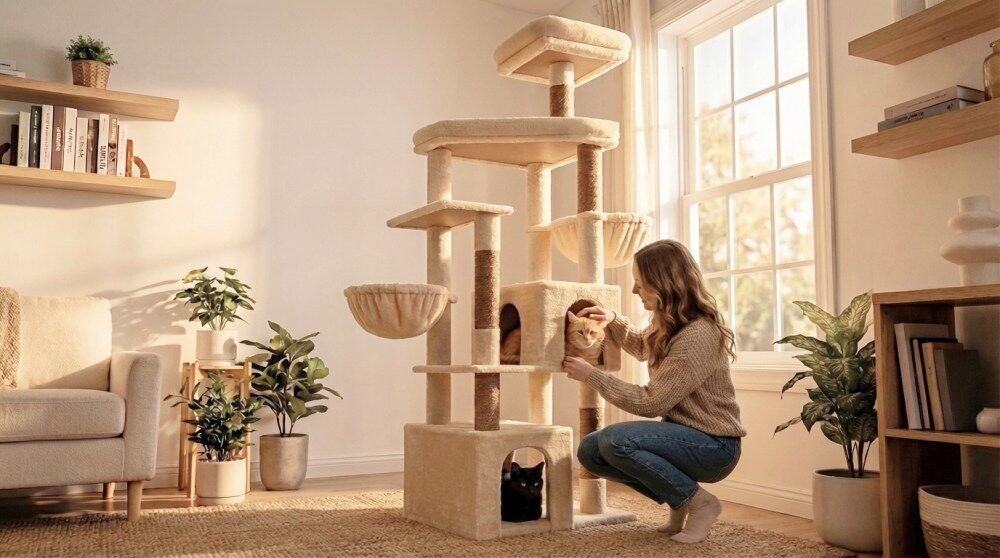
Aesthetics are how the contract gets signed. Modern families will not tolerate a carnival column in the sightline. Neutral palettes—beige, soft grey, light grey—let a tall cat tree stay beside the window instead of exiled to a spare bedroom. Furniture-like proportion matters as much as color: edited silhouettes, restrained attachments, surfaces that read as upholstery rather than pet-aisle novelty. The goal is not the tallest photo. It is the tallest object a household will keep in the room all year.
Multi-cat use changes the math again. One large tower can outperform two small ones if routes separate: different columns, staggered perches, scratch surfaces placed on daily traffic lines rather than mirrored for symmetry. We design for the household that will host two very different climbers—not the household that looks calm in a single-cat photoshoot.
Materials follow the same family logic. Plush must survive Tuesday traffic; sisal must live where cats already scratch. We choose surfaces that forgive claws and vacuums, then pair them with structural cores that stay quiet when launches repeat. That pairing is what makes a large tower livable, not merely impressive on arrival day.
We also design for the sightlines families actually use: towers beside windows without blocking light, profiles that clear door swings, neutrals that survive seasonal decor changes without looking dated. A large cat tree is a roommate; it should not renegotiate the room every quarter.
At Globlazer, large-family towers combine wide bases, staggered platform spacing, and neutrals chosen for open-plan life. We are not chasing spectacle. We are designing vertical neighborhoods inside one calm silhouette—so modern families do not have to choose between their cat’s height and their room’s peace, tonight or a year from now.
New Arrivals
Fresh designs, new colors, and limited releases for modern cat homes.