
Improving Weight Distribution Across Tall Structures
Tall cat trees fail in predictable ways. Not always dramatically—often quietly, with a micro-sway that owners feel with one hand and cats feel with their feet. The moment a tower telegraphs uncertainty, vertical space stops being an invitation and becomes a negotiation. That is why weight distribution moved to the center of our tall-structure work at Globlazer.
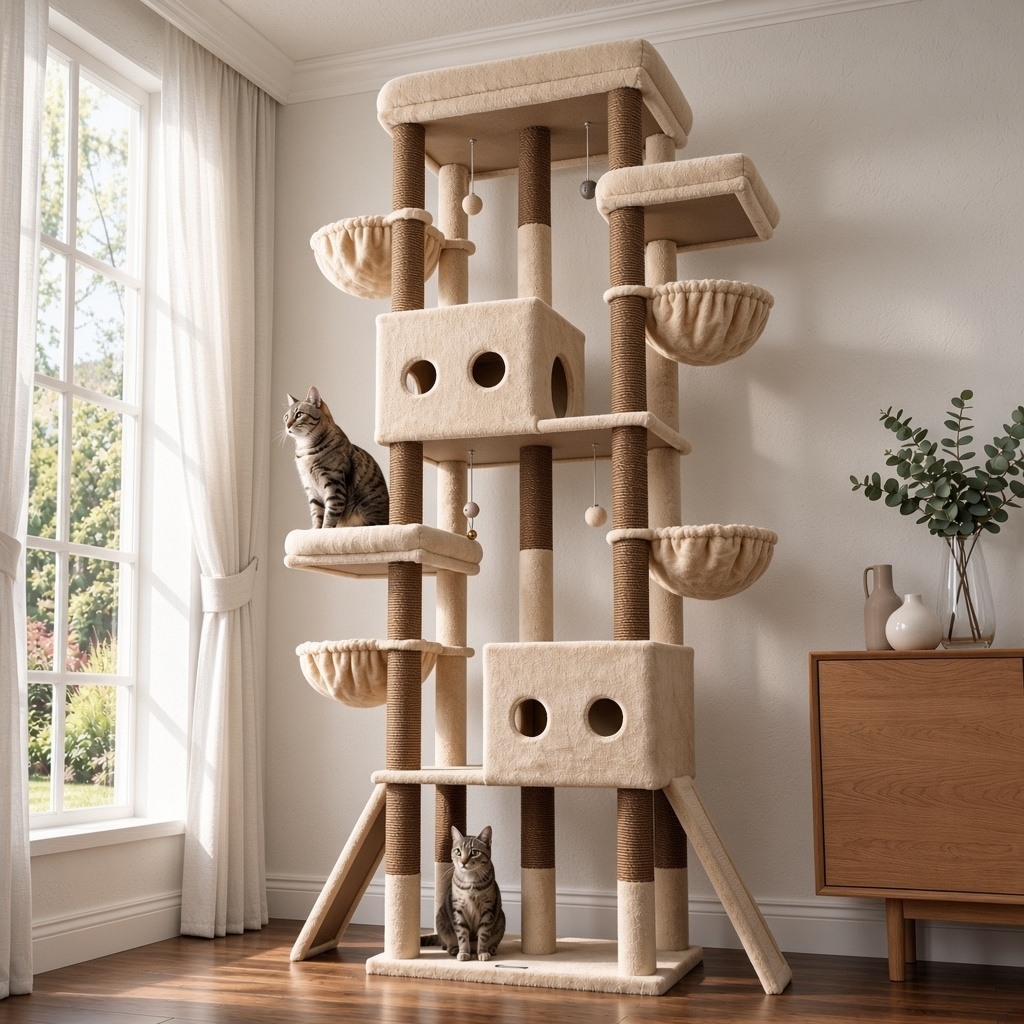
Height raises the stakes. When platforms stack higher, small imbalances in post alignment or platform overhang become louder. A perch that looked generous on paper can place mass too far from the support path beneath it. We have been revisiting how wide the base should be relative to the silhouette—wide enough for confidence in open-plan rooms, edited enough that the footprint still respects real apartment layouts beside sofas, media consoles, and the corners cats treat as launch pads.
Ballast and material choice matter, but geometry matters first. A base that looks wide yet concentrates mass in the wrong corners still passes movement upward. Our design team maps where cats actually land: the top perch at dusk, the third level during a diagonal sprint, the middle platform where a large indoor breed pauses before deciding whether the climb continues. Support paths are drawn for those impacts, not for an imaginary user who never shifts weight.
Posts are not interchangeable columns. Bay spacing changes how torque travels when a heavy cat launches from the middle platform. Narrow spacing can feel efficient in a diagram and brittle in daily use. Wider bays can calm the frame but risk visual bulk. We prototype different intervals and joint methods, then observe how the structure recovers after repeated climbs—the kind of ordinary abuse a premium cat tree should absorb without asking the household to adjust its habits.
Weight distribution also shapes what owners perceive before a cat ever steps on the tower. Lean a shoulder into a well-balanced frame and it returns a steady answer. Lean into one that borrowed height without mass discipline and the room suddenly feels less settled. That perceptual stability is what makes cats commit to the top perch. Whiskers and ankles agree long before anyone discusses engineering vocabulary.
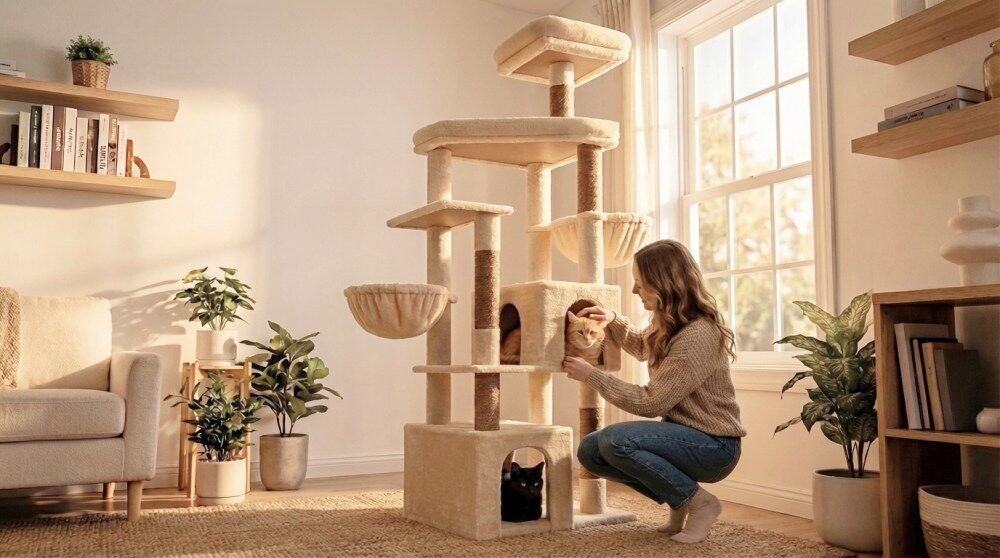
We apply these lessons across multiple tall Globlazer structures, not as a single hero dimension on one SKU. Room-scale towers, layered multi-cat layouts, and furniture-inspired profiles all share the same discipline: lower mass biased toward the footprint center, upper volumes edited so the eye travels upward without the floor feeling borrowed. Neutral surfaces help—the tower should read as calm furniture—but calm appearance cannot substitute for mass placed with intention.
Owners should not need a physics lecture to trust what they bought. They should feel the difference when they assemble the final section and the frame stops behaving like a stack of parts and starts behaving like one object. Better weight distribution is invisible when it works. That is the point—confidence you feel in the living room, not hardware you have to explain at the door.
For Globlazer, improving weight distribution across tall structures is less about chasing numbers and more about honoring how modern cat furniture lives: beside real sofas, under real ceilings, with real cats who will never read a specification sheet but will always vote with their feet.
New Arrivals
Fresh designs, new colors, and limited releases for modern cat homes.