
Understanding the Needs of Maine Coon Owners
A Maine Coon does not apologize for its size. The tail takes space on the windowsill. The shoulders fill a doorway. When such a cat looks at a narrow perch, the body language is clear: this is not for me.
Owners of large indoor cats—Maine Coons, big mixed breeds, long-haired rescues—often describe the same quiet frustration at the store. Towers marketed as “large” still offer platforms that feel like balance beams. The cat uses the bottom once, then returns to the back of the sofa where the surface is honest.
What they are really asking for is proof: proof the perch will hold a turn, proof the base will not telegraph sway to the floor below, proof the structure was designed for weight that moves athletically—not just sits.
Platform width is the first kindness. A large cat needs room to fold, groom, and watch the room without hanging off the edge. Height still matters, but height without width reads like a trick. On a generous top perch, a Maine Coon can settle into the loaf position with both paws tucked and still have margin—a small detail that decides whether the tower becomes daily furniture or expensive scenery.
Stability is the second kindness. Large cats launch. They hit upper levels with momentum that smaller cats never generate. A slight wobble at the base is not a quirk; it is a veto. Owners notice micro-movement instantly; cats notice it faster and simply opt out.
Picture a Tuesday evening in a neutral living room: a silver tabby Maine Coon named Otis drops from the sofa, crosses the rug in three long strides, and hits the mid platform hard enough that a lesser tree would sway. He pauses—not from fear, but to confirm the structure answered. Then he climbs to the wide top perch, turns fully around without negotiating the edge, and begins the slow ritual of paw-washing while the room’s lamp light catches the fur along his shoulders.
That scene is what wide platforms are for. Not a photo moment, but a repeat behavior. Large breeds groom where they feel secure; a perch that forces half the body over open air will lose to the sofa every time.
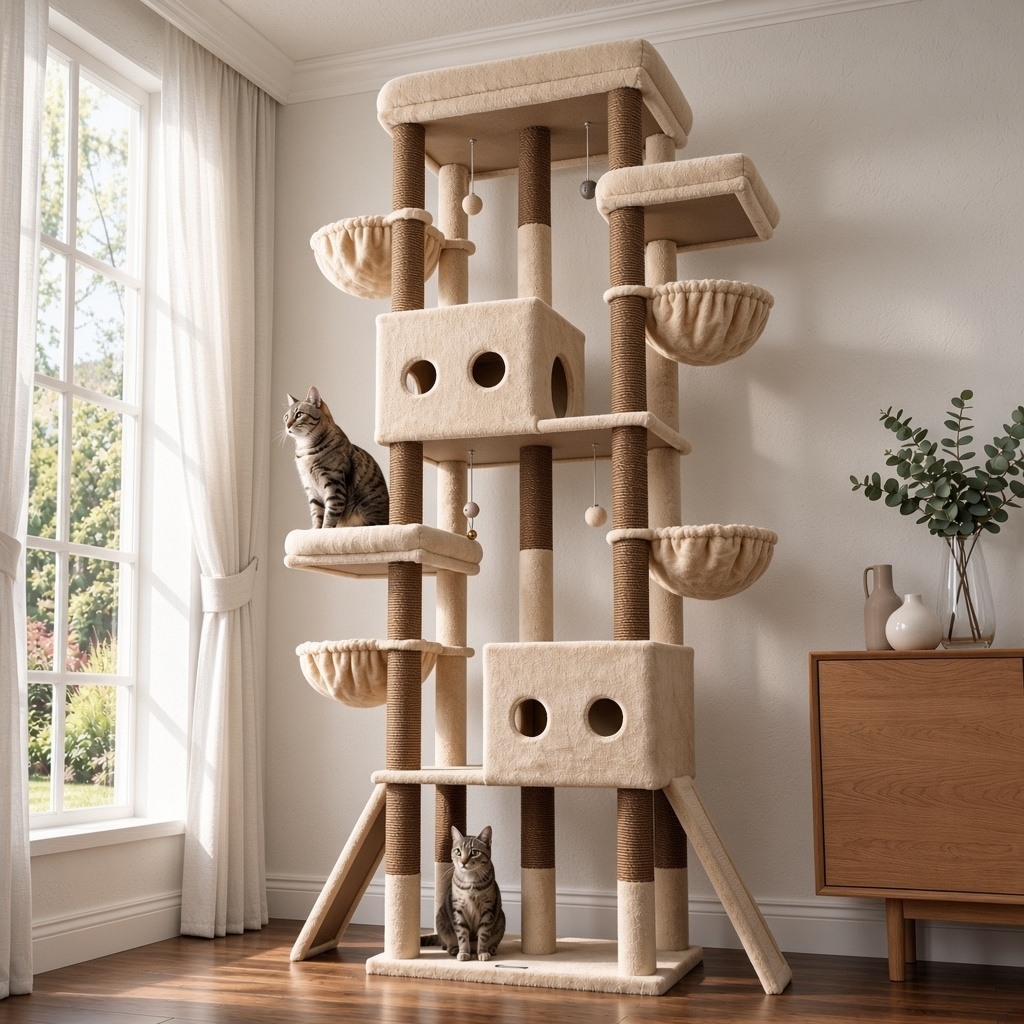
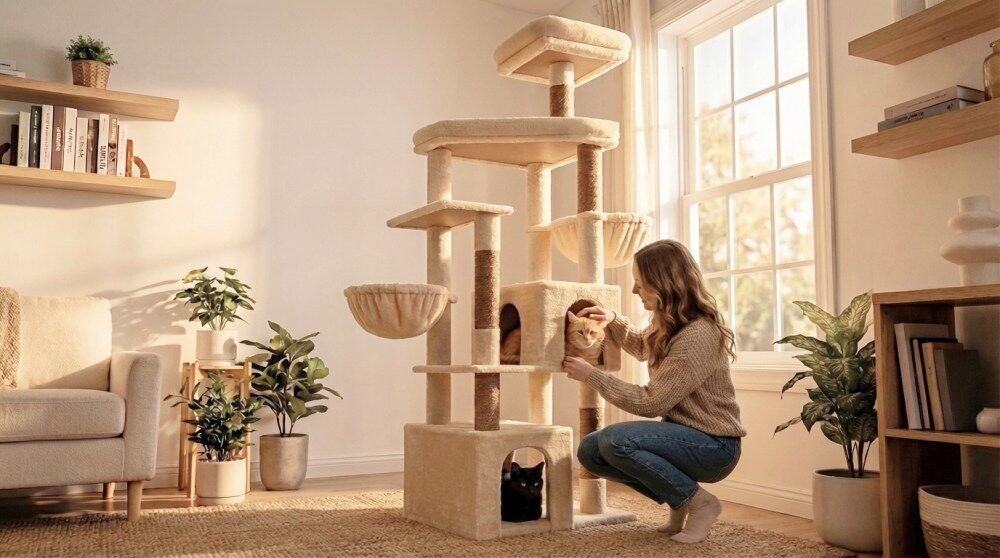
Neutral palettes matter more than people admit. A big cat tree is already a visual event. Loud colors make it louder. Beige, soft grey, and dark grey finishes—BG and DG tones in the Globlazer line—let the structure stay in the room without becoming the room’s punchline. Because the silhouette is tall, the finish should whisper.
Height still serves large cats when it is paired with width. Otis uses vertical routes the way smaller cats do—window to mid level to top—but each stop must feel like a landing pad, not a ledge. The base footprint matters too: a calm, weighted foundation keeps launch energy from traveling into the floorboards, which is how a Maine Coon cat tree earns quiet coexistence in apartments where neighbors share walls.
Morning looks different. Otis claims the top perch before the coffee machine finishes, tail draped over the plush edge without dragging on the level below. Afternoon sun moves across the wide platform; he shifts a few inches rather than relocating entirely—proof the surface is large enough to live on, not just visit.
Understanding Maine Coon owners means respecting scale as a design input, not an afterthought. When the platform feels generous and the base feels calm, the largest cats stop negotiating with the furniture. A Globlazer tower built for large indoor cats should read as everyday home infrastructure—wide perches, steady structure, neutral tones—so the biggest personalities in the room finally have somewhere honest to land.
New Arrivals
Fresh designs, new colors, and limited releases for modern cat homes.