
The Next Era of Modern Cat Furniture Design
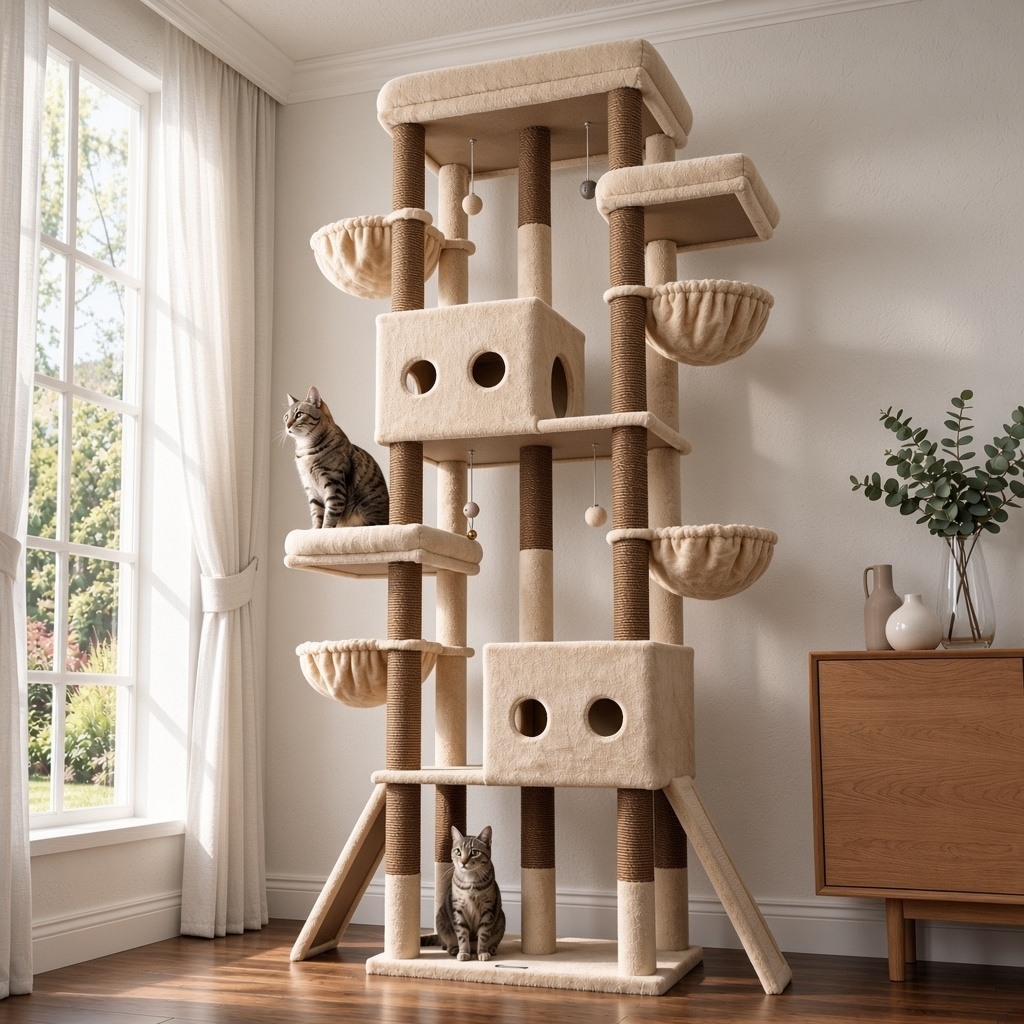
The next era of modern cat tree design is not a single aesthetic—it is a stricter gate at the purchase moment. Shoppers increasingly decide with interior literacy: proportion, daylight behavior, and whether an object feels permanent or temporary. Utility still matters. But room-fit has become the first filter, ahead of height claims or novelty shapes.
Industry Updates observation points toward integrated vertical systems rather than one-off novelty posts. Families want routes that can evolve—add landings, replace wear parts, adjust placement as apartments change—without turning the home into a pile of mismatched pet shapes. Modularity is no longer a premium footnote; it is how households insure against moves, second cats, and furniture refreshes that used to obsolete entire towers.
Structure is maturing in public view. Wide planted bases, thicker posts, and connectors engineered for reassembly appear in listing photography because wobble reads as failure in open-plan rooms—not only as a safety concern. Design teams borrow architectural thinking: vertical rhythm, honest landings sized for pauses, silhouettes that respect ceiling lines instead of fighting them. The quietest towers are competing on climb confidence, not cartoon volume.
Material clarity crosses from buyer rooms to living rooms
Documentation used to be a trade-only conversation. It is spreading. Surface feel, odor behavior on bonded platforms, and lot consistency for sisal are becoming part of how people judge quality—especially for large objects that sit near seating and sleep zones. Shoppers who once accepted glossy pet fabrics now ask whether a platform reads upholstery-grade in daylight, whether scratch posts can be replaced without discarding the whole unit, and whether neutral lots will match when they add a module two years later.
Globlazer is responding with layered engineering: structural cores for load and stiffness, show surfaces for touch and photography, wear zones for claw honesty and replaceability. Behind matte plush, documented cores and recycled options appear where stiffness matters more than showcase grain. Lifecycle thinking—replaceable posts, modular landings, hardware that survives reassembly—reduces the temptation to landfill an entire tower when one zone fails.
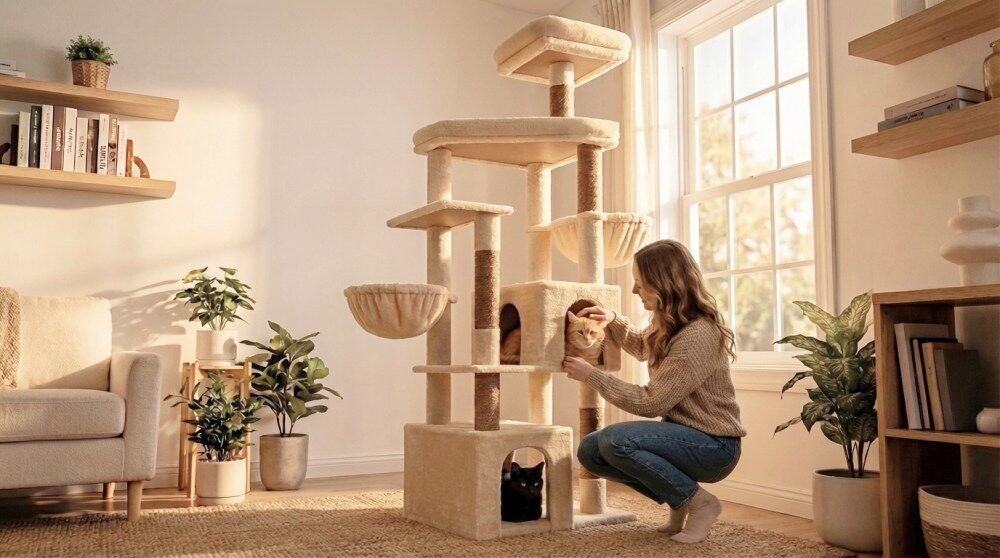
Retail and direct channels amplify the shift. When a tower sits beside a sofa in a hero image, proportion and palette discipline answer faster than feature bullets. Neutral envelopes—beige, soft grey, controlled two-tone—lower color-mismatch returns and let families stack pet verticals beside human furniture without visual apology. Warm minimal interiors described in design media land directly on SKU choices: warmer beiges, sisal that reads woven rather than plastic, curves that soften edges without adding noise.
Biophilic cues matter too—not as jungle wallpaper, but as material honesty. Wood tones beside posts, stone-adjacent neutrals on platforms, textures that feel tactile instead of glossy. Pet products inherit the same intolerance for surfaces that look cheap under daylight. That intolerance is pushing the category toward furniture discipline: fewer shapes that age poorly, more engineering people can feel, towers that sound like they were specified rather than grabbed on impulse.
At Globlazer, we see the next era as maturity, not hype. The winners will not be the loudest structures—they will be the calmest ones that still deliver scratch honesty, planted stability, and silhouettes that survive years of photos in the same room. Modern cat furniture design is finally converging with how homes are actually planned: vertical territory that supports behavior, composition that respects shared sightlines, and quality signals that still read true after the first month—not only the first unboxing.
The category’s center of gravity has moved. The next era asks whether manufacturers can keep pace with rooms that refresh faster than pet aisles used to. We intend to—one modular system, one honest material layer, one planted base at a time.
Service expectations are shifting with the hardware. Families ask clearer questions about replacement posts, compatible landings, and whether a neutral lot will still match after a partial refresh. Globlazer is documenting wear zones and connector families so upgrades feel like furniture maintenance—not a scavenger hunt for mismatched parts.
The next era will also test honesty in marketing photography. Room-context images already outperform isolated product renders because they answer the first filter—does this belong here? Manufacturers who keep leading with cartoon height claims while ignoring proportion will feel increasingly out of step with design-literate buyers.
Ultimately, modern cat furniture design is converging with interior planning because indoor cats are no longer optional background. They are co-authors of daily routes. Towers that respect those routes—and the humans who photograph the room—are the ones that will define the years ahead.
Globlazer will keep publishing modular families and material notes as those programs lock—because the next era rewards transparency as much as silhouette.
We are also expanding connector documentation so households can add landings without guessing which post family matches—a small paperwork shift that changes how long a tower stays in the room.
That is the next era in practice: fewer disposable towers, more vertical systems families can maintain.
New Arrivals
Fresh designs, new colors, and limited releases for modern cat homes.