
The Rise of Integrated Pet Furniture Systems
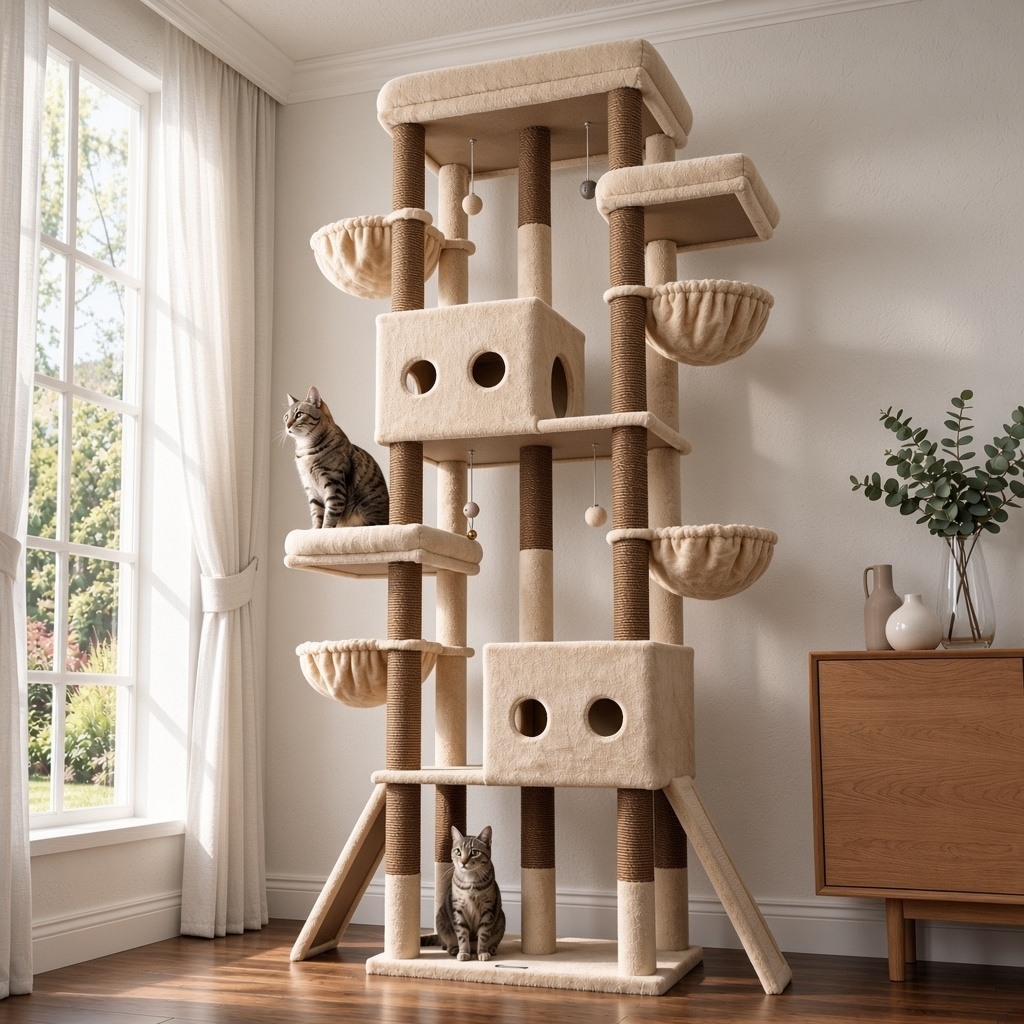
Pet products spent years as add-ons: a scratching post here, a bed there, a cardboard ramp that lived behind the door until moving day. Integrated pet furniture systems treat those functions as one planned object—or one planned family of objects—that shares a room’s footprint, palette, and sightline from the start.
The shift is visible in how households shop. Owners no longer ask only whether a cat will climb; they ask whether the tower can stay when the sofa changes, whether sisal and plush belong in the same photo as the rug, whether one structure can grow instead of being replaced when a second cat arrives.
Industry Updates research describes pet gear moving toward space cohabitation design—products meant to blend into modern interiors rather than occupy a dedicated pet corner. Modular combinations, washable layers, and calmer silhouettes appear across categories because pets are treated as household members with permanent addresses, not weekend visitors with collapsible furniture.
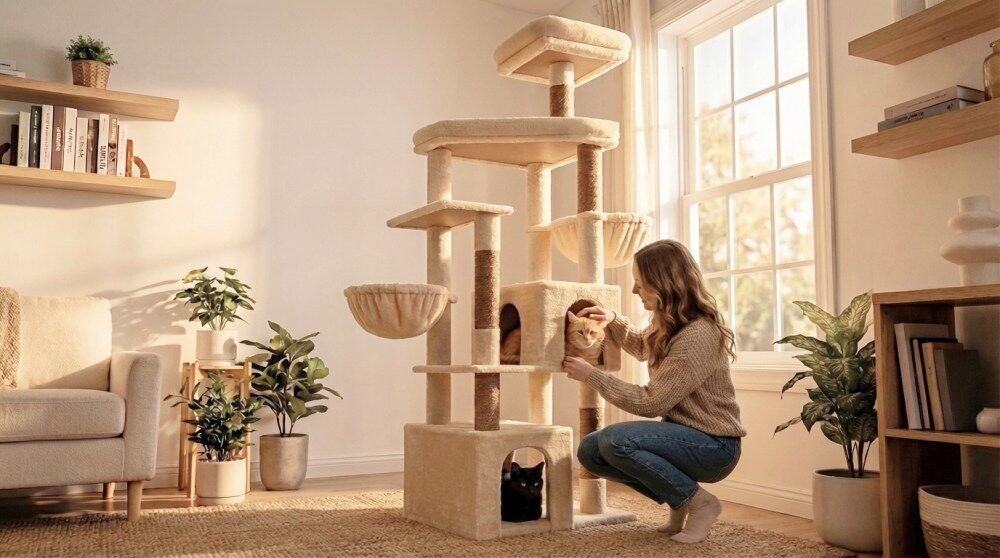
That language matters for cat trees especially. A traditional approach stacks novelty: bright carpet, faux branches, dangling toys that age poorly beside neutral kitchens. An integrated system starts with engineering and upholstery logic—wide base, honest sisal weave, platforms sized like furniture surfaces, neutrals that ride interior cycles instead of fighting them.
Modularity is the practical spine. When bases, posts, and platforms share standardized connections, owners can add landings over time rather than discard an entire tower. Retail buyers gain assortments that expand without multiplying incompatible shapes. Product teams can iterate one connector or one fabric family without orphaning every tower already in homes.
Vertical integration is the other half of the phrase. Height becomes infrastructure: climb routes planned like staircases, scratch zones placed where daily behavior actually happens, perches staggered so multiple cats share air without sharing the same square. Open-plan rentals reward that approach—one calm vertical object replaces three loud pieces that used to clutter a walkway.
Photography and staging reinforced the category shift. Lifestyle sets that once cropped pet gear out of frame now keep a neutral tower visible—because integrated objects read as part of the decor story, not an apology for owning a cat.
Globlazer has been developing toward this lane for seasons—neutral BG/DG/LG systems, room-scale towers with edited silhouettes, structures refined so stability reads as part of the aesthetic brief. Integrated does not mean invisible; it means the cat tree behaves like vertical furniture the room could have been designed around.
Challenges remain. Durability still has to survive real claws. A beautiful system fails if cats distrust motion at the top landing. Integration without performance is staging—not furniture.
Rental markets add pressure in a useful direction. Tenants who cannot repaint still curate with textiles; a single integrated tower aligns with that constraint better than a scatter of mismatched pet pieces that fight the lease layout.
OEM and retail conversations echo the same vocabulary: fewer SKUs that do more in the room, neutral systems that replenish across regions, towers specified like vertical cabinetry rather than impulse novelty.
Wholesale buyers describe the shift as assortment simplification—one integrated cat tree hero per height band instead of parallel novelty shapes that each need their own endcap story.
The direction nonetheless feels durable. As housing stays compact and interiors stay edited, owners will keep rewarding products that answer two questions at once: does this respect my cat’s body, and does it respect my room’s plan? Integrated pet furniture systems are the market’s way of saying both questions belong in the same brief.
Globlazer cat trees continue to treat that brief as design work—not an accessory aisle afterthought, but vertical living planned with the same care as the sofa it stands beside.
New Arrivals
Fresh designs, new colors, and limited releases for modern cat homes.