
What We Learned From Multi-Cat Households
In a two-cat home, peace is often negotiated in inches of height. The ground floor looks shared—food bowls, sun patches, the same human lap—but cats still think in territories. Watching multiple households in early 2023, we kept seeing the same workaround: when floor space is contested, vertical layers become diplomacy.
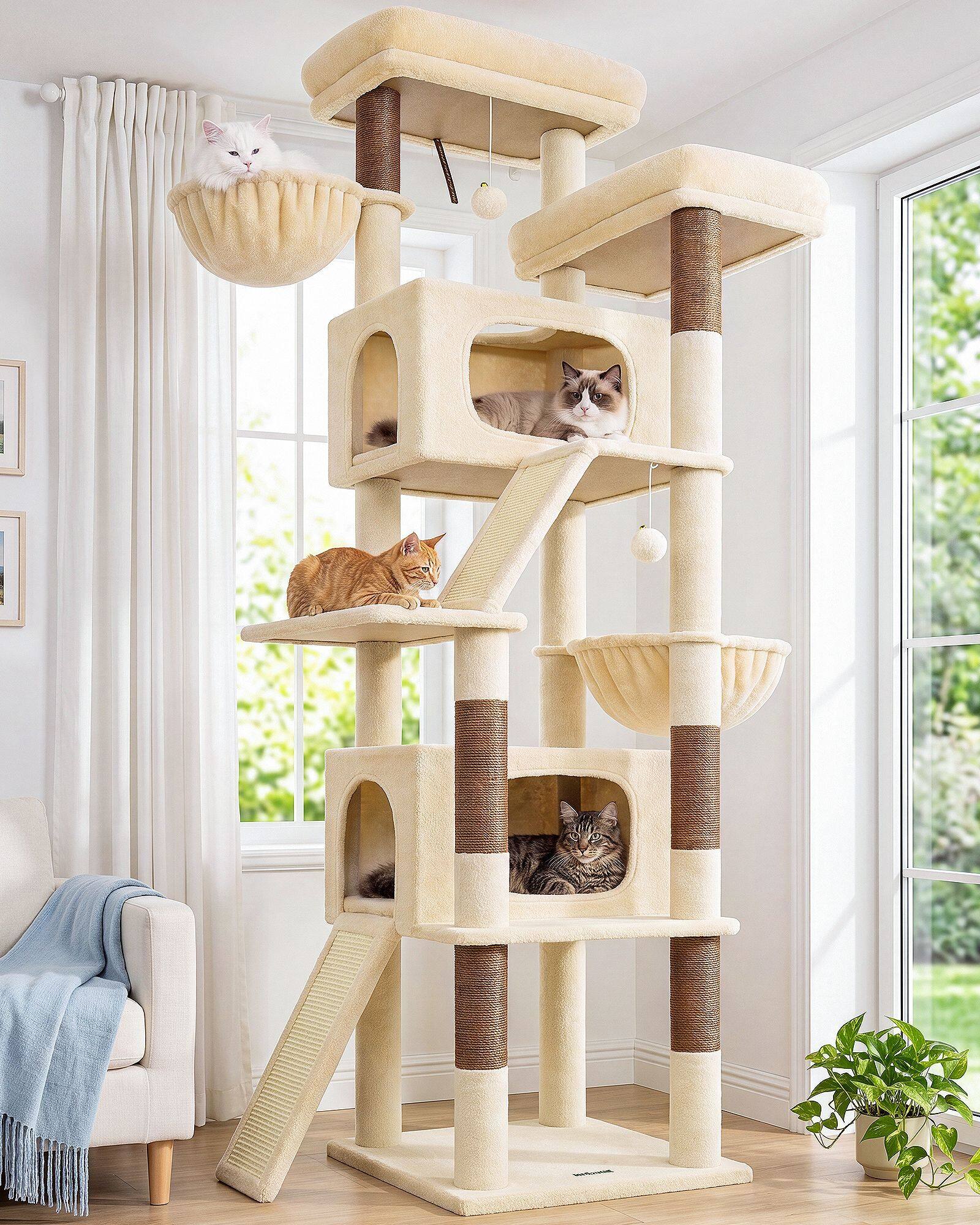
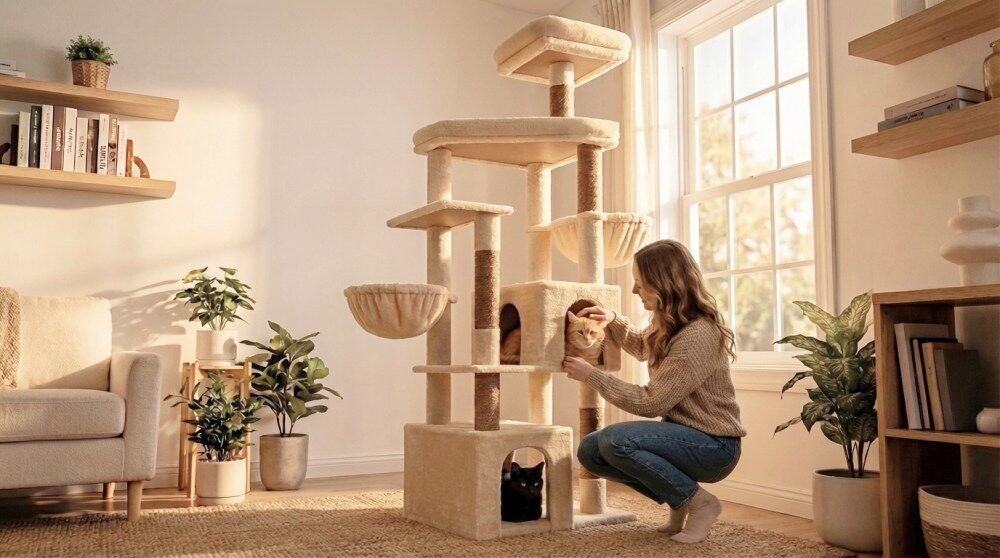
One pair of siblings in a Chicago two-bedroom illustrated the pattern. Both cats wanted the window. Neither wanted to share the sill. A single wide perch solved nothing; the bolder cat simply monopolized it. What changed their truce was separation by elevation—a high lookout, a mid-level hammock, a lower platform near the scratch column—each with enough room to turn around without bumping whiskers.
Platforms need real estate, not symbols
Multi-cat layouts fail when platforms are sized for photos, not bodies. A perch that fits one curled cat may not fit two passing each other. We started recommending wider top rests and staggered heights—not to maximize SKU count, but to reduce the micro-conflicts that make owners think one cat is antisocial.
Neutral finishes helped, too. In open-plan rooms, a second tower in circus colors reads like clutter. A calm cat tree palette lets you add vertical territory without visual chaos.
Route separation mattered as much as perch width. When two cats share one column, climb timing becomes choreography. Staggered platforms let one cat descend while another ascends without mid-air negotiations. Height differences turned one corner into three agreements.
Scratch zones are shared infrastructure
Multi-cat homes concentrate scratching at doorways and social thresholds. We placed sisal where traffic naturally splits—near entry platforms and mid-level rests—so both cats could mark without blocking the other’s path. Scratching became shared infrastructure, not a prize to defend.
Globlazer layouts for multi-cat mornings favor wide landings and clear vertical spacing. The goal is not twice the furniture; it is clearer layers that respect how cats actually time-share a room.
Feeding routines shaped our spacing notes. Cats often climb after meals; platforms too close to food bowls become contested faster than platforms near window lines. We stagger rests away from ground-level resources so vertical diplomacy has room to work.
Evening told a different story in the same Chicago home. The bolder sibling took the high lookout for dusk bird traffic; the quieter cat claimed the mid hammock for slow blinks within sight of the sofa. Height became a schedule, not a ranking.
We started sketching wider mid decks on multi-cat briefs after visits like that—not for spectacle, but so passing climbs did not require flattened ears. A Globlazer cat tree in a two-cat living room is furniture for negotiation as much as for climbing.
Owners sometimes add a second neutral tower instead of widening one column. Two calm silhouettes beat one loud centerpiece when the goal is territory without visual argument.
What we learned is simple and easy to underestimate: multi-cat homes do not need twice the furniture. They need clearer layers—height differences that turn one corner into three agreements, and a neutral second tower that adds territory without adding visual noise.
New Arrivals
Fresh designs, new colors, and limited releases for modern cat homes.