
Material Innovation Trends in Cat Furniture Manufacturing
Material innovation in cat tree manufacturing is rarely one breakthrough fabric—it is layered engineering. Structural cores carry load and stiffness. Show surfaces carry touch and photography. Wear zones carry claw honesty and replaceability. When those layers are designed together, towers feel quieter in homes and more defensible for retail programs that photograph products beside human furniture.
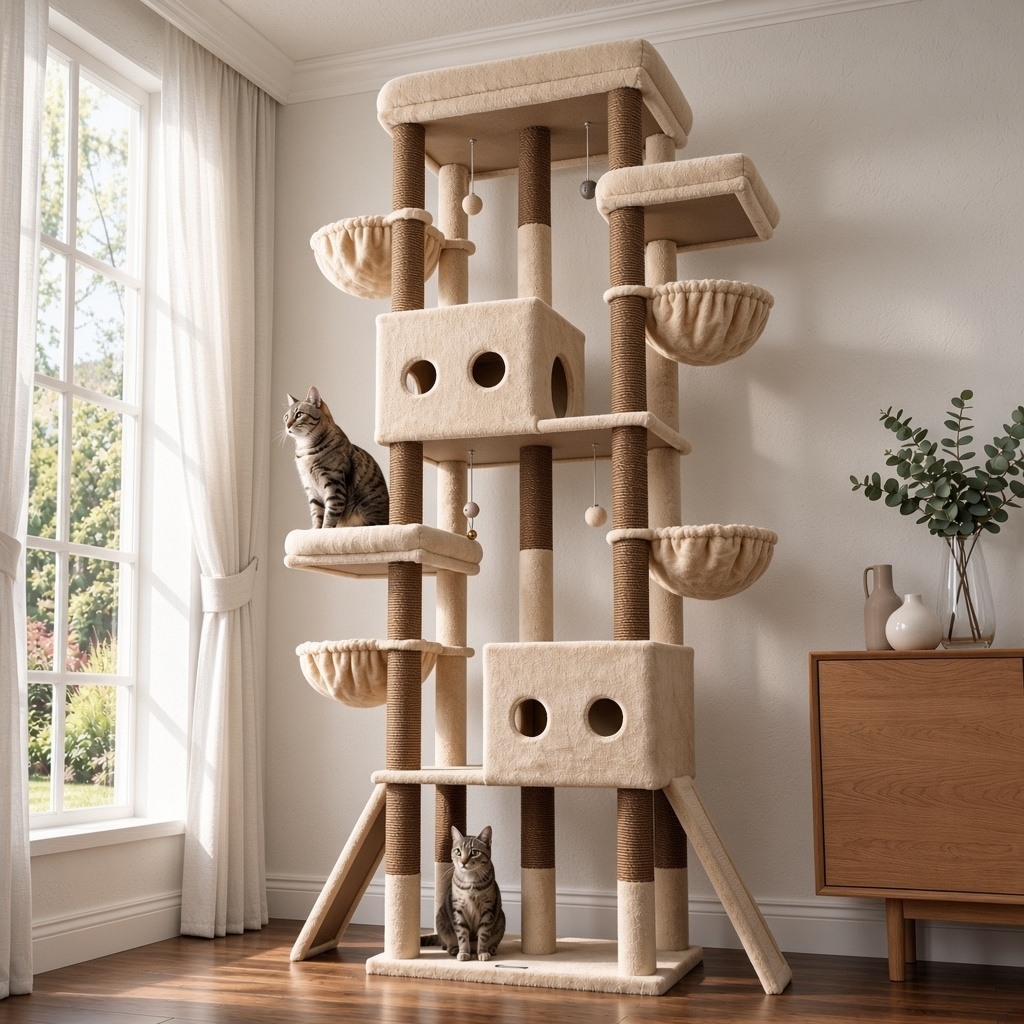
Globlazer is pushing three directions simultaneously. First, matte short-pile platforms that read upholstery-grade in daylight—surfaces families compare to sofa swatches without wincing. Second, traceable sisal lots for high-traffic posts, so scratch zones stay consistent from batch to batch and replacements match two years later. Third, low-odor bonding on sleep-adjacent platforms, because large objects near seating demand material clarity, not chemical surprise on unboxing day.
Behind the plush, documented cores and recycled options appear where stiffness matters more than showcase grain. Posts are not decorative sticks—they are load paths. Bases are not marketing footprints—they are planted stability engineering. When buyers push on a tower in a showroom or pause on a listing video, they are reading those layers whether they name them or not.
Lifecycle thinking is the other innovation front. Replaceable scratch posts, modular landings, and hardware that survives reassembly reduce the temptation to discard an entire tower when one zone fails. That is material strategy as sustainability: less landfill, more years of use per square foot of floor space claimed. Families in compact homes especially feel the difference—vertical infrastructure should outlast a lease cycle, not a novelty weekend.
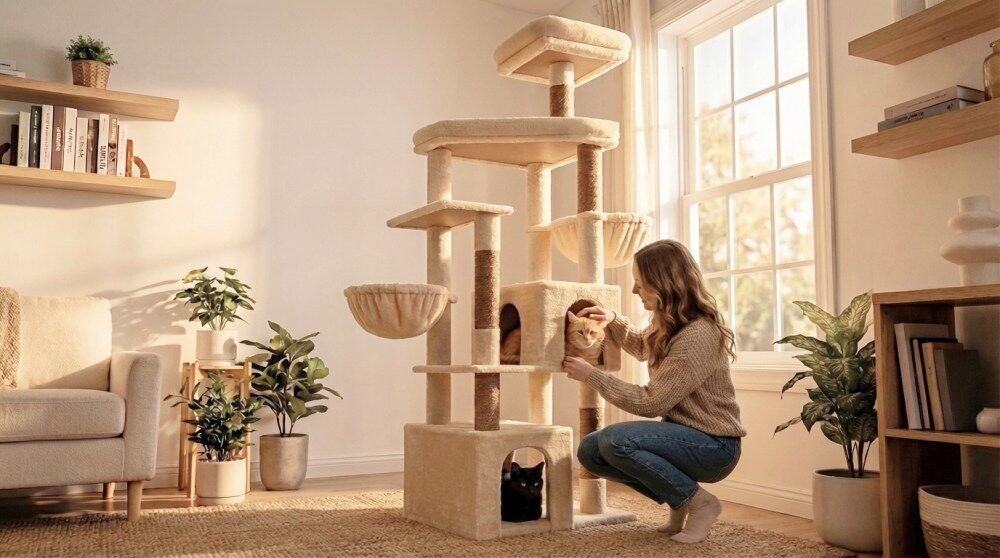
Surface innovation also tracks interior trends moving toward warmer minimalism. Warmer beiges, softer greys, stone-adjacent neutrals on platforms, sisal that reads woven rather than plastic. Globlazer sampling pipelines now treat color lots like furniture programs—controlled curves on platform edges, texture variation inside neutral envelopes, photography tests beside linen and oak before a SKU locks.
These choices roll through sampling now and into 2026 catalogs. The outward sign is subtle: towers that feel more composed, more furniture-adjacent, and more consistent from batch to batch. Material innovation in cat furniture is not laboratory theater—it is the quiet work of making vertical pet systems behave like they belong in curated rooms for years, not weeks.
Quality programs now track sisal lot numbers, adhesive cure windows, and plush dye batches with the same seriousness furniture suppliers apply to upholstery rolls. That discipline shows up in fewer surprise odors on unboxing day and fewer “replacement post does not match” messages twelve months later.
Globlazer buyers and consumer support teams share the same vocabulary—wear zone, core stiffness, neutral envelope—because material innovation only matters when the whole organization can explain it without jargon walls. The manufacturing floor and the living room are closer than they used to be.
Those shared definitions are what let a family replace one sisal post in year two and keep the same calm silhouette they photographed on move-in day.
Sampling pipelines now photograph every locked SKU beside linen and oak before release—because material innovation only lands when the room agrees.
That gate keeps 2026 catalogs aligned with how families actually live—not how pet aisles used to look under fluorescent light.
New Arrivals
Fresh designs, new colors, and limited releases for modern cat homes.