
The Shift Toward Minimalist Pet Furniture
Minimalism in home design is not emptiness—it is editing. Fewer objects, clearer lines, materials that do the talking. That edit is reaching pet products slowly, and cat trees are a telling case study. The category built its reputation on abundance: more platforms, more dangling toys, more faux branches, more color noise.
Owners in 2023 are pushing back with a different brief: give my cat height and scratching without turning the living room into a pet carnival. Minimalist pet furniture—especially the cat tree—is the answer to that brief, not a style fad.
Industry Updates observation tracks the same correction across housing types. Open-plan rentals punish visual clutter because one object competes with the entire sightline. Suburban living rooms with intentional decor punish clutter because the tower sits in the same frame as art and textiles. Minimalism is not a magazine mood—it is a floor-plan constraint.
Less decoration, same behavior
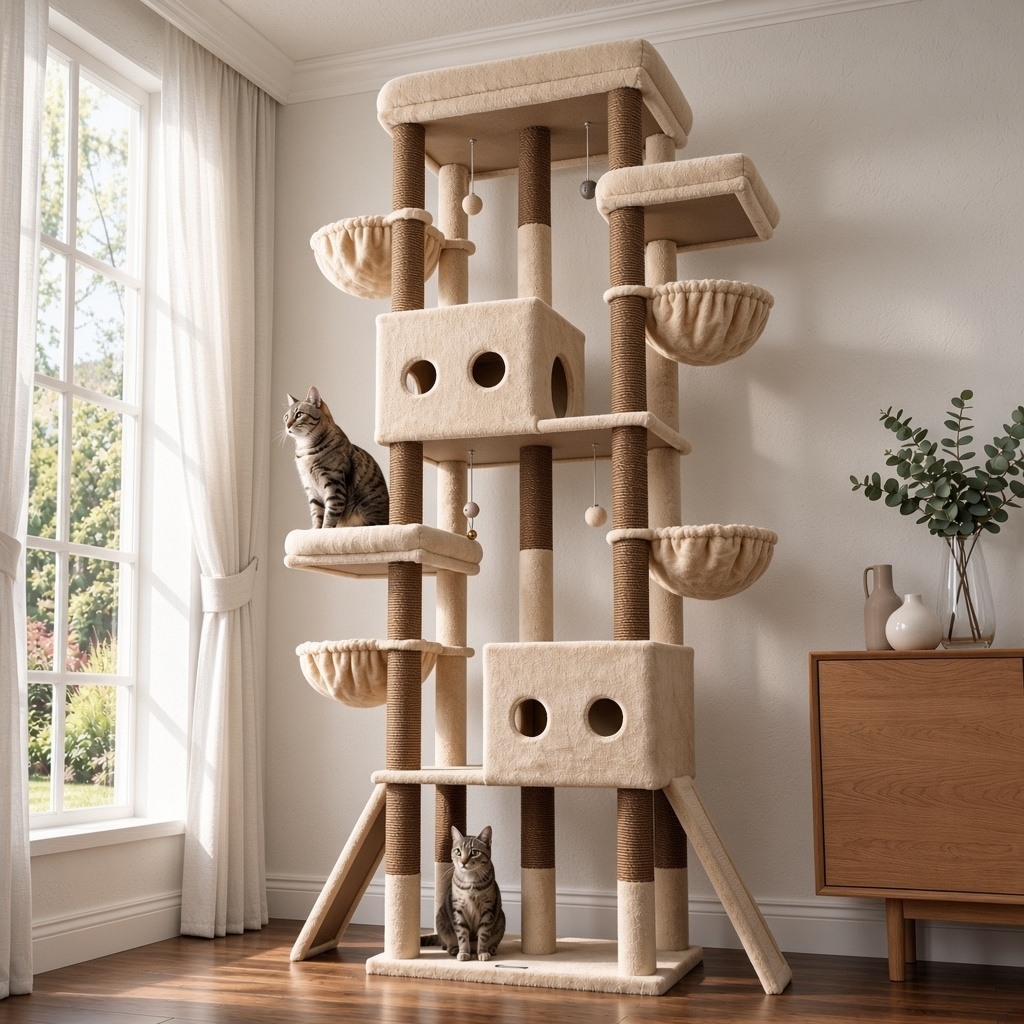
Cats still need vertical routes, sisal, and secure perches. Minimalism does not delete function; it deletes visual panic. A clean tower with three honest levels can outperform a busy tree with seven ornamental shelves cats ignore. We see returns cluster around ornament cats never touch—feathers, faux leaves, novelty shapes—while calm towers with clear climb lines stay in place for years.
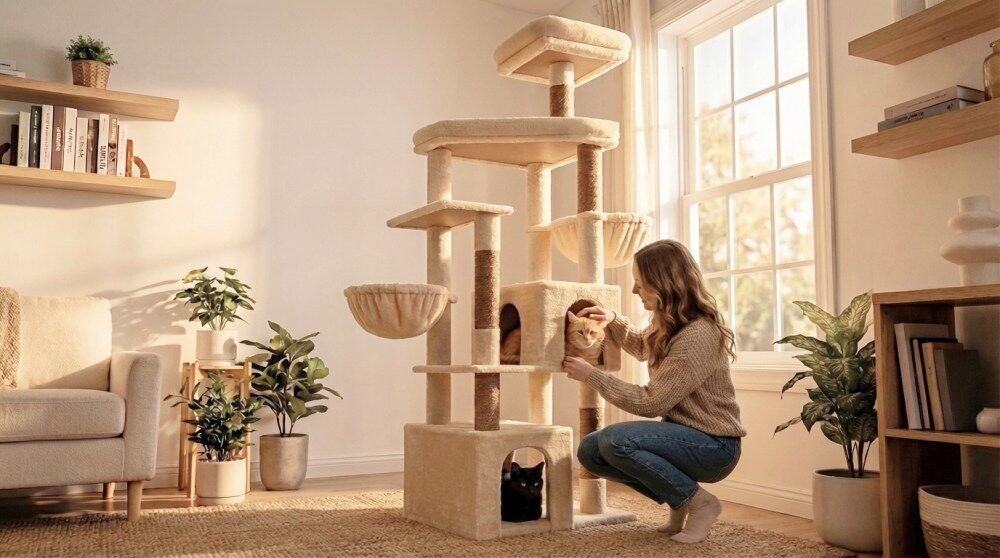
Globlazer watches renters especially: open kitchens into living areas, one dominant color story, limited storage. A minimalist silhouette respects those constraints—slim above the base, neutral surfaces, no fake leaves competing with actual houseplants. The tower becomes vertical infrastructure instead of a second decorating problem.
Editing also changes how families shop. Instead of asking which tree has the most features, they ask which tower disappears into the room while still offering a window lookout. That question favors proportion over accessory count.
Materials carry the personality
When shape quiets down, fabric and proportion carry character. Short plush in beige or grey, sisal with visible weave, platforms sized for turning—not for photo clutter. The tower reads as designed, not assembled at random. Matte surfaces and honest post rhythm do the work novelty colors used to do.
Minimal structures also age better. A neutral tower beside a linen sofa still works when throw pillows change; a bright carpet tower fights every seasonal refresh. Retail assortments increasingly mirror that logic—fewer SKUs, calmer palettes, taller furniture-style lines.
The shift toward minimalist pet furniture mirrors the shift toward furniture-style cat trees: pets are room citizens. Editing is how both species share the same square footage without daily visual negotiation.
Minimal is not less for cats. It is less noise for humans—and cats, who notice instability and chaos faster than we do, often prefer the calmer result. The category’s next chapter is not more decoration. It is clearer structure, quieter materials, and towers that earn placement beside human furniture instead of apologizing in the corner.
Retail resets in 2023 tell the same story in a different dialect. Stores that once stacked novelty shapes now leave negative space between SKUs so neutral towers can breathe on the shelf. Buyers describe the edit as fewer hero gimmicks, more height ladders in calm palettes—exactly the assortment Globlazer briefs ask for when we discuss next-season towers.
Minimalism also changes longevity math. A family that edits once buys a tower that survives three decor refreshes instead of one. That is not austerity for cats—it is fewer loud mistakes in the same footprint, which is how minimalist pet furniture earns its place beside human chairs instead of cycling through the closet every year.
The minimalist shift is not anti-fun for cats. It is anti-chaos for rooms that already have enough motion at floor level.
Calm towers win the long calendar.
New Arrivals
Fresh designs, new colors, and limited releases for modern cat homes.