
Multi-Level Designs for Active Indoor Cats
Jasper was never a nap-first cat. In his Seattle one-bedroom, he treated furniture like parkour—bookshelf to chair, chair to windowsill, windowsill to the forbidden top of the kitchen cabinets. His owner, Priya, did not need another sleep spot. She needed a sanctioned circuit.
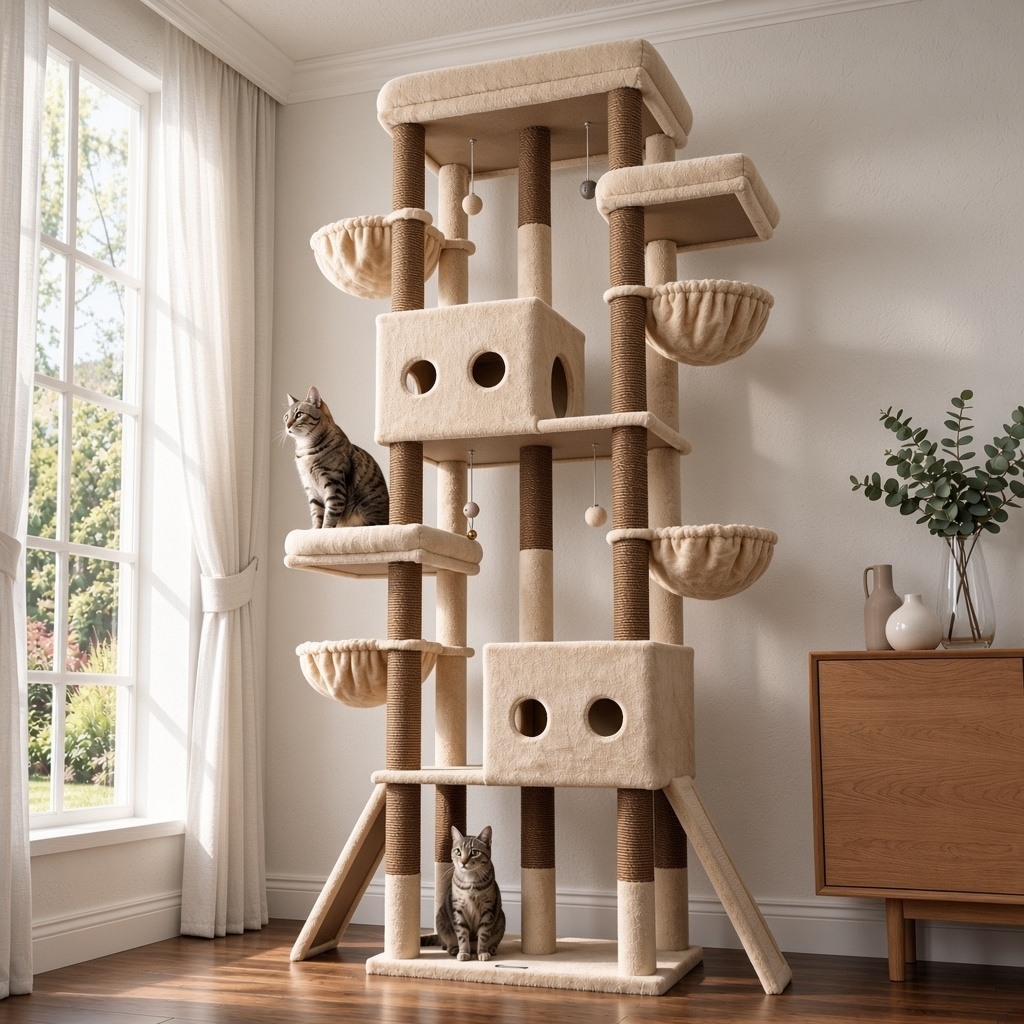
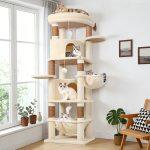
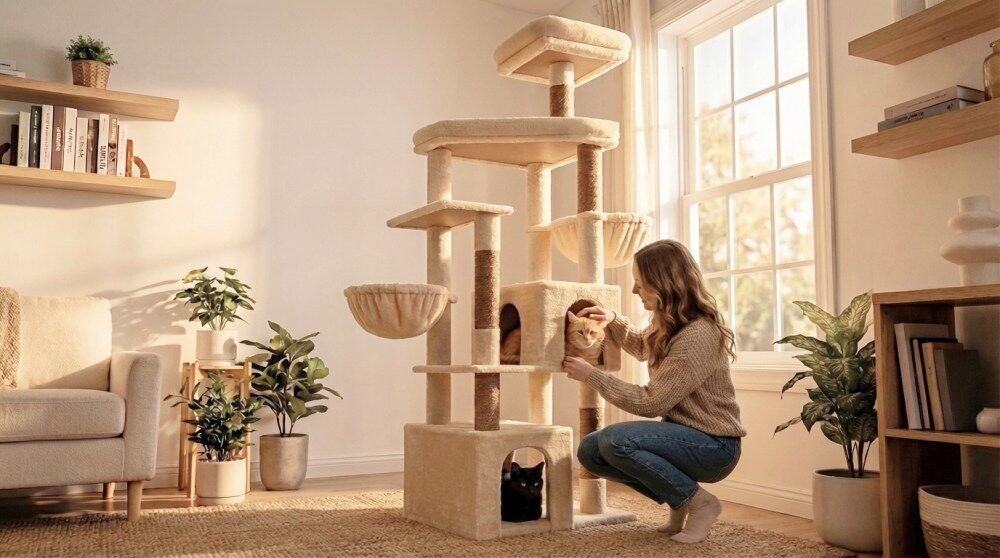
A single perch cat tree failed within a week. Jasper visited the top once, declared victory, and returned to the cabinets. What changed his rhythm was multi-level design—not more toys, but more connected altitude: entry sisal, a mid turnaround wide enough to sprint through, a high rest that was a pause, not a destination.
Morning became predictable: scratch, sprint two levels, pause at the window line, drop to the floor, repeat by noon. The tower absorbed energy that used to end in knocked plants and annoyed roommates. Priya stopped moving breakables off the bookshelf because the bookshelf was no longer the main vertical thrill.
Active indoor cats are not misbehaving when they climb curtains. They are under-furnished vertically. Veterinary guidance on enrichment emphasizes physical structure; for high-drive cats, structure must read as a trail with chapters, not a single podium. A lone top perch offers a trophy; a ladder of landings offers a habit.
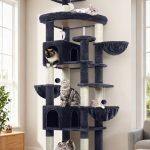
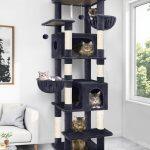
Level spacing matters as much as level count. Platforms too close together feel like stairs without runway; too far apart turn the tower into a single risky leap. Priya’s unit is a slim neutral grey Globlazer tower beside the bookshelf—footprint tight, but mid-deck wide enough for Jasper’s turnaround sprint. Height did the work, not floor area.
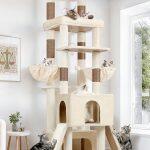
Multi-level design also shares territory in multi-cat homes even when this story is single-cat. Priya’s roommate’s cat sometimes met Jasper on the mid platform—wide enough for parallel pauses without stare-downs on the rug. That social buffer is an accidental benefit of decks sized for motion, not only for curling.
Evening told a different chapter: slower climbs, kneading on the high rest, then a long window watch. The same tower that handled noon sprints handled dusk calm because levels were spaced for both burst and linger. Active cats do not need louder colors or dangling toys. They need altitude with logic.
That is what multi-level design offers active cats: not confinement, but choreography—height spaced for bursts, turns, and lookout pauses in the same vertical column humans can live beside. Jasper still runs, but the run has a script now—and the apartment has one less daily negotiation.
Window lines matter in Jasper’s script. The mid platform sits high enough to see street movement without claiming the sill; the top rest catches late-afternoon sun without blocking Priya’s desk sightline. Multi-level design is not only about burn energy—it is about placing lookout chapters where the apartment already has light and motion.
When Priya travels for work, her roommate reports the same circuit at dusk: scratch, climb, window watch, descend. Consistency is the quiet proof that levels were spaced for habit, not for a single photo of a cat on top.
The circuit still runs on rainy weekends.
Same script, different weather.
New Arrivals
Fresh designs, new colors, and limited releases for modern cat homes.