
What Makes a Cat Tree Feel Stable?
Stability is the first feature cats evaluate—and the last one owners articulate. They say their cat “does not like” a tower. Often the tower moved a millimeter on the first jump. Cat tree stability is felt in whiskers and ankles before it appears in any spec sheet.
At Globlazer we treat that perception as design data. When climbing structures feel uncertain, cats simply stop using them. So the question is not only whether a tree stands, but whether it feels planted while a cat launches, lands, and turns around on the top perch.
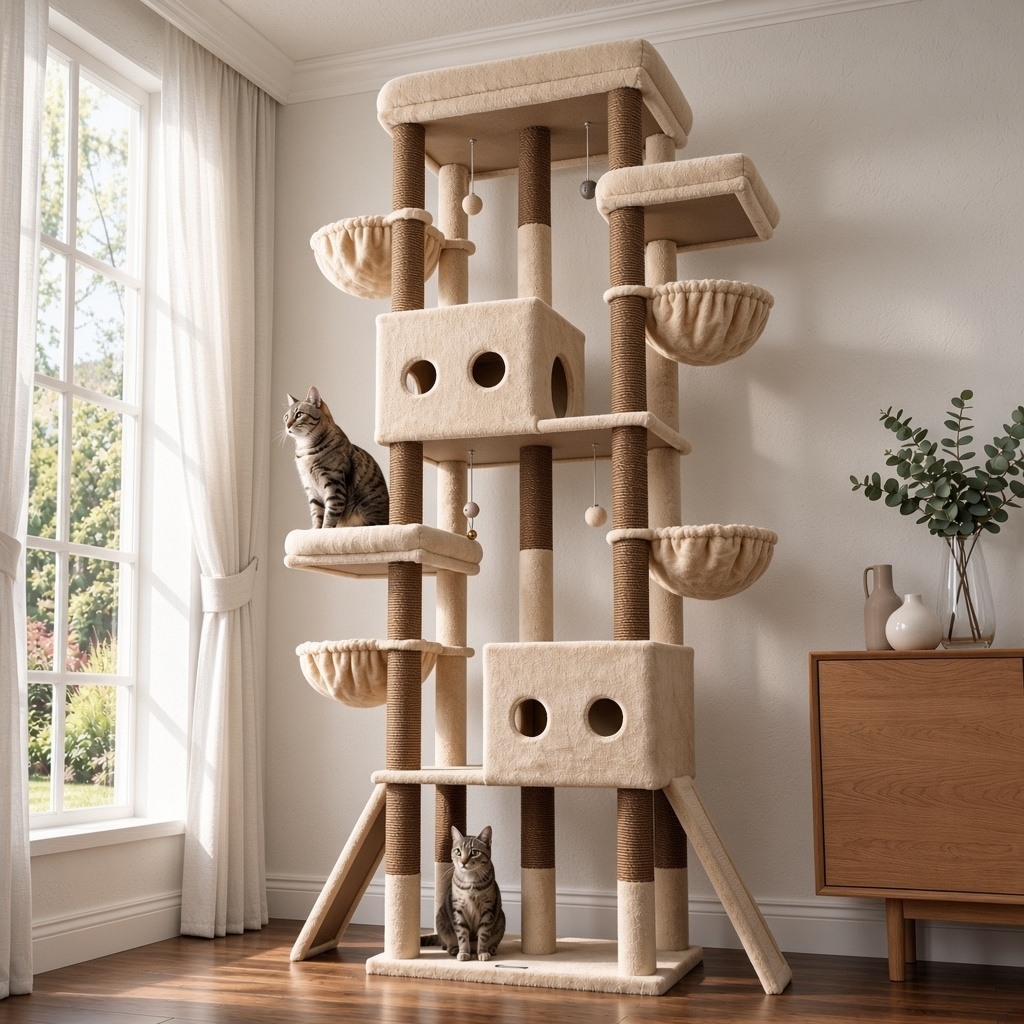
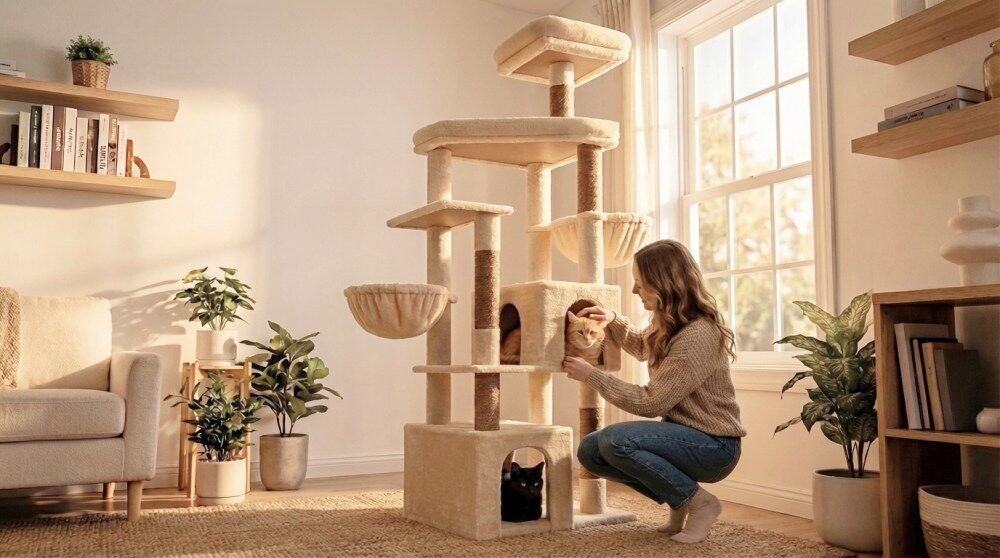
Base footprint is the most honest signal. A wide base that extends beyond the post shadow suggests the structure expects force. A base that is barely wider than the column looks like a temporary permission to climb. Owners may not measure the overhang, but they notice when a tower “looks narrow” before a cat ever tests it.
Weight distribution matters next. Top-heavy silhouettes photograph dramatically; cats prefer drama on the bird outside the window, not under their paws. Platforms placed to keep momentum inside the footprint earn repeat visits. Perches that hang too far forward turn every landing into a lever arm.
Dense posts, tight joints, and sisal wraps that do not slide under pressure all contribute to the same impression: this object was built to be climbed, not displayed. Connection hardware hidden well still has to bear real torque when a cat ricochets off the second level.
Surface contact counts too. A base that sits on a single thin lip can rock on imperfect floors. Slight flex in a living room is not a laboratory story—it is the difference between a cat returning tomorrow and a cat that adds the tower to the list of furniture to avoid.
Industry Updates research on indoor enrichment consistently points to vertical territory cats will actually use. Stability is the gate. A tall cat tree that fails the trust test becomes expensive vertical clutter.
We also watch how owners assemble and place towers. A structure stable on tile may feel different on thick carpet if feet are not fully seated. Clear assembly guidance—tighten until snug, not until strip—matters as much as engineering upstream.
Perceived stability changes with use. Sisal compacts. Platforms settle. A tree that felt solid on day one and wobbles on day ninety often failed at wrap tension or foot pad contact—not because cats gained weight overnight.
Visual cues matter to humans, and humans buy the tree. A slim base on a tall tower signals risk before touch. Proportion language—base width relative to height—is part of the stability story owners read without measuring.
Multi-cat homes add another layer. A structure stable for sequential climbs may flex when two cats pass on different levels. We design for the chaotic Tuesday, not the calm photo shoot.
Floor type is the hidden variable. Tile, short pile, and thick carpet each change how much micro-flex owners forgive. We design for the middle case and document foot pad seating so assembly closes the gap.
Replacement cycles teach the same lesson. Owners who upgrade after a wobbly first tower arrive with a sharper eye for base proportion. The Industry Updates trains consumers through disappointment; we would rather train through trust on the first assembly.
For Globlazer, stability is a long relationship—cats climb daily, owners walk past daily. A tower that becomes quiet confidence in the background passes the hardest test in the category.
That is the bar Globlazer uses in every line we develop: felt stability before claimed height. If the top perch does not earn a second visit, the specification number on the box is decoration.
New Arrivals
Fresh designs, new colors, and limited releases for modern cat homes.