
Small Space Living and Modern Cat Trees
Elliot’s Austin studio is 480 square feet of intentional minimalism—one desk, one bed, one cat named Fig who did not sign the lease. Every object competes for footprint, including Fig’s need to climb, scratch, and watch the courtyard from height.
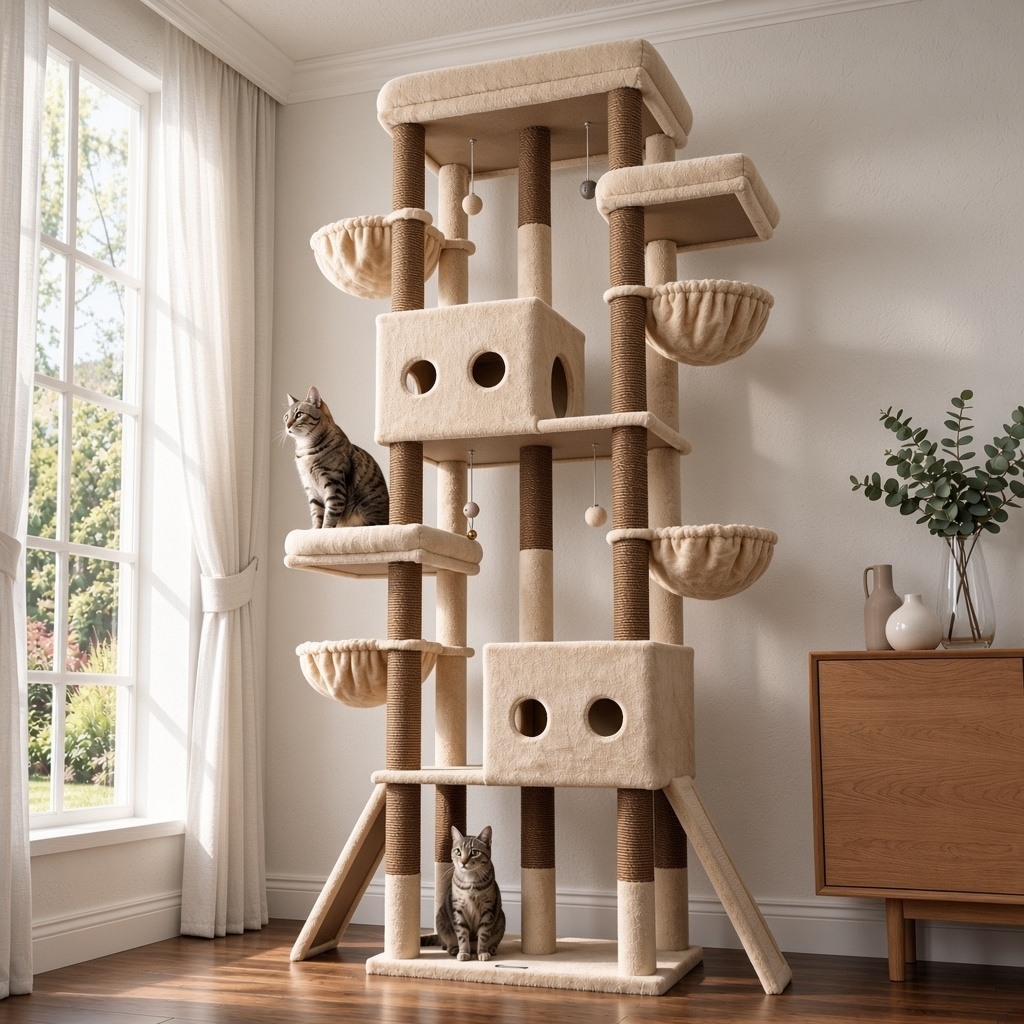
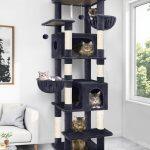
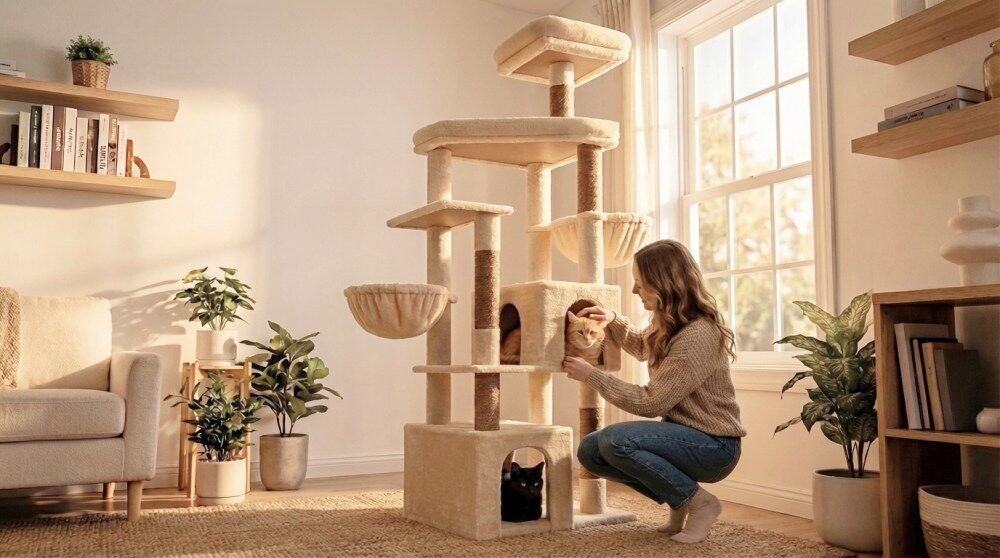
A bulky pet tower was never an option. It would have become the room’s personality, and Elliot had already chosen calm: white walls, oak shelves, a grey rug. What fit was vertical—a slim cat tree in Light Grey tucked where the bookshelf met the window, tall enough to add routes, narrow enough to preserve the walk from kitchen to desk.
Fig’s routine reorganized around it. Scratch column at entry height. Mid perch for afternoon sun. Top rest for the hour when delivery drivers crossed the courtyard. Elliot kept the floor visually empty; Fig kept the airspace busy.
The first compromise was cable management. Elliot ran cords behind the tower instead of through the only clear wall path. The second was chair placement—rotated 15 degrees so the desk chair did not block the sisal column Fig used as a morning alarm clock.
Visitors still ask whether a tall tower “makes the studio feel smaller.” Elliot’s answer is always the same: clutter makes it feel smaller. A single vertical structure with a clear footprint reads like furniture. Three floor toys and a collapsed tunnel read like an obstacle course.
Fig still sprints at 11 p.m. The difference is the finish line moved from the kitchen counter to the third-level hammock. Elliot still works late. He no longer finds paw prints on his laptop lid.
Neutral upholstery helped. Light Grey matched the rug and disappeared against the white wall in photos Elliot sends his family—proof that a cat tree can sit in a design-forward studio without becoming the joke of the group chat.
Elliot measured twice before ordering. Ceiling height in the studio is standard, but a ceiling fan blade carved a no-go zone above the bed. The tower had to clear the fan arc and still offer a top perch below the blade path—a constraint catalog photos rarely show.
Storage stayed minimal. Elliot keeps Fig’s brush and treats in the desk drawer, not in bins on the floor. Vertical cat furniture worked because the rest of the room agreed to stay quiet.
When friends visit, the tower becomes a conversation about dimension rather than pet chaos. Fig demonstrates the mid perch; Elliot talks about footprint math. Small-space living with cats becomes a design problem with a furniture answer—not a sacrifice narrative.
Elliot measured the tower footprint with painter’s tape before unboxing—24 inches square, acceptable. Anything wider would have meant moving the desk. That tape outline is how small-space owners actually buy.
Rent renewal season did not change the math. Elliot still signs the same square footage; Fig still needs the same vertical routes. The tower made renewal feel like a design choice kept, not a compromise tolerated.
Small-space living with cats is not about buying less. It is about buying dimension—height instead of sprawl, neutral instead of noise, structure that respects both species’ paths through the same few square feet.
New Arrivals
Fresh designs, new colors, and limited releases for modern cat homes.