
Why More Customers Want Softer-Looking Cat Tree
For years, the default cat tree looked like equipment—sharp posts, loud colors, faux branches that tried too hard. That visual language made sense when pet products lived in spare rooms. It makes less sense when the tower sits beside the sofa.
At Globlazer, we keep hearing a quieter request: owners want softer-looking cat furniture—structures that feel closer to upholstery than to warehouse shelving. It is not about making cat trees fragile. It is about making them belong.
Design media describe a broader shift toward warm minimalism: curves replacing cold angles, muted neutrals replacing high-contrast clutter, tactile surfaces replacing glossy plastic. Pet furniture is catching that same current because cats now share the rooms where those choices are made.
Softness is an edit, not a costume
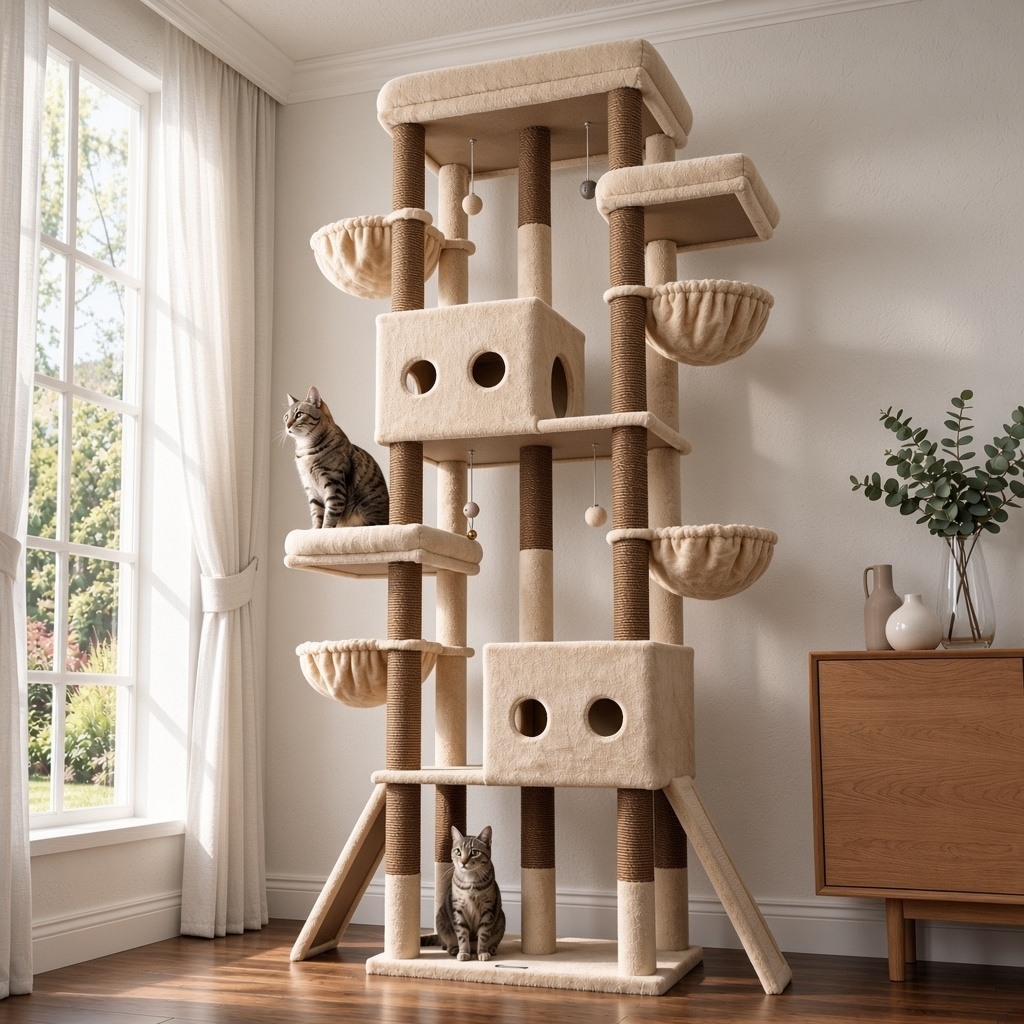
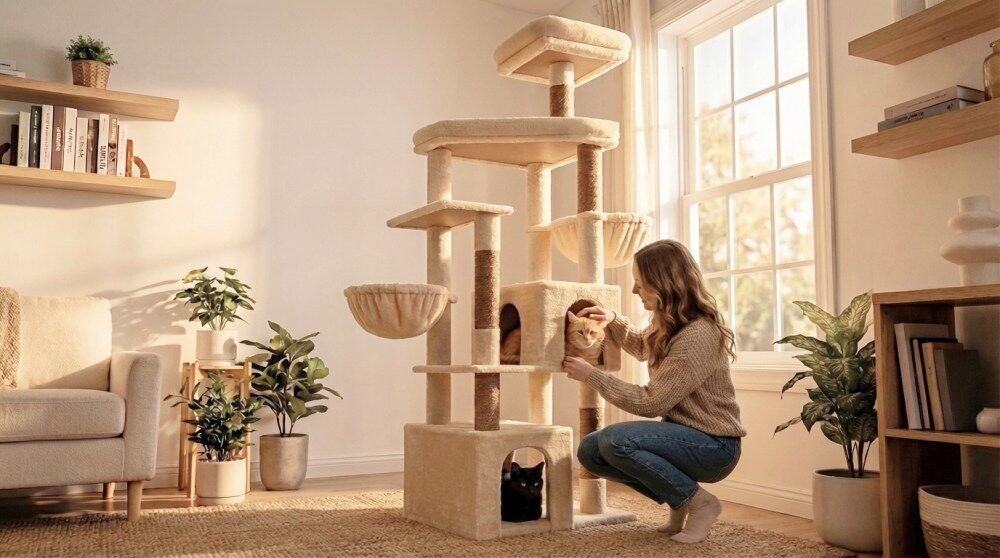
Softer-looking does not mean decorative. The most convincing pieces are edited, not dressed up. A calm beige or soft grey platform, rounded corners that read gentle in photos, and a silhouette without fake branches often does more work than another pattern.
Owners also push back on harsh industrial aesthetics—the visible bolts, the aggressive angles, the sense that the object would look wrong if you moved apartments. When renters plan around white walls and slim sofas, they want a cat tree that whispers instead of shouts.
Material choice carries the look. Plush with a muted pile can read like a throw blanket on a perch. Sisal stays honest when it is wrapped cleanly rather than disguised. Posts in warm wood tones feel intentional beside oak floors. Each decision is small; together they change how the room feels at two meters—the distance where most apartments actually live.
Color discipline mirrors the softness brief. BG, DG, and LG neutrals let structure read as architecture. When accent appears, it behaves like throw pillows—small, intentional, subservient to the room palette. Loud towers date faster than quiet ones because decor cycles move quicker than cat habits.
There is engineering underneath the softness. A tower still has to forgive launches, still has to stay upright when a cat hits the top platform at dusk. Softer-looking cat furniture therefore demands more discipline: stable bases that do not need bulky visual mass, platforms that feel generous without becoming a block, joints tuned so the object plants before anyone reaches the second level.
We see the trend as a continuation of furniture-like thinking. If the living room went neutral, if open plans punish visual noise, if pets are planned like family members, then cat trees have to look like they were chosen—not tolerated. Maintenance completes the argument: surfaces that vacuum cleanly and corners that resist fray keep the tower looking chosen, not dated after one season beside a sofa they plan to keep for five.
That is why our palettes keep returning to warm neutrals, why we trim silhouettes before we add detail, and why we treat touch as part of the design brief. A Globlazer cat tree should feel calm on move-in day and still feel honest six months later.
Globlazer’s direction assumes the sofa sets the brief before the catalog does. When beige and grey platforms survive three decor refreshes beside the same sectional, we know the reverse influence worked. The home trained the product—and cats gained routes in better light because the tower was allowed to stay there.
Assembly is part of the living-room test. Flat-pack towers that arrive with honest module counts and neutral hardware feel like furniture deliveries, not toy crates. Owners assemble at 9 p.m.; the tower should still look intentional by 9:30, because permanence begins at the first tightening bolt, not the first photograph.
Softer-looking cat furniture is not a fad toward weakness. It is a market learning what modern homes already decided: the best objects in the room are the ones you stop apologizing for—and cats, who notice instability and visual chaos faster than we do, often prefer the calmer result without being asked.
New Arrivals
Fresh designs, new colors, and limited releases for modern cat homes.