
Compact Vertical Designs for Urban Living
Maya’s lease in Brooklyn does not come with a spare room. It comes with one window that catches late-afternoon light, a sofa that doubles as a dining chair, and a hallway just wide enough for two people to pass if nobody is carrying groceries.
When she adopted a young tabby named Pico, the floor plan did not grow. The question did: where does a cat tree go when every square foot already has a job?
Maya tried a wide, low unit first. It solved scratching, but it ate the walk from kitchen to desk. She moved it twice, then stopped using the route she paid rent for. The tower became an obstacle with perches.
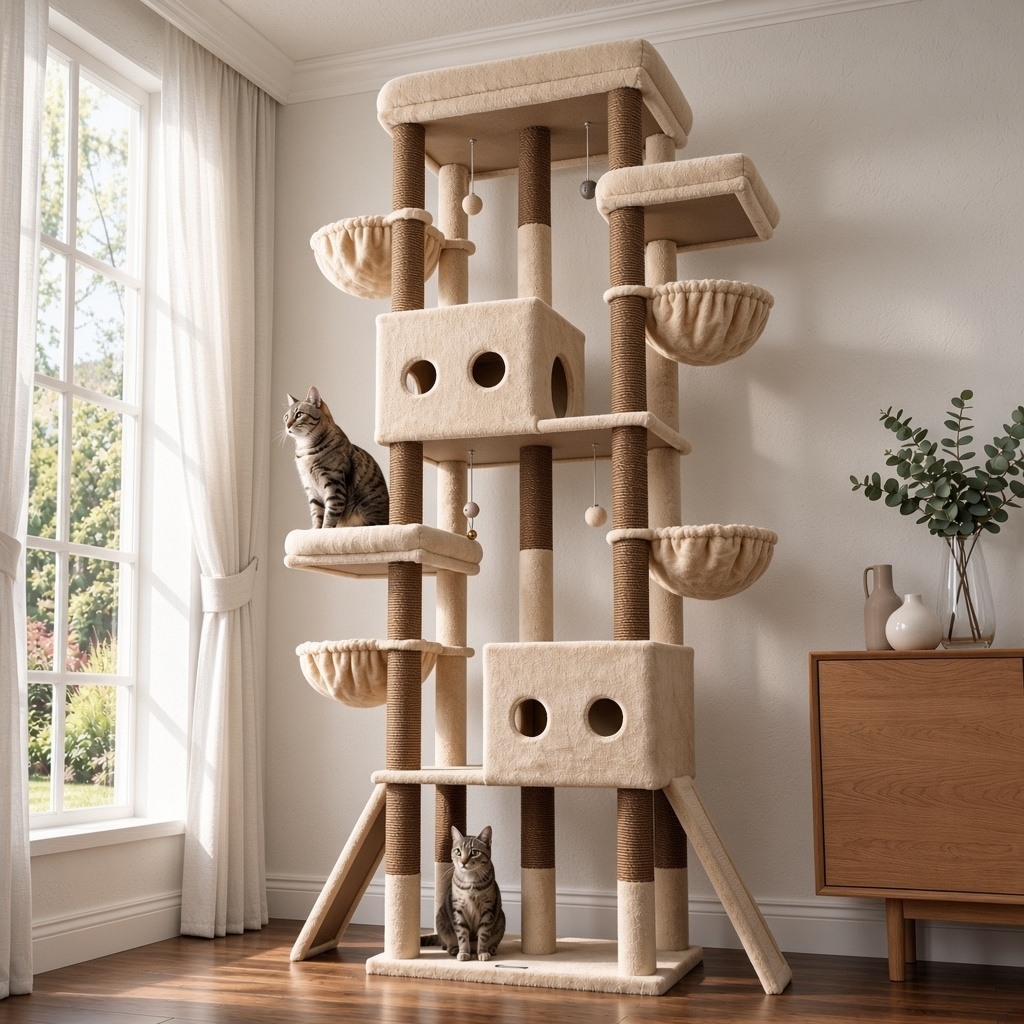
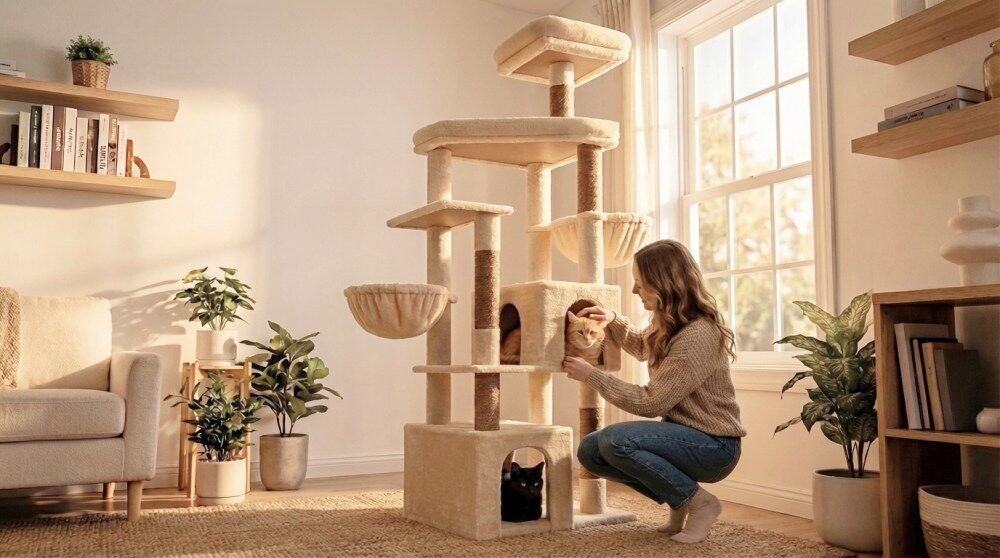
What changed the room was height, not width. A compact vertical design tucked beside the window gave Pico a lookout without stealing the floor Maya needed for yoga mats and guest shoes. The footprint stayed narrow; the enrichment went up.
Urban rentals reward edge placement—beside a door, along a sofa arm, in the strip of wall between window and bookshelf. Those are places where a slim silhouette can disappear into the architecture while still offering routes a cat will actually climb.
In tight apartments, the useful question is spatial economics: how much enrichment per square inch of floor. A tall slim Globlazer cat tree can offer three usable levels on roughly the same floor tile as a single dog bed sprawled in the center of the room. Height buys territory without asking the kitchen island to move.
Maya learned this by placement, not by measuring. Her first tower sat in the middle of the living zone like a second coffee table. Now the base rests on a thin strip of wall between the radiator cover and the bookshelf—the kind of edge where urban renters store nothing because nothing fits. The tower fits because it rises instead of spreading.
Pico uses it in predictable city rhythms. Morning: scratch the sisal while Maya makes coffee, then up to the mid level to watch hallway traffic through the glass panel in the front door. Afternoon: top perch for pigeons on the fire escape rail and the slow ballet of delivery bikes below. Evening: a neat coil on the second platform while the radiator clicks on and the room smells like whatever is simmering behind her.
She descends in one fluid drop when the front door opens, which is how Maya knows visitors have arrived before the knock finishes. The base rests on a small wool mat so hardwood stays quiet for neighbors below—a courtesy that matters when your cat tree shares a wall with someone else’s bedroom.
On weekends the same vertical route becomes furniture. Pico threads from window to sofa arm to tower top without touching floor, which is exactly what compact vertical cat furniture is supposed to enable in a one-bedroom: not a pet corner carved from half the room, but a slim column of motion beside the things humans already chose.
Window-adjacent towers earn their keep in city apartments. The perch becomes a private balcony without square footage—a place to watch rain on brick and the neighbor’s planter boxes while the human side of the room stays walkable. That is why vertical height often wins over horizontal sprawl in studio and one-bedroom layouts: inches up buy more cat territory than inches out.
Maya did not need more products cluttering the open kitchen-living layout. She needed one vertical object that respected the apartment’s spatial economics—enrichment per square inch instead of enrichment per square foot. When friends visit, they still walk from kitchen to desk without detour. The cat tree reads as part of the room’s architecture, not a compromise tucked behind a chair.
That is the urban story behind compact vertical designs: not smaller cats, but smaller rooms that still deserve calm design. A Globlazer tower in a city apartment should feel like a deliberate choice of where to spend height, not something you apologize for when the lease renewal comes around.
New Arrivals
Fresh designs, new colors, and limited releases for modern cat homes.