
Exploring Ceiling-Height Cat Tree Structures
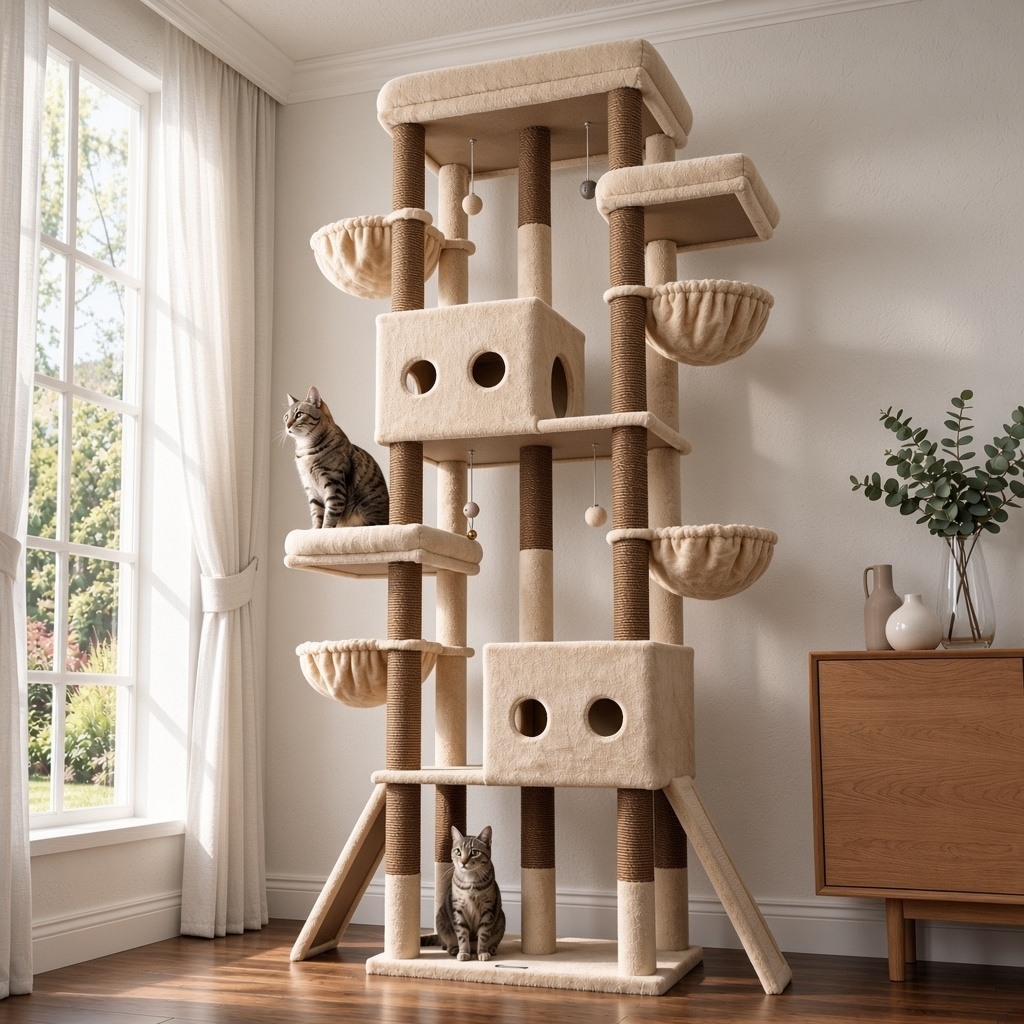
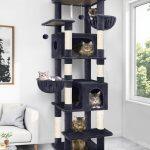
Most Globlazer towers aim for useful height—not necessarily the ceiling. But as more owners ask for structures that feel room-scale, our product team began early work on ceiling-height concepts: how tall can a cat tree grow before the room, not the cat, becomes the limiting factor? This is feasibility exploration, not a finished product announcement. We are sketching proportions, building partial mockups, and asking direct questions about sway, placement, and what tall should mean in a rental with eight-foot ceilings.
Height changes the physics story. A tower that approaches the ceiling moves the center of gravity higher and makes the base conversation louder. We are refining base footprints, post spacing, and how platforms distribute load when the top perch sits near crown molding. Because a dramatic silhouette means little if the structure cannot stay calm when a large indoor cat launches, every proportion study begins with planted stability—not vanity height.
Ceiling proximity also changes behavior. Some cats love the highest available point; others avoid climbs that feel exposed beneath air vents or light fixtures. Our early prototypes include different platform sizes and partial enclosures so we can observe which routes feel inviting rather than precarious. That observational work informs editorial silhouettes: a room-scale cat tree should offer choice, not a single intimidating ladder to the sky.
Assembly realities shape the concept as much as engineering drawings. A ceiling-height structure may ship in more sections, which affects how owners experience setup and how joints must feel solid over years—not just on day one. We are developing connection sequences that keep alignment obvious across multiple post bays, because tall furniture that frustrates assembly rarely stays tall for long in real homes.
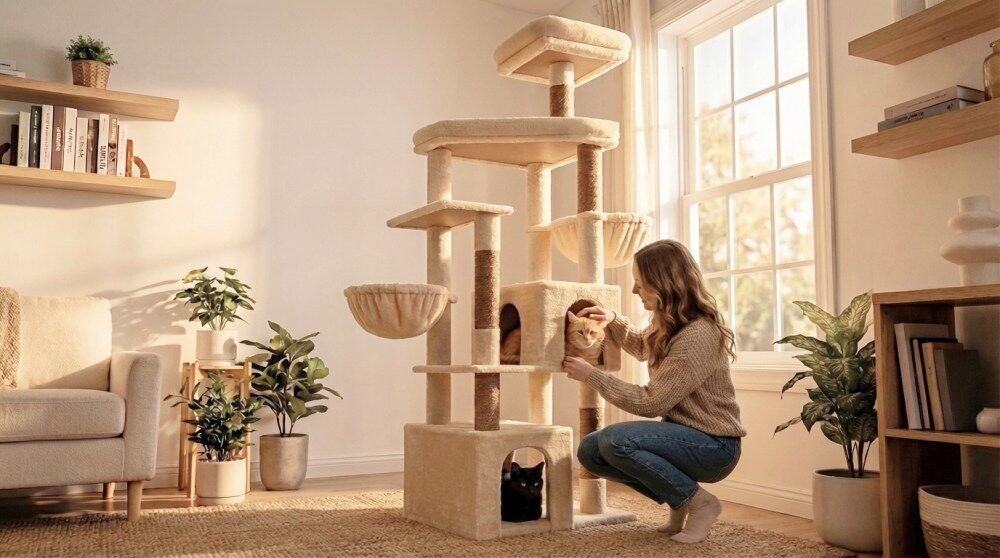
Visual calm matters, too. North American and European owners increasingly treat a cat tree as part of the furniture palette—beige, grey, and restrained lines that respect white walls and oak floors. Room-scale height cannot read as a temporary prop in the corner. We are exploring how vertical mass tapers upward, how platform edges soften sight lines, and how neutral fabrics keep the piece from dominating a modest living room even when it reaches toward the ceiling.
Throughout the work, we keep returning to Globlazer’s stability language. A tall tower should not ask the owner to choose between drama and confidence. If height becomes decoration, we have missed the point of building cat furniture for shared interiors. Our feasibility studies include staggered use patterns—one cat resting up top while another climbs below—because static stability and lived stability are not always the same story.
There is no launch date attached to this exploration. What we can share is direction: room-scale vertical furniture that respects modern ceilings, edited silhouettes, and the same neutral palettes our owners already live with. When a ceiling-height Globlazer cat tree eventually arrives, we want it to feel inevitable in the room—chosen with the sofa, not parked beside it as an afterthought.
For now, the work continues in sketches, partial frames, and quiet refinement loops. Height is not a race to the ceiling. It is a question about how much vertical generosity a home can welcome while still feeling restful. That is the bar we are engineering toward.
New Arrivals
Fresh designs, new colors, and limited releases for modern cat homes.