
Looking Back at the Evolution of Modern Cat Tree
If you zoom out on the past few years of cat tree design, the story is not one invention—it is a slow reclassification. Products that once lived in a pet-only mental aisle moved into living rooms, mood boards, and open-plan sightlines. What changed was not only aesthetics; it was what shoppers considered an acceptable permanent object in a curated home.
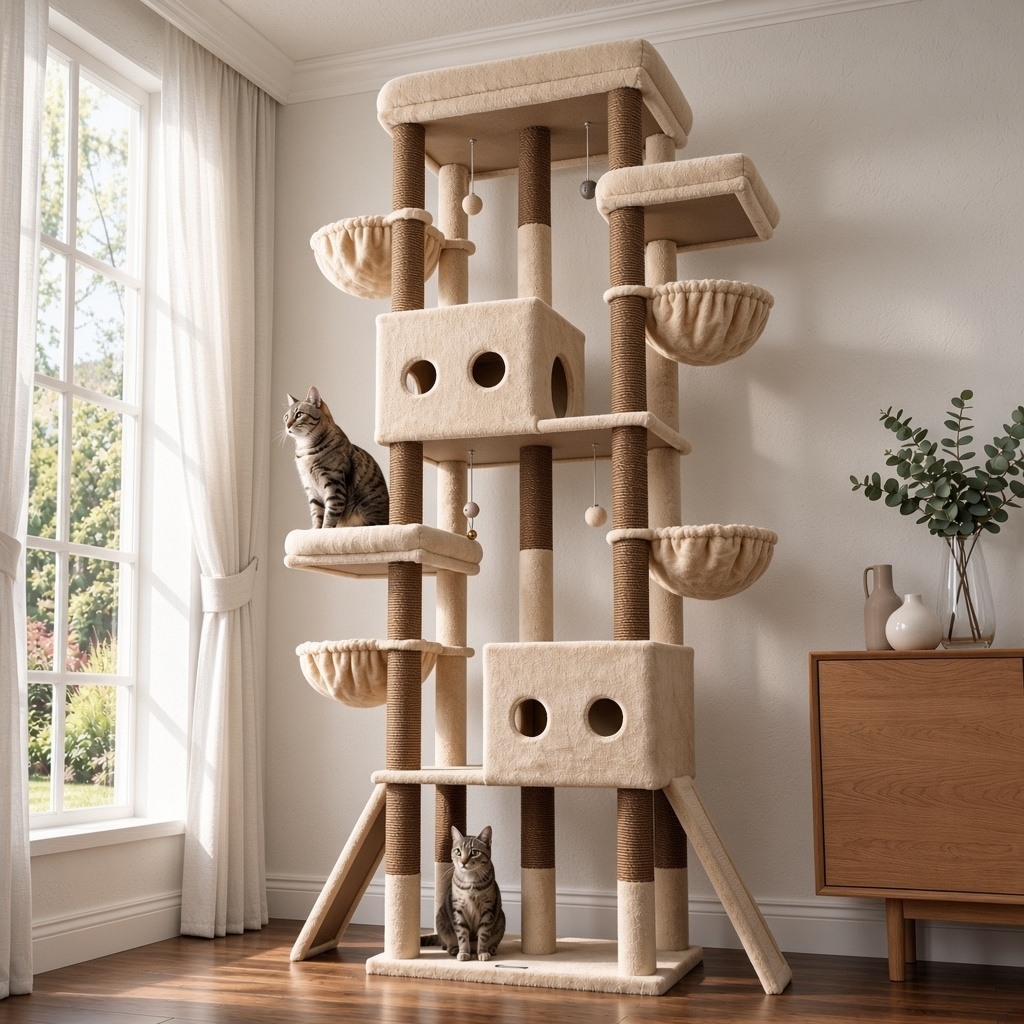
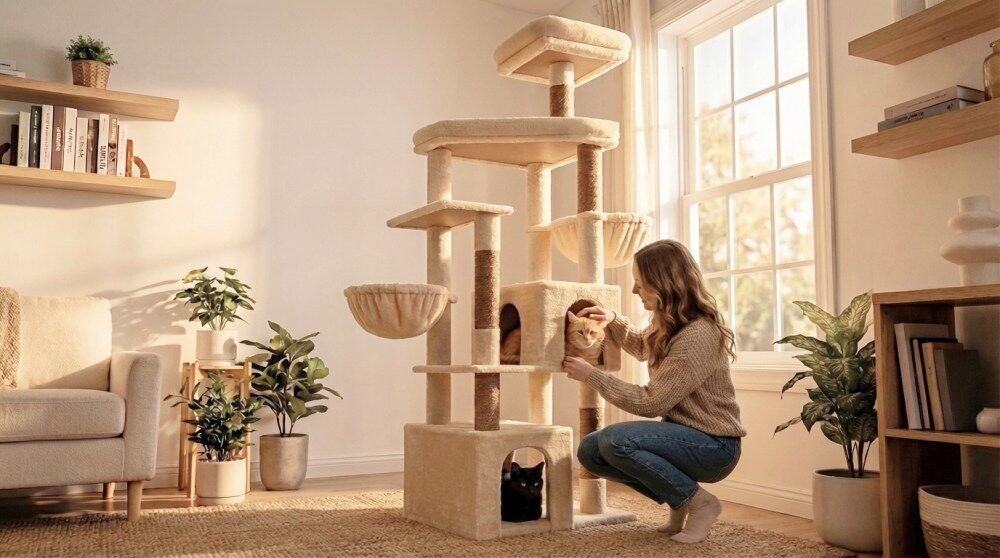
Early mainstream assortments rewarded compact footprints and loud colors—easy to merchandise, easy to hide behind a door before guests arrived. The shift toward furniture-style silhouettes changed the bargain: neutral palettes, honest structure, and proportions that echo human furniture let towers sit beside sofas without becoming the joke of the photo. Retail resets followed. So did online discovery, where texture close-ups and stability cues began to matter as much as height in listing photography.
Industry Updates observation points to three parallel threads that rarely moved alone. Structure matured first—wider bases, thicker posts, connectors that survived reassembly instead of loosening after the first move. Materials followed, with short-pile platforms that read upholstery-grade in daylight and sisal lots chosen for wear honesty rather than novelty color. Aesthetics closed the loop: beige, soft grey, and disciplined two-tone schemes stopped being a premium story and became the baseline language for SKUs that could cross from pet aisles into decor conversations.
Height became room-scale in the same stretch. Tall structures normalized as vertical furniture—claiming height budget the way shelving does, especially in markets that prefer enrichment per square foot on the floor. Families in compact rentals learned to think in vertical routes: window lookouts, mid-level pauses, scratch zones placed where cats already travel. The tower stopped being a corner afterthought and started reading like part of the apartment’s spatial grammar.
Modularity matured last but may matter most going forward. Replaceable scratch posts, expandable landings, and hardware that survives household changes turned “tower as disposable novelty” into “tower as infrastructure” families could live with for years. That shift also changed how people judged quality: not only whether a cat climbed on day one, but whether the silhouette still felt calm after a sofa refresh, a new rug, or a second cat.
At Globlazer, the through-line across these years is consistent: calmer surfaces, planted bases, and climb routes cats trust. Our product team treats each line as a vertical system—not a pile of pet shapes—because that is how rooms actually work. The category still has cheap corners, but the growth story moved toward designed towers that behave like furniture in the store, in the box, and in the room.
Looking back, the evolution was less about a single trend year and more about a rising floor. Shoppers arrived with interior literacy; manufacturers responded with proportion discipline and material clarity. The next chapter will not erase that progress—it will ask whether pet verticals can keep maturing at the same pace as the homes they share.
Channel shifts reinforced the same story. Direct listings began leading with room-context photography—towers beside linen sofas, not isolated on white seamless. Retail buyers asked for neutral lots that could sit in furniture-adjacent sets without repainting the aisle. Even warranty conversations changed: fewer disputes about color mismatch, more questions about whether a base still plants after a cross-country move.
Globlazer catalogs from this stretch show the pattern in SKU form—taller lines with calmer envelopes, modular families that share connectors, wear parts documented for replacement instead of hidden until failure. The evolution of modern cat furniture was never only design school theory. It was logistics, photography, and the slow acceptance that indoor cats deserve vertical infrastructure that respects the room they share.
That respect is now baseline—not bonus—for families who treat the living room as the real homepage.
New Arrivals
Fresh designs, new colors, and limited releases for modern cat homes.